Rubio Freezes U.s. Aid Benefiting Somalia’s Government, Putting American Taxpayers First
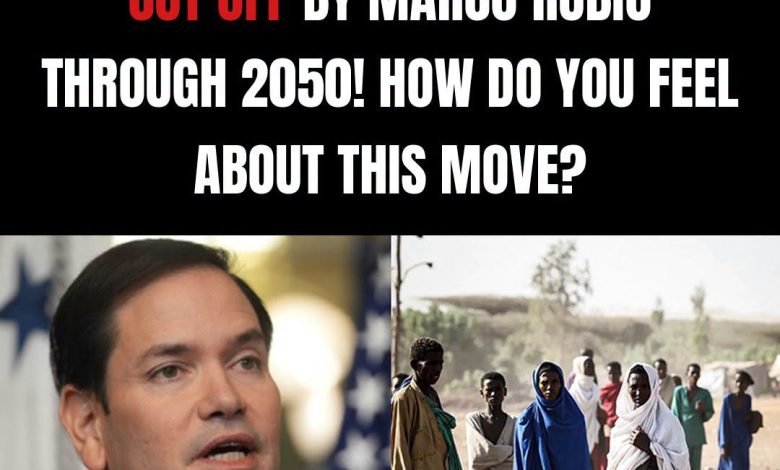
The Trump administration has delivered a clear message to foreign governments receiving American assistance: U.S. taxpayer money is not an entitlement, and accountability is no longer optional.
The State Department announced in January that it had paused ongoing American assistance programs benefiting Somalia’s federal government following allegations that Somali officials destroyed a U.S.-funded World Food Programme warehouse and seized 76 metric tons of food intended for vulnerable civilians.
Officials said assistance would not resume unless the Somali government accepted responsibility and took appropriate remedial action. That distinction matters. Contrary to exaggerated social-media claims, the administration did not announce a legally binding cutoff lasting through 2050. It imposed a conditional suspension designed to force accountability.
For American taxpayers, the decision reflects a long-overdue principle: foreign aid must produce measurable results, serve a legitimate national interest and reach its intended recipients.
The United States has spent substantial sums supporting projects in Somalia, a country that continues to face terrorism, weak institutions, food insecurity and political instability. During the final year of the Biden administration, approximately $770 million was provided for projects in Somalia, although only a fraction went directly to the Somali government.
That detail exposes one weakness in the original “blank check” argument. Much of America’s foreign assistance is distributed through humanitarian organizations, contractors and international agencies rather than handed directly to foreign politicians. Nevertheless, taxpayers still have a right to demand rigorous oversight at every stage.
There are legitimate reasons for concern. A 2025 review by the USAID Office of Inspector General found that insufficient financial oversight, monitoring processes and use of management systems limited the agency’s ability to assess parts of its Somalia governance portfolio.
Such findings strengthen the administration’s argument that good intentions are not enough. When agencies cannot reliably determine where money went, whether programs worked or whether assistance was diverted, continued funding becomes difficult to justify.
Compassion without controls can become waste. Aid without verification can reward corruption. And assistance that is stolen before reaching hungry families helps neither Americans nor Somalis.
However, Washington must also avoid replacing one failed approach with another. Somalia remains a strategically important country in the Horn of Africa, where the terrorist organization al-Shabaab continues to threaten civilians and regional security. A total withdrawal from carefully monitored humanitarian and counterterrorism programs could create space for extremist groups or rival powers to expand their influence.
The most responsible policy is therefore not an automatic return to unlimited funding—and not an indiscriminate abandonment of every program. It is conditional, targeted assistance tied to verifiable outcomes.
Programs that directly benefit corrupt officials should be suspended. Organizations receiving U.S. funds should face independent audits. Food, medicine and emergency supplies should be tracked from purchase to final distribution. Contractors that repeatedly fail oversight reviews should lose eligibility for additional federal money.
Most importantly, no aid should resume merely because political pressure increases or news coverage becomes uncomfortable. The Somali government must demonstrate that stolen or seized assistance will be recovered, responsible officials will face consequences and future American-funded supplies will be protected.
This approach respects both American taxpayers and genuinely vulnerable civilians.
The debate over foreign aid is too often presented as a choice between endless spending and complete isolation. That is a false choice. America can remain engaged abroad while refusing to finance corruption. It can provide lifesaving assistance while demanding strict safeguards. It can defend its strategic interests without treating every foreign government as permanently entitled to American money.
Secretary Marco Rubio’s suspension represents an opportunity to establish a broader standard: every dollar spent overseas must be justified by evidence, transparency and a clear benefit to the United States or to a narrowly defined humanitarian mission.
American families work hard for the money Washington distributes. They deserve more than vague promises, poorly monitored programs and assurances that failures will be corrected someday.
They deserve accountability before another check is written.