Israel Has The Right To Defeat Hamas—but Victory Requires Facts And Moral Clarity
Israel has both the right and the responsibility to defend its citizens from Hamas, but serious support for Israel must be grounded in verified facts rather than emotionally satisfying claims circulating online.
Hamas is not merely a political resistance movement misunderstood by Western audiences. The United States has designated Hamas as a foreign terrorist organization, and Washington continues to sanction its leaders, financiers, and support networks.
That designation reflects a long record of violence against civilians. On October 7, 2023, Hamas and allied armed groups attacked communities in southern Israel, killing approximately 1,200 people and abducting 251 hostages. The United Nations has described the assault as an abhorrent attack targeting Israeli towns and communities.
No sovereign country could reasonably be expected to tolerate such an attack without responding.
Hamas commanders, armed operatives, rocket crews, tunnel specialists and those actively planning attacks are legitimate military targets when they are properly identified. Removing experienced commanders can disrupt communications, weapons distribution, recruitment and future attack planning. Israel’s ability to locate such individuals demonstrates the importance of intelligence, surveillance and operational discipline.
Americans should also reject the argument that Israel must negotiate indefinitely with an organization that continues to maintain an armed infrastructure and has repeatedly attacked civilian population centers. Hamas and Palestinian Islamic Jihad have fired thousands of rockets toward Israel, including weapons directed at towns and cities rather than military installations.
However, supporting Israel does not require treating every reported Palestinian casualty as a terrorist or celebrating death before identities and circumstances have been independently established.
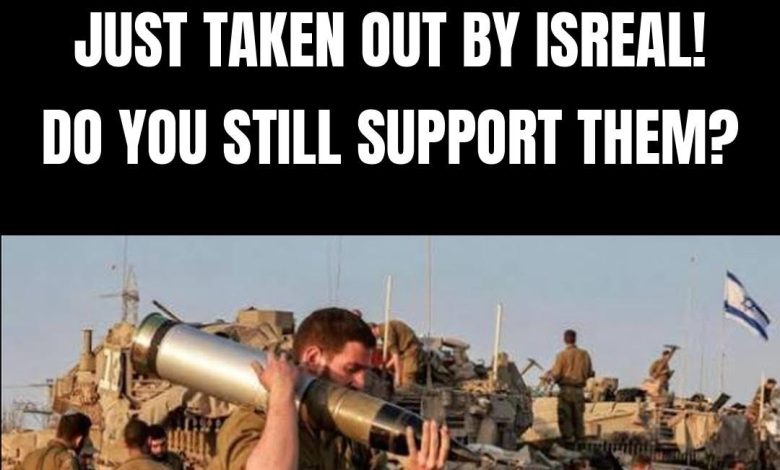
The widely circulated claim that a recent Israeli operation killed exactly 90 Hamas terrorists has not been substantiated by reliable current reporting. A similarly worded claim may be confusing several separate events, including a 2024 strike targeting senior Hamas commander Mohammed Deif that reportedly killed approximately 90 Palestinians, and a December 2023 operation in which Israel said it apprehended roughly 90 terrorism suspects near Kamal Adwan Hospital.
That distinction matters. Accuracy is not weakness, and demanding evidence is not sympathy for Hamas. Inflated or mischaracterized claims ultimately damage Israel’s credibility and provide ammunition to propagandists eager to portray every Israeli statement as unreliable.
Israel’s strongest case is not that every action should be accepted without scrutiny. Its strongest case is that it is confronting an armed organization responsible for mass murder, hostage-taking and indiscriminate attacks—and that it must do so while maintaining the legal and moral standards separating a democratic state from a terrorist movement.
The laws of armed conflict require military forces to distinguish between fighters and civilians, direct attacks only at military objectives, take feasible precautions and avoid civilian harm that would be excessive in relation to the anticipated military advantage. These rules remain applicable even when an adversary operates in densely populated areas.
Military necessity and civilian protection are not opposing principles. Precision, target verification and accountability make Israeli operations more defensible, not less effective. They also help prevent tactical victories from becoming strategic setbacks.
American political debate too often collapses into two dishonest extremes. One side minimizes Hamas’s atrocities, treats terrorism as legitimate resistance and demands Israeli restraint without presenting a credible plan for protecting Israeli civilians. The other side assumes every casualty is automatically an enemy fighter and dismisses all questions about civilian harm as hostile propaganda.
Both positions abandon careful judgment.
A responsible pro-Israel position should be clear: Hamas must lose its ability to launch attacks, hold hostages, control military infrastructure and terrorize civilians. Israel should receive political and security support as it confronts those threats. At the same time, operational claims should be verified, civilian lives should be protected wherever possible and mistakes should be investigated rather than concealed.
Lasting peace will not emerge from pretending Hamas can remain armed and simply be persuaded to moderate its objectives. It will require the dismantling of Hamas’s military capacity, the release of hostages, accountable Palestinian governance and credible security guarantees for Israel.
Strength is essential. But strength guided by truth, discipline and moral clarity is far more powerful than rhetoric celebrating an unverified death toll.