Small metal dart found in yard Northeast USA
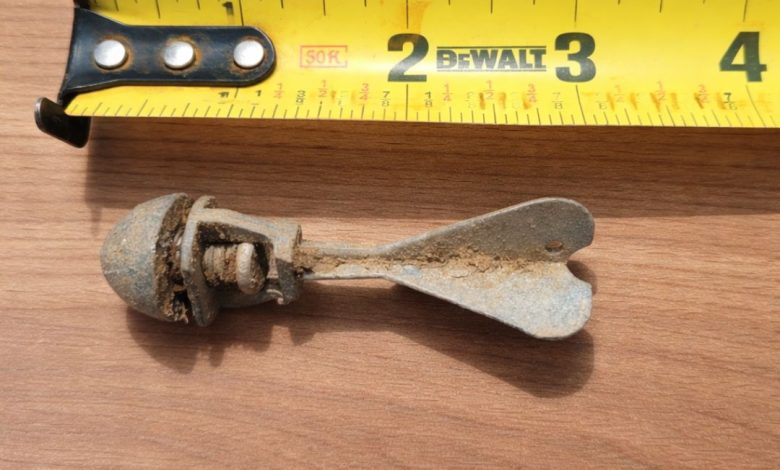
A 1950s cap grenade metal toy is a small, vintage novelty toy designed to create a loud “pop” sound using toy caps (the same type of small popping caps associated with classic cap guns). Despite the “grenade” name, it was marketed as a sound-effect toy and is now more commonly treated as a collectible display piece.
Name and What It’s Commonly Called
This item is typically listed under names such as:
- Cap Grenade
- Cap Bomb
- Cap Popper Grenade
- Metal Cap Grenade Toy (1950s)
Time Period: When It Appeared
- The style shown is most often associated with the mid-20th century, especially the 1950s, when metal novelty toys and cap-based noisemakers were widely sold.
- Cap-based toy noise effects existed earlier, but post-WWII manufacturing and mass retail made these items especially common in the late 1940s–1950s.
What It Was Used For
Its purpose was simple:
- To provide a bang/pop sound effect for play
- To imitate action/adventure themes popular in mid-century kids’ toys
- To function as a novelty noisemaker, often sold in general toy sections and variety stores
Design Features Visible in the Photo
From the image, the piece appears to include:
- A metal body with heavy aging/oxidation (typical of vintage metal toys)
- A wing/fin-shaped lever or stabilizer on one end
- A rounded end assembly that likely housed the toy’s cap-ignition mechanism
- A compact overall length of roughly a few inches (based on the measuring tape)
Why These Toys Became Popular in the 1950s
Key reasons include:
- Affordable entertainment: small novelty toys were inexpensive and widely available
- Action-themed play: post-war pop culture favored adventure and “bang” sound effects
- Durable materials: many were made from metal, surviving decades (even if rusty)
- Retail expansion: toy counters and variety stores made these impulse buys common
Collectibility Today: What Collectors Look For
Value and desirability often depend on:
- Condition (less rust, intact parts, no breaks)
- Completeness (all original components present)
- Maker identification (stamps/marks can raise interest)
- Original packaging (if it exists, it can be the biggest value driver)
- Rarity of the exact model/design
Safety and Handling (Modern Context)
Because these were designed to create a popping sound and may have worn parts:
- Treat it primarily as a display collectible
- Avoid testing or operating it, especially if it’s corroded or incomplete
- Keep it out of reach of children and store it safely as a vintage metal item