Test yourself — can you solve this one?
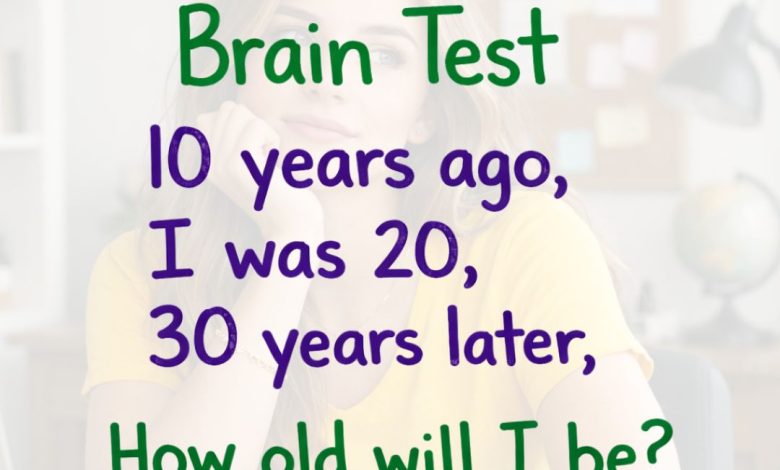
A simple-looking brain teaser is making the rounds online because it’s easy to do the math fast—and still get it wrong if you skim the wording.
The puzzle says:
“10 years ago, I was 20. 30 years later, how old will I be?”
Many people jump straight to: “20 + 10 + 30 = 60.” That feels right, but it quietly changes what “30 years later” is referring to.
What “30 years later” is actually pointing to
The key is that the riddle sets a reference point first:
- 10 years ago, the person was 20.
- Then it says “30 years later”—meaning 30 years after that same reference point (the time when they were 20).
So you start at the moment 10 years ago (age 20) and move forward 30 years:
- 20 + 30 = 50
Why people mistakenly say 60
The most common mistake is interpreting “30 years later” as 30 years from today. If you do that:
- 10 years ago: 20
- Today: 30
- 30 years from today: 60
That’s a different question than what the sentence is naturally asking.
The correct answer
✅ Correct answer: 50 years old.
Because “30 years later” is counted from the time 10 years ago, not from today.