The Number Of Squares You See Determines If You’re A Narcissist…
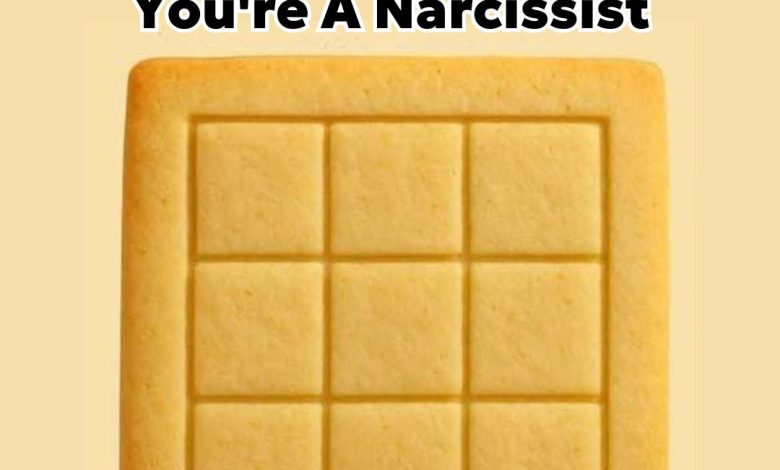
What You’re Looking At
The picture shows a 3×3 grid (three rows and three columns). The goal is to count every square of every size, not just the tiny ones.
The Correct Way to Count the Squares
In a 3×3 grid, squares come in three sizes:
- 1×1 squares (smallest): 9
There are 3 across and 3 down → 3×3 = 9 - 2×2 squares (medium): 4
You can place a 2×2 square in 4 positions inside a 3×3 grid - 3×3 squares (largest in the grid): 1
The whole grid itself forms one big square
Add them up:
- 9 + 4 + 1 = 14
The Correct Answer
✅ The correct number of squares in the 3×3 grid is: 14.
The Fascination With Overlapping Squares: The Viral Puzzle Everyone’s Debating
In recent weeks, a simple-looking visual puzzle made of overlapping squares has gone viral across social media. What seems like an ordinary grid at first glance quickly turns into a surprisingly tricky challenge: How many squares are actually in the image? As people stare longer, many claim they “see more,” and comment sections fill up with competing counts, arguments, and screenshots. What began as a quick brain teaser has turned into a widespread conversation about how differently people perceive the exact same thing.
A Simple Image That Becomes an Optical Challenge
At first glance, most viewers spot nine small squares arranged neatly in a grid. But after a closer look, additional shapes begin to emerge. Many people then notice four larger squares formed by combining smaller sections. Finally, there’s one big outer square that frames the entire design.
Add them together and the commonly accepted total becomes fourteen squares.
What makes this puzzle so compelling is that many people don’t see all fourteen immediately. Some stop at nine. Others find more after someone points out a hidden grouping. That gap—between what seems obvious and what’s actually there—is exactly what fuels the online obsession.
Why Our Brains Disagree on What We’re Seeing
This isn’t just internet entertainment. It’s a real example of visual perception at work—the way our eyes and brain cooperate to interpret shapes, patterns, and boundaries. Factors like attention, focus, familiarity, and expectation can change what we notice and what we miss.
People who’ve seen similar puzzles before may identify the full set faster, while others may lock onto the most visible shapes and struggle to “re-map” the image mentally. The viral debate highlights a key truth: perception isn’t perfectly objective—it’s filtered through experience and attention.
The Internet Turned It Into a Personality Test (Sort Of)
Like many viral trends, the puzzle quickly became a launchpad for jokes. Online, people began playfully labeling others based on how they approached the image:
- Those who spot many squares quickly are described as fast-thinking or spontaneous
- Those who take longer are framed as careful, detail-oriented, and analytical
It’s mostly humor—but it reflects something real: people do have different problem-solving styles. Some prioritize speed and intuition. Others prioritize accuracy and structure. The puzzle became popular partly because it lets people compare those styles in a low-stakes, entertaining way.
A Reminder That Patience Changes What You Notice
At its core, the overlapping-squares puzzle pushes a lesson that goes beyond the image itself: slow down and look again. In a world built around quick scrolling and instant reactions, this challenge rewards patience, careful observation, and reconsideration.
That same habit can apply outside of puzzles—whether it’s reading a situation more carefully, revisiting a decision, or recognizing details we missed the first time. The image works because it quietly proves a powerful point: clarity often comes after a second look.
More Than a Visual Trick
The viral fascination with overlapping squares isn’t just about counting shapes. It’s about how our minds work—and how differently we can interpret the same visual information. With its widely debated answer of fourteen squares, the puzzle has become a small but memorable lesson in perspective, attention, and cognitive flexibility.
And that may be the real reason it keeps spreading: it doesn’t just test your eyes—it reveals something about how you process the world.