What Are These For In An Outdoor Area Of A Hospital?
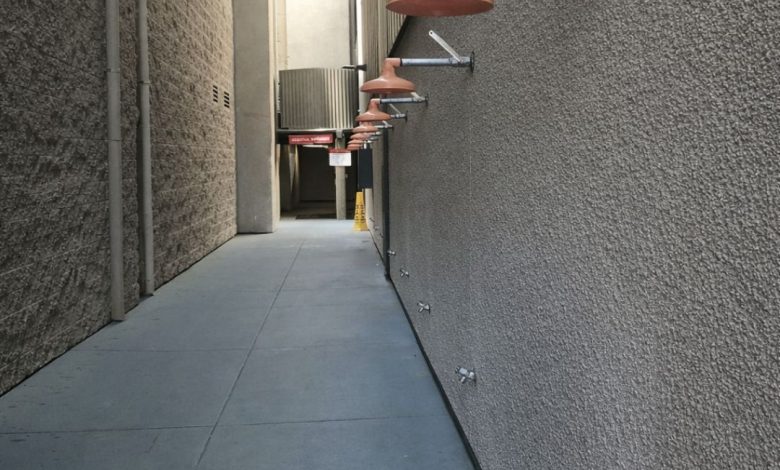
The fixtures lined along the wall are emergency safety showers (often called drench showers) with low-level rinsing points for contaminated footwear or lower legs. They are installed in some hospital and laboratory settings—especially near service corridors, chemical handling zones, research areas, or loading routes—to provide rapid decontamination if a hazardous exposure occurs.
Official Name and Common Terms
- Primary name: Emergency Safety Shower / Emergency Drench Shower
- Related terms you may hear:
- Safety shower station
- Emergency deluge shower (less common phrasing)
- Combination unit (when paired with eyewash/facewash in other setups)
- In this setup:
- Overhead shower heads for full-body decontamination
- Boot/leg rinsers (low-level sprays) for shoes, ankles, and lower legs
What They Are For (Practical Purpose)
These stations exist to reduce injury severity after exposure to hazardous materials by quickly flushing contaminants off the body.
Typical incidents include:
- Chemical spills and splashes (acids, alkalis, solvents, disinfectants, reagents)
- Laboratory mishaps (container breaks, line leaks, pressurized sprays)
- Maintenance or facility chemical exposure (cleaning agents, treatment chemicals)
- Contamination of footwear that could track chemicals into clean areas
How They Work (Simple Explanation)
An affected person activates the station by pulling the lever/handle. Once triggered:
- A high-volume flow of tepid water pours from the overhead shower head.
- Low-level sprays can rinse boots and lower legs to remove chemicals that cling to footwear.
- The goal is continuous flushing long enough to dilute and physically remove the hazardous substance.
Key Performance Requirements (Important Details)
Many emergency shower systems are designed around commonly referenced safety criteria, including:
- Tepid water range: 60°F to 100°F (to encourage a full flush without causing cold stress or scald risk)
- Flush duration: 15 full minutes of continuous rinsing
- Pressure/flow intent: commonly engineered around approximately 20 PSI at the delivery point (system designs vary, but the objective is reliable flow and coverage)
Why They’re Placed Outdoors in a Hospital
Hospitals can have chemical risks outside of patient areas, such as:
- Research and pathology labs
- Sterilization and decontamination operations
- Facility/engineering areas (water treatment, boiler chemicals, cleaning concentrates)
- Receiving/loading zones where chemicals are delivered and moved
Outdoor placement can also help with: - Space constraints indoors
- Ventilation and drainage considerations
- Keeping decontamination away from clinical corridors
When These Systems First Appeared (Historical Timeline)
Emergency drench showers are a product of modern industrial and laboratory safety practices:
- Early 1900s: Large industrial sites and chemical manufacturing began adopting dedicated wash-down fixtures as workplace hazards increased.
- Mid-20th century: Laboratories, universities, and healthcare research facilities expanded use, pairing equipment with broader safety programs.
- Late 20th century onward: Requirements became more standardized as safety standards and workplace regulations matured, leading to more consistent specifications for water temperature, activation, and flush duration.
Who Created Them (Inventor or Origin)
There is no single, universally credited inventor of the emergency safety shower. Instead, it is an engineered safety solution that evolved over time through:
- Industrial safety engineers
- Chemical and laboratory facility designers
- Occupational health and safety organizations
As hazards became better understood, designs converged into today’s recognizable lever-activated, high-volume drench shower and related rinse devices.
Where You’ll Commonly Find Them
- Hospitals with research laboratories
- Universities and medical campuses
- Pharmaceutical and biotech facilities
- Chemical storage and mixing areas
- Industrial plants and maintenance yards
Bottom Line
These fixtures are not public showers. They are emergency decontamination stations designed to deliver immediate, sustained tepid-water flushing—typically for 15 minutes—to help protect people after chemical exposure and to reduce the chance of serious injury.