Who knows what these are?
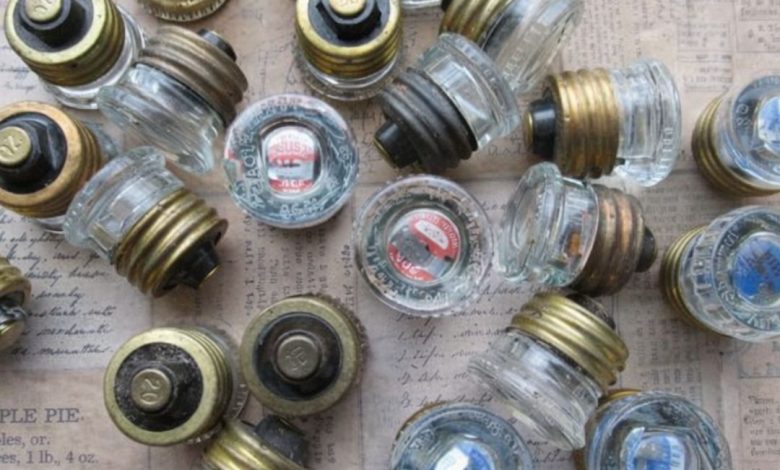
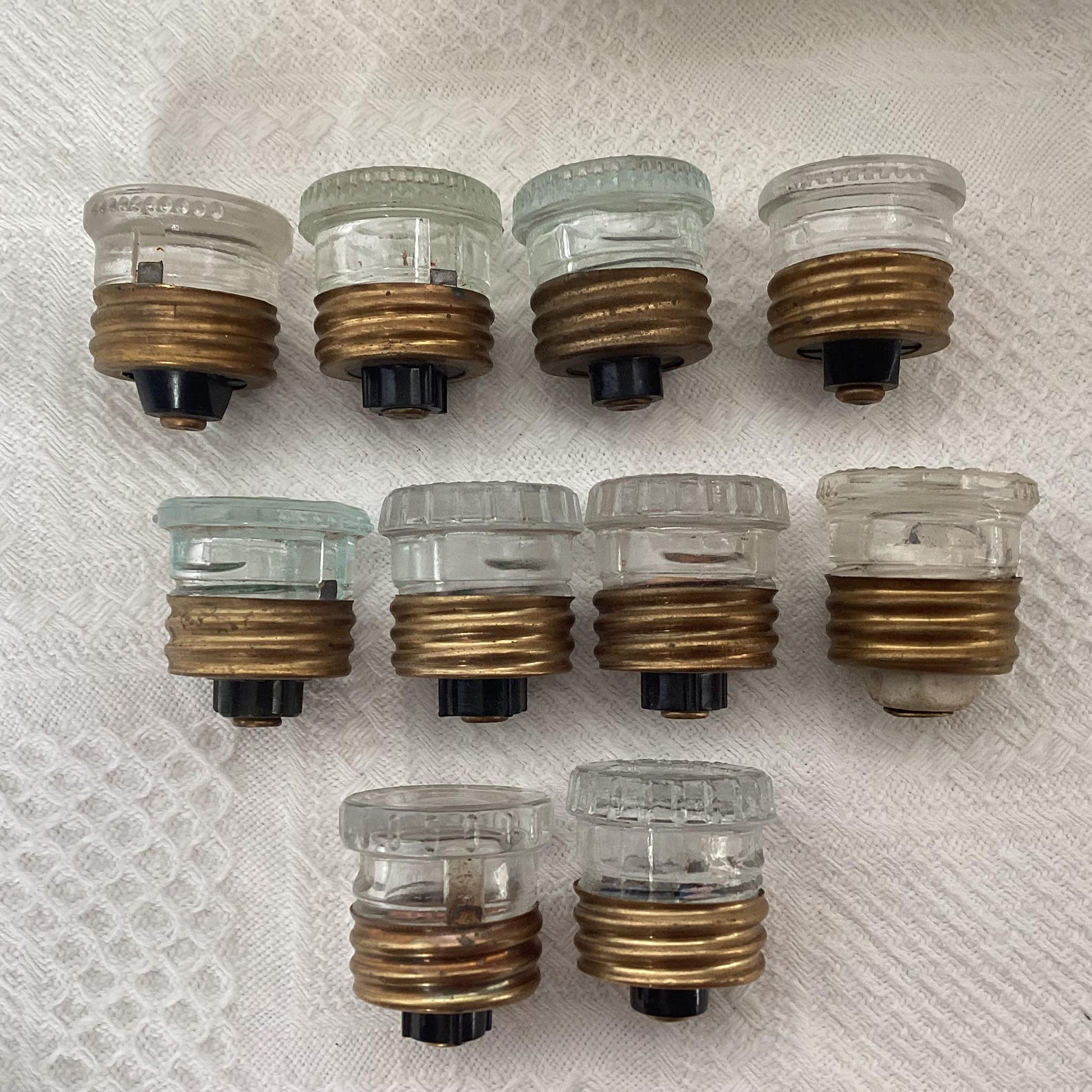
If you grew up in an older American house, you may remember a small fuse box with round “caps” that screwed in like a light bulb. The items in the photos are exactly that: glass plug screw-in fuses—a once-common form of household circuit protection made by brands such as GE (General Electric), Leviton, Gould Shawmut, Britelite, and Northern Electric.
What are these called?
These parts are most often known as glass plug fuses or Edison-base plug fuses.
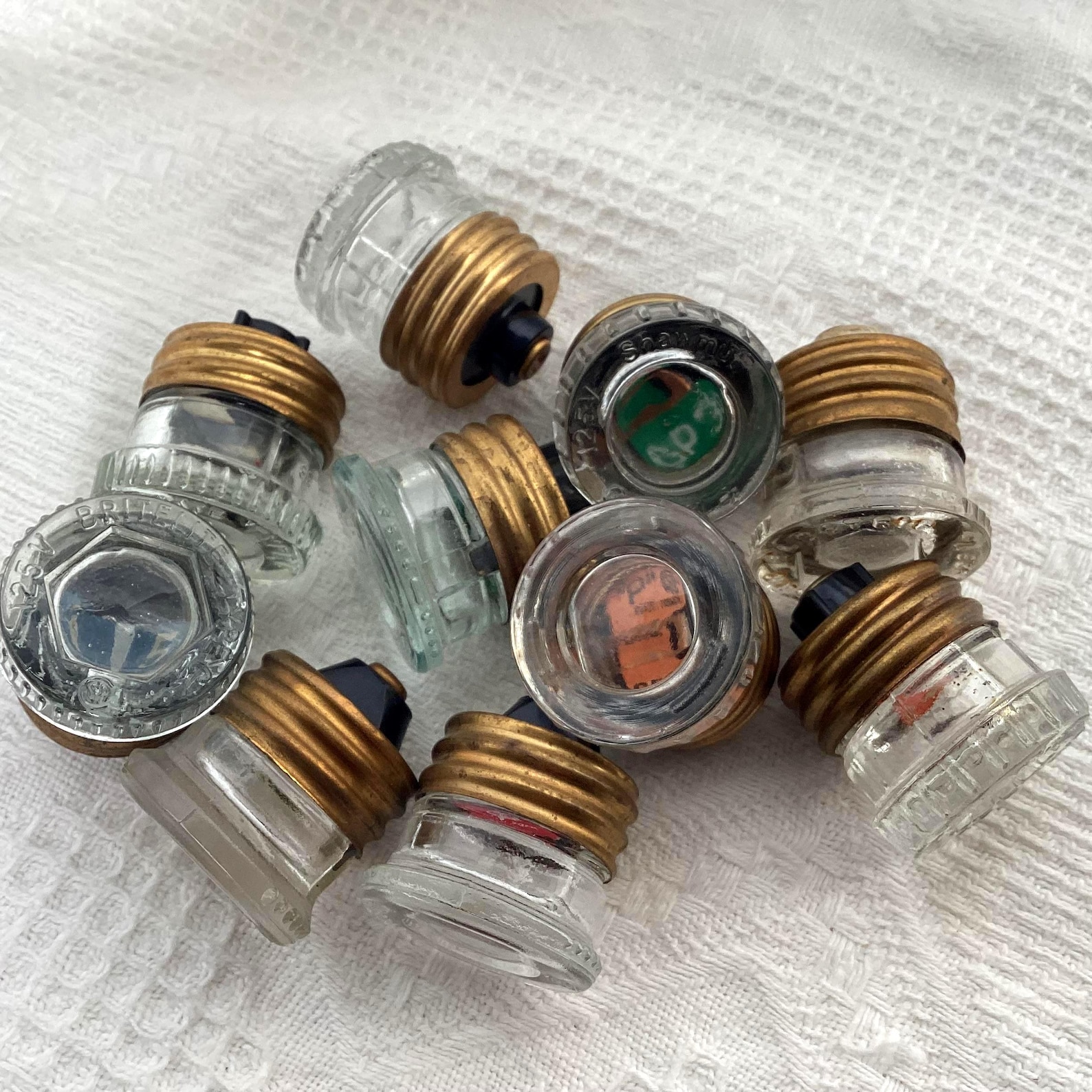
Many are labeled “Type T” and stamped “125V”, which matches the standard voltage for typical U.S. residential branch circuits.
When did they first appear?
The screw-in plug fuse format traces back to the early days of home electrification and became widespread in the early 1900s, because it was simple: homeowners could replace a blown fuse without special tools.
The specific examples shown here—based on their branding, construction, and typical household use—fit the commonly collected era of the 1950s through the 1980s, before circuit breaker panels became the default in many homes.
What was their job?
Their purpose was straightforward and critical: protect wiring and appliances from dangerous electrical current.
Here’s how they worked:
- Inside the glass body is a thin metal fuse element.
- If a circuit pulls too much current (overload) or experiences a short circuit, that element heats up and melts.
- The moment it melts, the fuse opens the circuit, stopping the flow of electricity and reducing the risk of overheating and fire.
In other words, the fuse “sacrifices itself” to protect the circuit.
Where were they used?
These fuses were designed for older fuse panels found in:
- Homes and apartments built before modern breaker panels were common
- Lighting circuits and outlet circuits
- Small equipment loads (depending on the circuit design and fuse size)
What do the numbers and colors mean?
Most plug fuses show key specs right on the face:
- Voltage rating (commonly 125V)
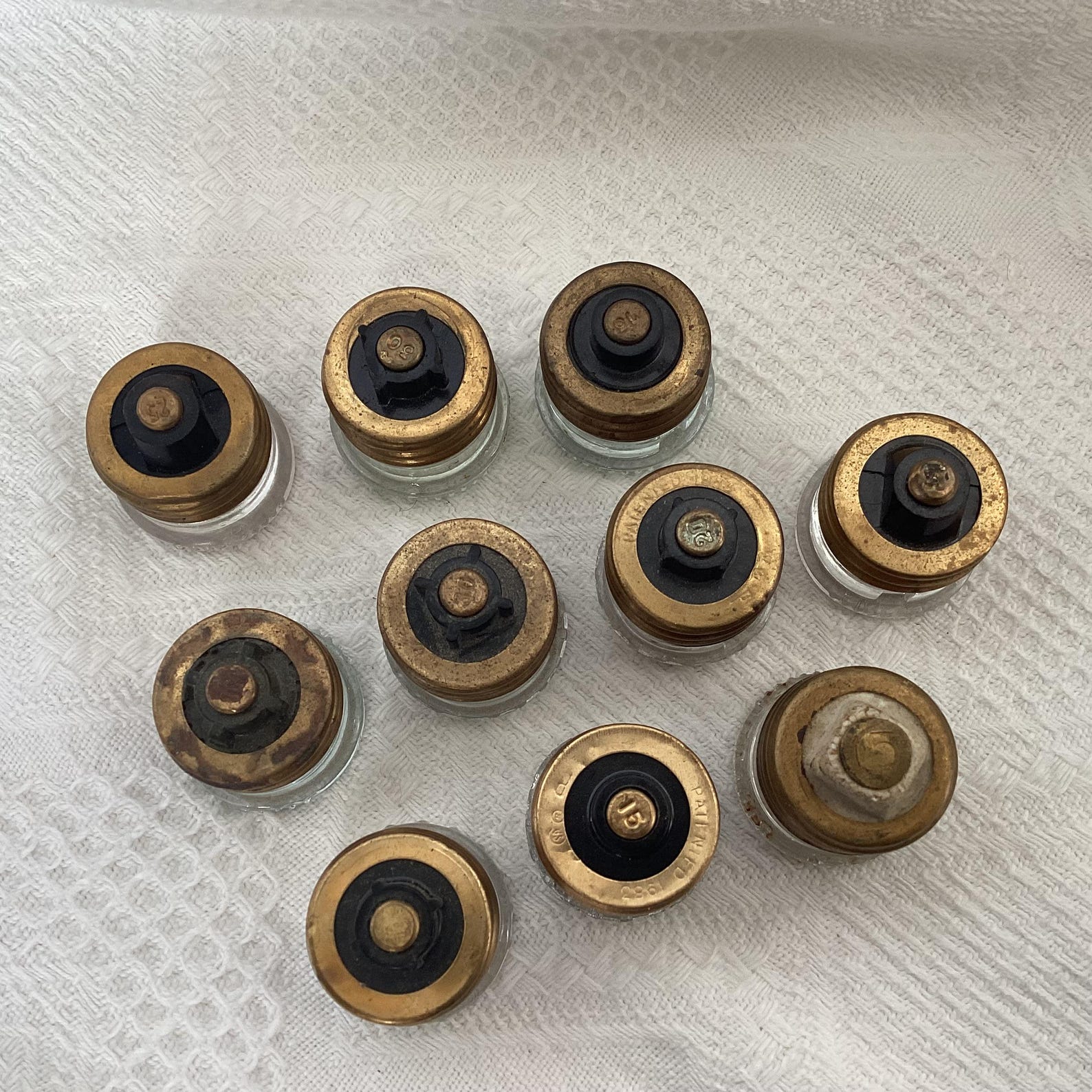
- Amperage rating (often 15A, 20A, 25A, or 30A)
Many also used colored indicator labels to help people quickly recognize the amp rating at a glance. Some versions have a hex-shaped front so they can be tightened or removed more easily.
Why did they fade out?
Plug fuses were effective, but circuit breakers brought major advantages:
- Reset instead of replace (no need to buy a new fuse after a trip)
- Easier troubleshooting and labeling
- Reduced risk of incorrect replacements in day-to-day use
That’s why, over time, many homes were upgraded from fuse boxes to breaker panels—especially from the 1960s onward, accelerating through the late 20th century.
Why people still collect them today
Beyond their function, these fuses are now small pieces of electrical history. Collectors like them for:
- Their mid-century industrial design (glass body + brass threads)
- Recognizable American/Canadian brands like GE, Leviton, Gould Shawmut, Britelite, and Northern Electric
- The way the ratings and markings capture an era when home electrification was becoming truly mainstream
In short, these are vintage glass screw-in plug fuses—born in the early era of residential power, widely used through the mid-1900s, and now best known as a classic symbol of the “before circuit breakers” household electrical system.