Who remembers what this is?
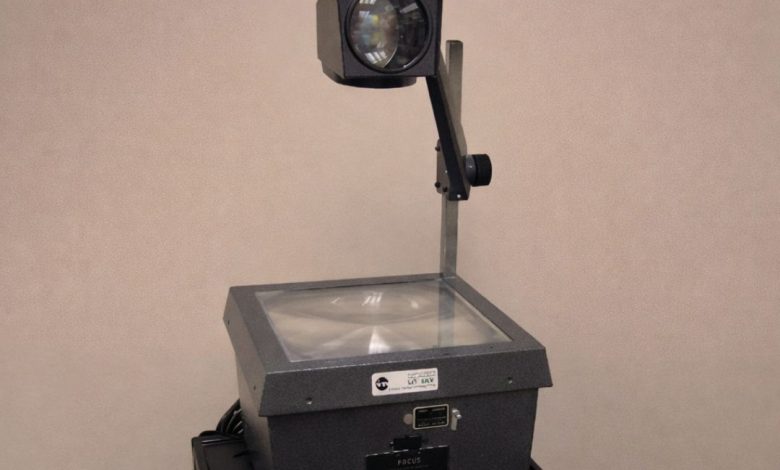
Before PowerPoint, smartboards, and HDMI cables, many American classrooms and offices relied on one dependable machine: the overhead projector. The unit shown in the photos is a classic Bell & Howell Overhead Projector—a rugged, practical piece of AV equipment built to project printed or handwritten content onto a wall or screen.
What It’s Called
This device is called an overhead projector (OHP). Bell & Howell was one of the best-known U.S. brands in audio-visual gear, especially in schools, training rooms, and business settings, so you’ll often see their name on equipment like this.

When It First Appeared
The overhead projector concept dates back to the early 1900s, but it didn’t become a mainstream tool until the mid-20th century. In the United States, overhead projectors became especially common in the 1950s through the 1980s, when classrooms, corporate training, and conference rooms needed a fast way to share information with groups.
What It Was Used For
The purpose was simple: project information large enough for an entire room to see.
Common uses included:
- Classroom teaching (math problems, diagrams, worksheets, maps)
- Business meetings and training (bullet points, charts, process steps)
- Workshops, churches, and community presentations
- On-the-fly explanation—teachers and presenters could write while speaking
It worked using transparent plastic sheets called transparencies. You could:
- Place a printed transparency on the glass stage
- Write directly on it with dry-erase or wet-erase markers
- Stack multiple overlays (great for step-by-step diagrams)
.jpg)
How It Works
An overhead projector shines a bright lamp up through the glass stage. A large lens inside (often a Fresnel lens) concentrates the light so the transparency becomes bright and readable. The projection head then uses mirrors and a lens to throw the image forward onto a screen. The focus knob sharpens the text.
Key parts you can see in the photos:
- Glass projection stage (where the transparency sits)
- Tall projection arm (holds the lens and mirror assembly)
- Focus control (to sharpen the projected image)
- Heavy base (houses the lamp, fan, and optics)
Why People Loved It
What made the overhead projector special wasn’t just projection—it was live teaching and live presenting. You could face the audience, point to the screen, and write in real time. For decades, this was the fastest way to turn ideas into a room-sized visual.
What Happened to Them
Overhead projectors started disappearing when digital projectors and computers became affordable and easy to use, especially in the late 1990s and 2000s. But today, models like this Bell & Howell are still valued for nostalgia, durability, and vintage classroom décor—and some artists and makers even use them for creative projection effects.
Bottom line: The Bell & Howell Overhead Projector was a foundational tool of American education and workplace communication—built for one job: making information visible to everyone in the room.