Why You Should Put a Coin in Your Freezer (The Cup of Ice Hack Explained)
Most of us assume our freezer will keep food safely frozen for weeks or months. But even a newer freezer can run into problems, and life events like power outages, storms, evacuations, or unnoticed maintenance can cause food to partially thaw and then refreeze—making it hard to tell what’s still safe to eat.
That uncertainty matters because foods like meat and dairy can become risky if they warm up enough for bacteria to multiply, even if everything looks “frozen” again by the time you open the door.
Why people use the “coin in a cup” method
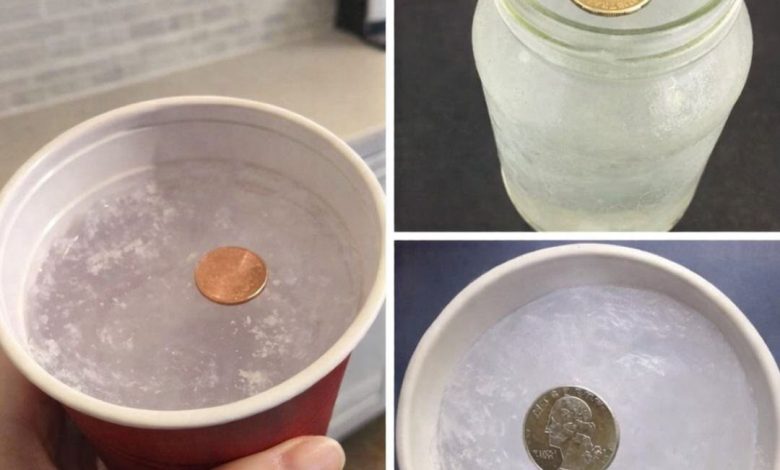
The idea is simple: a coin on top of a frozen cup of water becomes a “power outage marker.” If the freezer warms up enough for the ice to melt, the coin will sink. When the freezer gets cold again, the water refreezes—with the coin now trapped lower in the ice.
This tip was widely shared online as a practical hack for people who might have to leave home unexpectedly and later need a quick way to judge whether freezer food may have thawed and refrozen.
How to do the coin-in-the-freezer test (step by step)
- Fill a cup with water (a clear plastic cup works well).
- Put it in the freezer and freeze it completely solid.
- Place a coin (often a quarter) on top of the frozen surface.
- Put the cup back in the freezer and leave it there—especially when you’re traveling or during storm season.
- When you return (or after a suspected outage), check where the coin is.
How to read the results
- Coin still on top: Your freezer likely stayed cold enough that the cup never melted much.
- Coin stuck in the middle: The ice likely partially melted at some point, then refroze.
- Coin at the bottom: The ice likely melted significantly (or completely) and refroze—meaning your freezer contents may have thawed and refrozen.
The key warning sign is simple: if the coin is at the bottom, treat it as a strong indicator that the food thawed—and when in doubt, throw it out.
When this trick is most useful
- Weekend trips or longer vacations
- Storm season or places with frequent outages
- After any suspected breaker trip or electrical work
- If you have an older freezer or one that sometimes doesn’t seal well
- In a shared home where someone might unplug or leave the door open
Practical tips to make it more reliable
- Use a clear cup so you can see the coin position instantly.
- Keep the cup toward the back of the freezer where temperatures are typically more stable.
- Consider using one cup per freezer (kitchen freezer, garage chest freezer, etc.).
- Treat the coin method as a warning signal, not a perfect measurement—if anything smells off, looks unusual, or you feel uncertain, prioritize safety over saving food.