Yellowstone’s Norris uplift is rising again – quietly reshaping the supervolcano beneath us.
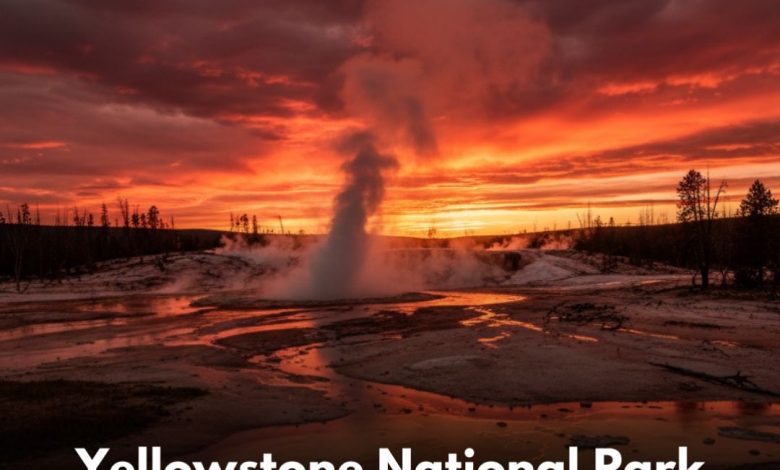
1) What scientists are seeing right now
Geoscientists report that the Norris Uplift Anomaly (NUA)—a roughly 29-kilometer-wide zone near Norris Geyser Basin on the north rim of the Yellowstone caldera—has started rising again for the first time in several years.
Key observations include:
- Ground deformation (uplift): the surface is bulging upward as underground pressure changes.
- Measured change: recent monitoring indicates about 2 centimeters of uplift in 2024–2025.
- Seismic activity: the area also experienced a swarm of 100+ small earthquakes.
2) What “uplift” means in plain language
Uplift happens when pressure increases beneath the ground, causing the land above to rise. At Yellowstone, that pressure is often linked to:
- Magma movement (molten or semi-molten rock shifting below the surface)
- Hot fluids and gases moving through cracks and underground pathways
Even when nothing erupts, Yellowstone’s underground system can still inflate or deflate, like a slow “breathing” motion of the crust.
3) Why Yellowstone does this
Yellowstone sits over a hotspot, where deep Earth heat keeps rock and fluids in constant motion. That ongoing “churn” can cause the surface to:
- Rise (inflate) when pressure builds
- Sink (subside) when pressure drops, fluids vent, or pathways open
4) The Norris uplift’s history: a pattern of rising and sinking
The NUA has moved before, and this new uplift fits that established pattern:
- Late 1990s–early 2000s: rose about 12 centimeters, then later subsided as pressure decreased.
- 2013: began inflating again at record rates.
- A magnitude 4.9 earthquake likely opened new vents for gas/fluid release, leading to renewed subsidence.
- 2020 onward: relatively quieter behavior—until the newest uplift detected in 2024–2025.
5) Does this mean a major eruption is coming?
Scientists emphasize that the current activity is:
- Modest
- Consistent with normal Yellowstone hotspot behavior
- Not a sign of an imminent major eruption based on current observations
In other words: Yellowstone is restless, but this is not an emergency signal—it is a system that modern GPS and satellite tools can monitor with increasing precision.
Bottom line
The Norris area is rising again, and while the words “supervolcano” and “earthquake swarm” sound dramatic, the current uplift appears to be normal, trackable movement in a living volcanic system—not evidence that a catastrophic eruption is around the corner.
References (APA style)
Poland, M. (2025). It’s baaaaaack! The Norris uplift anomaly. U.S. Geological Survey, Yellowstone Volcano Observatory, Caldera Chronicles.