Lawmakers Who Opposed the SAVE Act Just Sent Voters a Message — and Many Americans Heard It Loud and Clear
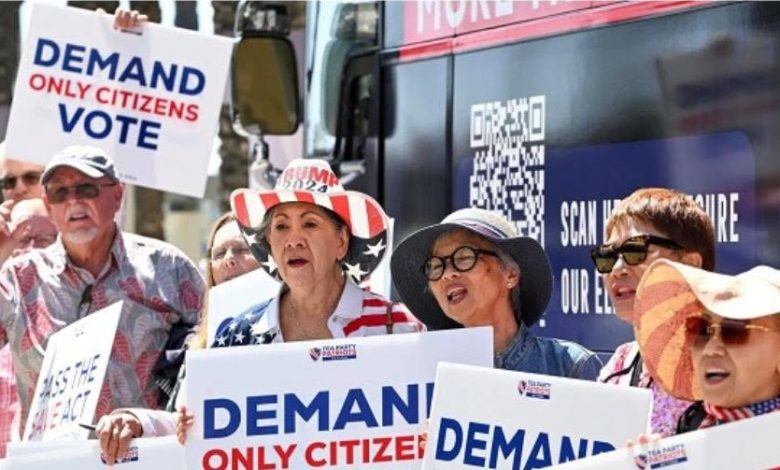
The fight over the SAVE Act is not just another Washington policy dispute. For millions of Americans, it has become a test of whether elected officials are serious about protecting the integrity of federal elections.
The Safeguard American Voter Eligibility Act would require documentary proof of U.S. citizenship when registering to vote in federal elections. Supporters argue that this is a basic, commonsense safeguard: American elections should be decided by American citizens, and the registration system should be strong enough to prove that standard before a ballot is ever cast.
That should not be a radical idea.
After years of public distrust surrounding elections, lawmakers had an opportunity to support a measure aimed at restoring confidence. Instead, those who voted against the SAVE Act gave voters another reason to believe Washington is more interested in political convenience than election security.
To be clear, noncitizens are already prohibited from voting in federal elections. Critics of the SAVE Act also argue that proven cases of noncitizen voting are rare and that stricter documentation rules could create barriers for eligible citizens who do not have easy access to passports, birth certificates, or updated legal documents. Those concerns should be taken seriously.
But there is another concern that cannot be dismissed: public confidence matters.
A voting system does not only need to be lawful. It must also be trusted. When Americans believe the rules are loose, inconsistent, or vulnerable to abuse, faith in the entire democratic process weakens. The SAVE Act’s supporters see citizenship verification as a necessary step toward rebuilding that trust.
That is why the political cost of opposing the bill could be real.
Voters who care deeply about election integrity are unlikely to forget which lawmakers stood in the way. Whether those lawmakers are Democrats or Republicans, the message many citizens heard was the same: when given the chance to strengthen citizenship verification, they said no.
For Republicans who opposed the measure, the backlash may be especially intense. Many conservative voters view election security as a defining issue, not a minor legislative detail. A Republican who campaigns on secure elections but refuses to support citizenship verification risks being seen as another Washington insider who talks tough at home and folds under pressure in Congress.
For Democrats, the political calculation is different but still risky. Many Democratic lawmakers argue that the SAVE Act could suppress eligible voters. But opponents of the bill must explain why citizenship verification is unreasonable when citizenship itself is already the legal requirement for voting in federal elections.
That is the central question voters will ask: If only citizens may vote, why is proving citizenship before registration considered too much to ask?
The SAVE Act debate also exposes a deeper divide in American politics. One side believes stronger verification is essential to prevent even the possibility of illegal participation. The other side believes additional documentation requirements could burden lawful voters and solve a problem they argue is not widespread.
Both arguments deserve scrutiny. But elected officials should understand this: dismissing voter concerns as paranoia is not a strategy. It is a mistake.
Americans want elections that are open, lawful, transparent, and secure. They want eligible citizens to vote without unnecessary obstacles, but they also want confidence that every registration is legitimate. Any serious election reform should address both concerns.
The lawmakers who voted against the SAVE Act may believe they made a defensible policy choice. But voters who prioritize election integrity may see something else entirely: a refusal to close a loophole before it becomes a larger problem.
That perception could follow these politicians into the next election cycle.
In primaries and general elections alike, candidates who opposed the SAVE Act should expect tough questions from voters, activists, and challengers. They should be asked why they rejected stronger citizenship verification. They should be asked what alternative they support. And they should be asked whether they believe public trust in elections is worth restoring.
Because for many Americans, this issue is not negotiable.
Election security is not a slogan. It is the foundation of self-government.
Any politician who treats that foundation casually should not be surprised when voters respond with equal seriousness at the ballot box.
The message from election-integrity voters is simple:
Secure the vote. Prove citizenship. Restore trust.
And to every lawmaker who voted against the SAVE Act, the warning is just as clear:
The voters are watching — and they will remember.