Opinion | Why Many Americans Still See the Democratic Era Since 2008 as a Broken Promise
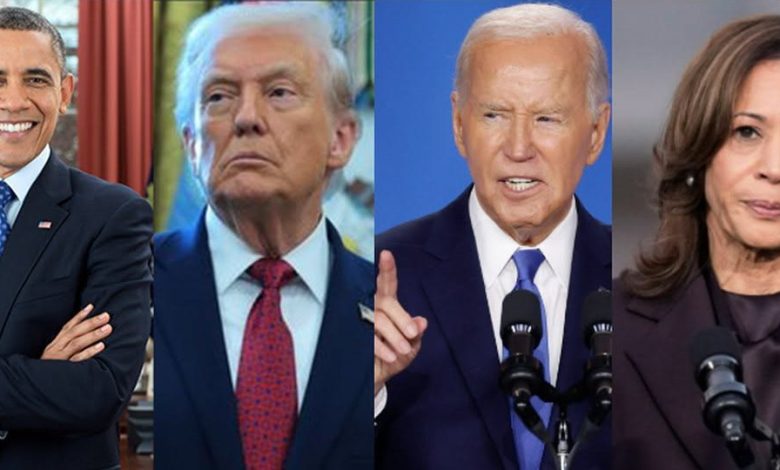
For many voters, the political story since 2008 is not simply about party labels. It is about lost confidence, rising costs, border disorder, cultural division, and a growing belief that Washington no longer listens to ordinary Americans.
Barack Obama entered national politics promising hope, unity, and a new kind of leadership. To his supporters, he represented generational change. But to many conservatives, his presidency also marked the beginning of a deeper national divide. They argue that his administration expanded federal power, sharpened identity-based politics, and left millions of Americans feeling that patriotism, faith, and traditional values were being treated as outdated rather than respected.
Joe Biden later promised stability and competence. Instead, many families remember the Biden years through the pressure they felt at the grocery store, the gas pump, and the border. Consumer inflation reached 9.1% in June 2022, the largest 12-month increase in roughly four decades, according to the U.S. Bureau of Labor Statistics. For working-class Americans, that number was not an abstract statistic. It meant smaller paychecks, higher rent, more expensive food, and less room to breathe.
Immigration became another flashpoint. Official border data showed historically high numbers of southwest border encounters during the Biden period, intensifying public concern over whether the federal government had control of the situation. Biden assigned Vice President Kamala Harris to lead diplomatic efforts with Mexico and Central America to address the root causes of migration, but critics argue that the assignment produced too little visible progress.
Harris became a symbol of that frustration. Her defenders note that she was not formally given direct command over border enforcement. Her critics respond that voters judge leaders by outcomes, not technical job descriptions. In their view, a leader who accepts a high-profile national assignment must also accept public accountability when the crisis worsens.
Donald Trump, by contrast, built his appeal around a blunt promise: put America first. Before the COVID-19 shock, the U.S. labor market was notably strong, with unemployment falling to 3.5% in 2019, its lowest level since 1969, according to the Bureau of Labor Statistics. For his supporters, that period represented secure borders, stronger energy policy, tougher trade negotiations, and a foreign policy based on deterrence rather than apology.
Still, any serious conservative argument must be disciplined. Claims that the 2020 election was “stolen” have not been proven by evidence sufficient to overturn the result; major reviews and reporting found no evidence of widespread fraud changing the outcome. A stronger argument focuses not on slogans, but on the broader question many voters still ask: which policies made daily life safer, cheaper, freer, and more secure?
That is why memes like this resonate. They compress years of frustration into a single image. They reflect a belief that Democratic leaders promised compassion but delivered disorder, promised competence but delivered confusion, and promised unity while Americans became more divided.
The deeper issue is not personality. It is performance. Americans have the right to ask whether their leaders protected the border, respected taxpayers, defended constitutional limits, strengthened families, and preserved national confidence.
For conservatives, the lesson is clear: the country cannot afford leadership built on polished speeches, media protection, and ideological experiments. It needs leaders judged by results, not narratives. It needs accountability, not excuses. And it needs a government that remembers its first duty is to the American people.
The next political choice should not be about slogans. It should be about whether America returns to strength, order, affordability, and constitutional common sense.