Schumer’s Supreme Court Rhetoric Shows How Dangerous Political Pressure on the Judiciary Has Become
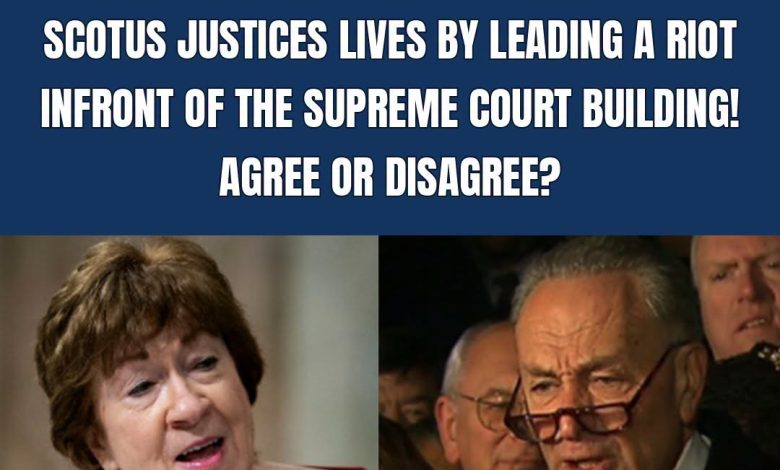
The independence of the Supreme Court depends on one simple principle: justices must be free to decide cases without political intimidation outside their doors. That principle was badly undermined when Senate Democratic leader Chuck Schumer stood near the Supreme Court in 2020 and directly named Justices Neil Gorsuch and Brett Kavanaugh, warning that they would “pay the price” if they ruled the wrong way on an abortion case. Chief Justice John Roberts publicly rebuked the comments, calling such language from a high-ranking elected official inappropriate and dangerous.
For many conservatives, Senator Susan Collins’ criticism of Schumer pointed to a larger problem: progressive leaders too often treat the Court not as a co-equal branch of government, but as a political obstacle to be pressured, shamed, or delegitimized. That is not constitutional accountability. It is institutional intimidation.
Protest is protected in America. Public disagreement with Supreme Court decisions is part of democracy. But there is a clear line between criticizing a ruling and applying personal pressure to named justices while a case is pending. When a Senate leader singles out individual members of the Court in front of a charged political crowd, the message can easily be heard as something more menacing than ordinary political speech.
Schumer later said he had chosen the wrong words and denied that he intended any threat. But the damage came from the moment itself. Words from powerful officials carry weight. When those words are aimed at judges, they can inflame activists, weaken public confidence, and make it harder for the judiciary to function without fear.
The Supreme Court cannot become a target zone every time one side dislikes the likely outcome of a case. If conservatives used the same language toward liberal justices, the media and Democratic leaders would almost certainly call it a direct assault on judicial independence. The standard should not change depending on which side controls the microphone.
The broader danger is that political anger is now being normalized around federal institutions. Courts are supposed to settle legal disputes through arguments, precedent, and constitutional reasoning—not through crowd pressure outside the courthouse. When elected officials blur that boundary, they encourage Americans to view judges as enemies rather than public servants carrying out a constitutional role.
This is why Collins’ warning still matters. The issue is not merely one speech or one political controversy. The issue is whether the country will maintain respect for the separation of powers. No justice—conservative, liberal, or moderate—should have to wonder whether a decision will bring personal threats encouraged by partisan rhetoric.
America’s legal system depends on restraint from those who hold power. Senators, presidents, governors, and activists all have the right to criticize the Court. But they also have a duty not to endanger it. When political leaders choose spectacle over responsibility, they weaken the very guardrails that protect every American from arbitrary power.
The safety and independence of the Supreme Court should never depend on party loyalty. It should be a shared national commitment. If the country wants to preserve ordered liberty, it must reject political intimidation at the courthouse steps—no matter who delivers it, and no matter which side benefits from the pressure.