Sunny Hostin’s Bodycam Call Raises Questions About Influence and Equal Accountability
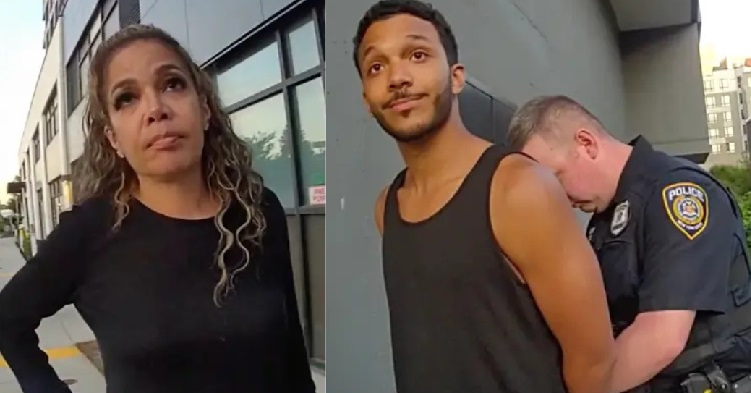
A police encounter involving “The View” co-host Sunny Hostin and her 24-year-old son, Gabriel Hostin, is drawing public attention after body-camera footage reportedly showed the television personality attempting to persuade officers not to issue him a trespassing citation.
The incident occurred on June 16 in New Rochelle, New York, after police encountered Gabriel on restricted property near active Metro-North railroad tracks by Station Plaza. According to accounts of the footage, Gabriel said he had been jogging and entered the area through an open gate.
Railroad tracks are not ordinary public pathways. Even when an entrance is unsecured, walking or running near active rail lines can create a serious risk for both the individual and railroad personnel. Officers ultimately issued Gabriel a trespass summons rather than placing him under arrest.
The encounter became more controversial when Sunny Hostin spoke with officers by phone.
During the conversation, Hostin reportedly identified herself as a co-host of “The View” and a former federal prosecutor. She also highlighted her son’s background, describing him as a Harvard graduate, a teacher working with children in the South Bronx and someone without a criminal record.
A parent’s instinct to defend a child is understandable. However, the decision to emphasize personal status, professional credentials and educational achievement has fueled criticism that Hostin was attempting to obtain favorable treatment unavailable to an ordinary family.
Did Professional Status Matter?
The central issue is not whether Gabriel is educated, employed or otherwise law-abiding. None of those facts determines whether a person entered restricted railroad property.
The more important question is whether celebrity, wealth or professional connections should influence how the law is enforced.
Americans who do not have access to prominent television platforms or prestigious résumés generally cannot call officers and establish their social standing during a citation. That disparity is why the footage has resonated with critics who already believe influential public figures live under a different set of expectations.
To their credit, the officers appeared to continue following established procedure. Gabriel received a summons, and there is no clear indication that Hostin’s intervention caused the citation to be withdrawn.
A Politically Uncomfortable Moment
The episode is especially notable because Hostin has frequently participated in national discussions about criminal justice, privilege, policing and equality under the law.
Critics argue that invoking her career and her son’s Harvard education conflicts with the principle that personal status should not determine legal consequences. A person’s résumé may provide context, but it does not erase a safety violation.
At the same time, some of the political criticism surrounding the incident goes beyond what the available facts establish. Receiving a summons rather than being arrested does not automatically prove that Gabriel was granted extraordinary leniency. Officers often have discretion in handling lower-level violations, depending on the law, circumstances and the individual’s cooperation.
The strongest criticism, therefore, is not that Hostin definitively succeeded in obtaining special treatment. It is that she appeared willing to invoke her influence in an effort to help her son avoid a consequence.
The Standard Must Apply to Everyone
This incident offers a straightforward test of a principle frequently invoked across the political spectrum: No one should be above the law.
That principle must apply to conservatives and progressives, working-class citizens and celebrities, high-school dropouts and Harvard graduates alike. Personal accomplishments may be relevant when a judge considers someone’s broader circumstances, but they should not determine whether police issue a lawful citation.
Parents will naturally advocate for their children. Public figures, however, must recognize that attempts to use fame or professional authority can undermine their credibility—particularly when they regularly speak about privilege and fairness.
The controversy surrounding Sunny Hostin is ultimately larger than one trespassing summons. It reflects a persistent public concern that connections can shape consequences, even in a country committed to equal justice.
Whether one agrees with Hostin politically or not, the proper standard remains simple: Restricted railroad tracks are dangerous, lawful police instructions should be respected, and accountability should not depend on a person’s name, education or social status.