Zohran Mamdani’s “Working Class” Word Salad Reveals a Bigger Socialist Problem
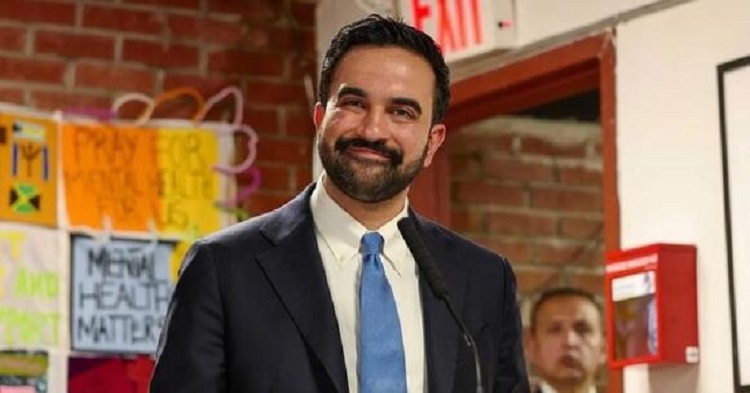
New York City Mayor Zohran Mamdani has built his political identity around one central promise: standing up for the working class. But when recently asked to explain exactly who belongs to that group, the democratic socialist struggled to provide a clear answer.
During an interview with The New York Times, journalist Lulu Garcia-Navarro asked Mamdani to define the constituency he so frequently claims to represent.
His response was remarkably broad.
“If you have to work to pay your bills,” Mamdani said, that could be one definition of belonging to the working class.
That answer may sound inclusive, but it immediately creates an obvious problem. Nearly everyone who receives a paycheck works to cover expenses—including lawyers, executives, physicians and other professionals earning several hundred thousand dollars a year.
When Garcia-Navarro asked whether someone making $250,000 annually should be considered working class, Mamdani admitted that he had not seriously considered where the category begins or ends.
That is not a minor semantic issue. It matters enormously when a politician is proposing higher taxes, expanded government programs and a redistribution agenda supposedly designed to transfer resources from the wealthy to working families.

A Definition That Includes Almost Everyone
Mamdani argued that the working class represents the only true majority in the country. He spoke about Americans seeking the “basic dignities of life” and suggested that anyone who works for a living can be placed under the same political umbrella.
But a definition that includes nearly everyone ultimately explains very little.
A hospital custodian earning $45,000, a public-school teacher earning $75,000 and a corporate attorney earning $250,000 may all work hard and pay bills. However, their financial circumstances, tax burdens and economic vulnerabilities are clearly not identical.
Income, wealth, job security, housing costs and access to benefits all affect how Americans experience the economy.
Ignoring those differences allows politicians to use “working class” as an emotional slogan without confronting the difficult details behind their policies.
Garcia-Navarro challenged Mamdani’s response, observing that it seemed like an easy answer to a complicated question. She was right to press him. If an administration intends to raise taxes on higher earners, voters deserve to know precisely who will pay more, who will receive benefits and where the dividing lines will be drawn.
The Convenient Politics of Ambiguity
Mamdani eventually suggested that his tax proposals would focus on people earning more than $1 million per year. Yet his broader definition of the working class remained unresolved.
Politically, the ambiguity is useful.
By describing almost everyone as working class, Mamdani can appeal simultaneously to low-income workers, middle-class families and affluent professionals. He can promise aggressive redistribution without directly telling six-figure earners that some of them may eventually be expected to finance it.
The broader the label becomes, the easier it is to build a coalition—and the harder it becomes to evaluate the policy honestly.
This is a recurring weakness in democratic socialist messaging. Politicians frequently invoke “the rich,” “the wealthy” and “the working class,” but those terms often change depending on the audience and the proposal being discussed.
A household earning $200,000 in a small Midwestern city may be financially comfortable. The same income in Manhattan, especially for a family facing high housing and childcare costs, may produce a very different standard of living.
Serious economic policy requires more than slogans. It requires clear thresholds, realistic cost estimates and an acknowledgment that tax increases can affect investment, employment, housing and the ability of businesses to remain in the city.
New Yorkers Need Specific Answers
New York already faces substantial concerns involving affordability, public safety, government spending and the cost of doing business. Residents do not need another political philosophy built around undefined categories.
They need to know how Mamdani’s agenda will affect their paychecks, rents, businesses and neighborhoods.
Will higher taxes encourage employers and high-income residents to leave the city? Will new government programs remain within budget? Will benefits reach struggling families, or will they become another expensive layer of bureaucracy? Will small-business owners be treated as productive members of the working economy or simply as another source of tax revenue?
These are practical questions, and they cannot be answered with vague promises about dignity and fairness.
Plumbers, truck drivers, nurses, teachers, construction workers and small-business owners understand the meaning of work. They earn their living, support their families and contribute to their communities. Many of them are less interested in ideological labels than in whether they can afford groceries, find safe housing and keep more of what they earn.

Slogans Are Not an Economic Plan
Mamdani’s difficulty defining the working class exposes a larger contradiction in modern socialist politics.
The movement depends heavily on dividing society into workers and wealthy elites. Yet the real American economy is far more complicated. Many small-business owners work long hours. Some high-income professionals carry heavy debt. Retirees may own valuable homes but live on limited monthly income. Families can earn substantial salaries and still struggle in cities with extremely high living costs.
A responsible leader must recognize those distinctions.
When a politician cannot clearly identify the group at the center of his agenda, voters have reason to question whether the agenda itself has been fully considered.
New Yorkers deserve policies grounded in measurable results: lower living costs, safer streets, stronger schools, efficient public services and an environment where workers and businesses can prosper.
They do not need a constantly expanding definition of the working class designed to make every government proposal sound compassionate.
Mamdani may be skilled at delivering progressive slogans, but governing America’s largest city requires precision, fiscal discipline and a willingness to answer difficult questions directly.
On the most basic question underlying his political brand—Who is the working class?—his answer created more confusion than clarity.