A crucial household tool that revolutionized food preparation techniques.
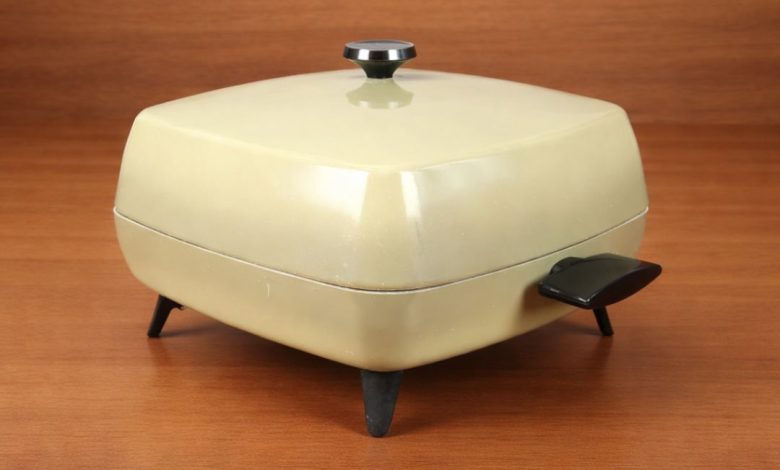
Name (What It’s Called)
- Primary name: West Bend Nonstick Electric Skillet
- Also commonly called: electric fry pan, electric skillet, countertop skillet
- What the image shows: A midcentury-style electric skillet with a fitted lid, raised on short legs, with side controls/handle hardware and a top knob for lifting the lid.
When It First Appeared (Time Period)
- Electric skillets became widely popular in American homes during the mid-20th century, especially from the 1950s through the 1970s, when countertop appliances surged in demand.
- This West Bend style is typically associated with the Midcentury Modern era, meaning it most often dates to roughly the 1960s–1970s based on its shape, color palette, and design language.
Who Created It (Maker / Origin)
- Manufacturer: West Bend, a U.S. appliance maker known for producing practical household and kitchen appliances.
- Important note: The electric skillet as a category was not created by one single person in the way a patented invention might be; instead, it was developed and commercialized by multiple appliance companies over time. West Bend’s role was producing their own branded models, including nonstick versions that matched modern home-cooking needs.
What It Does (Purpose and Function)
A vintage electric skillet is designed to provide controlled, countertop cooking without needing a stovetop burner.
Core uses
- Frying and sautéing: bacon, sausages, eggs, stir-fries, cutlets
- Pan-searing: chicken, pork chops, burgers
- Simmering and sauces: gravy, chili, curry, meatballs in sauce
- One-pan meals: casseroles, skillet pasta, rice dishes
- Keeping food warm for serving: buffet-style holding at a steady heat
Why it was a “big deal” in its era
- Temperature control: More consistent heat than many older stovetops.
- Portability: Cook anywhere there’s an outlet (useful for dorms, RVs, holiday gatherings).
- Capacity: A broad, flat cooking surface makes it easier to cook for groups.
- Lid cooking: The fitted lid helps trap heat and moisture, enabling braising and faster cooking.
Nonstick Feature: Why It’s Mentioned
- Nonstick coating made cooking and cleanup easier by reducing sticking and the amount of oil needed.
- On vintage units, nonstick surfaces can vary by generation; what matters most is the current condition:
- Light wear is common
- Deep scratches, flaking, or peeling are red flags for cooking use
Typical Parts and How They Work
- Skillet body: The heated pan where cooking happens.
- Lid with knob: Helps retain heat; knob allows safer lifting.
- Thermostat/heat control (often removable): Sets and maintains cooking temperature.
- Handles/feet: Keep it stable and slightly elevated to protect the counter surface.
Good Working Condition: What That Usually Means
If a listing says “good working condition,” it typically implies:
- The unit heats up properly
- Temperature control responds and cycles
- No obvious electrical issues (cord/control fit, no burning smell, no intermittent power)
Safe-Use Tips for a Vintage Electric Skillet
- Inspect the cord and control connection for cracks, looseness, or discoloration before use.
- Avoid metal utensils on nonstick surfaces; use silicone/wood to reduce damage.
- Use gentle cleaning methods (non-abrasive sponge) to preserve the coating.
- If the nonstick surface shows peeling or flaking, treat it as a display/collectible piece rather than a daily cooker.
Why Collectors and Home Cooks Still Like Them
- Midcentury Modern design: The silhouette and color fit vintage decor.
- Practical utility: Still performs everyday tasks well if maintained.
- Made in USA appeal: Many buyers value older American-made small appliances for sturdiness and nostalgia.