My dad bought these at a garage sale. They’re solid brass and open on the inside. Any ideas?
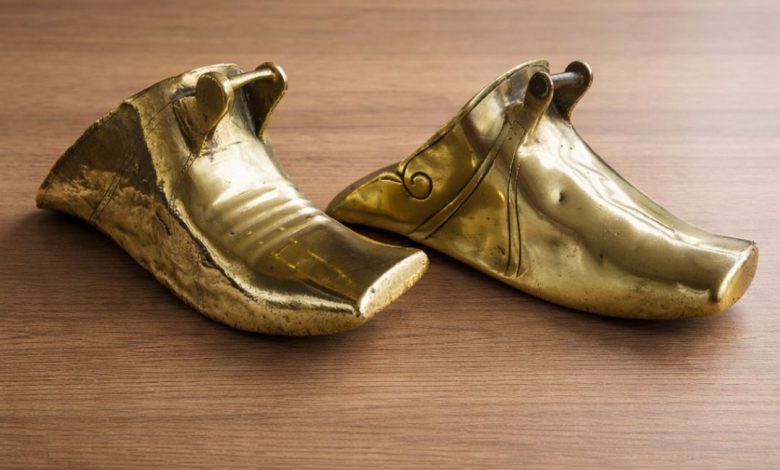
The objects in the photo match Spanish-style, shoe-shaped brass saddle stirrups, often repurposed or marketed as “wall pockets” in Spanish Revival / equestrian décor. Their heavy brass construction, curved “shoe” form, and decorative scroll/engraved lines are typical of ornamental stirrup designs.
Common Names
- Brass saddle stirrups
- Spanish stirrups / shoe-shaped stirrups
- Antique brass stirrup wall pockets (decor use)
- Vintage Spanish Revival equestrian décor
When Did This Style First Appear?
- The stirrup (as an invention):
- The earliest stirrups emerged in Asia around the early centuries CE, then spread widely through Europe and the Middle East, transforming horseback riding by giving riders greater stability and control.
- The “Spanish-style shoe stirrup” look (as a recognizable design family):
- The shoe-like, enclosed stirrup forms are strongly associated with Spanish and Iberian riding traditions, and later with vaquero (Mexican/Western) horsemanship aesthetics.
- The décor boom (Spanish Revival):
- As home design trends, Spanish Revival and Mediterranean-inspired décor became especially popular in the early-to-mid 20th century (notably 1920s–1940s, continuing afterward). During this period, equestrian motifs—stirrups, bridles, bits, horseshoes—were frequently used as architectural and interior accents.
Who Created It?
Because pieces like these were commonly made by regional metalworkers, saddlers, and foundries, the exact inventor or single creator is usually not identifiable unless the item is stamped or documented. In practical terms:
- The original concept (stirrups) was developed by early horse cultures and craftsmen rather than a single named individual.
- These particular brass examples were typically produced by artisan workshops or foundries serving equestrian markets (and later decor markets), often unmarked.
Primary Purpose (Original Equestrian Function)
A stirrup’s job is simple but critical: it provides a foot support point for the rider. That enables:
- Mounting and dismounting more safely
- Improved balance in the saddle
- Better control during riding (turns, speed changes, uneven terrain)
- Stability for working riding (ranching, patrol, travel)
Secondary Purpose (How These Are Commonly Used as Home Décor)
These are frequently sold and displayed as Spanish Revival equestrian décor, often used in one of these ways:
- Wall pockets: mounted or hung to hold dried flowers, greenery, mail, or small umbrellas
- Entryway accent pieces: placed on a console as sculptural objects
- Bookends or shelf décor: their weight and shape make them visually strong anchors
- Fireplace/hearth décor: used as decorative accents near the mantel (not as tools)
- Planter holders (lightweight): used to cradle small faux arrangements (real soil can be too heavy unless mounted securely)
Key Visual Clues in the Photo (Why This ID Fits)
- Shoe-like enclosed form rather than a simple open ring
- Heavy brass body with aged patina and oxidation marks
- Decorative scroll/engraved detailing consistent with Spanish-influenced ornament
- Pairing (two matching pieces), common for stirrups and for symmetrical décor placement
Quick Collector Notes (What Typically Affects Value and Authenticity)
- Maker’s marks or stamps (when present, they help date and place origin)
- Weight and casting quality: heavier, well-cast brass often indicates higher-grade production
- Patina and wear: natural age wear can be desirable; harsh polishing can reduce character
- Mounting holes or brackets: may indicate intentional wall-pocket use versus purely equestrian use
Conclusion
This set is best described as antique/vintage brass Spanish-style saddle stirrups, widely appreciated today as Spanish Revival equestrian décor—often displayed or mounted as wall pockets. Historically, they trace back to the practical innovation of the stirrup—an accessory that changed riding forever—then later became a decorative statement piece in homes that favored Mediterranean and equestrian design themes.