A Father’s Grief, a Jury’s Verdict, and a Media Machine That Wouldn’t Let the Truth Breathe
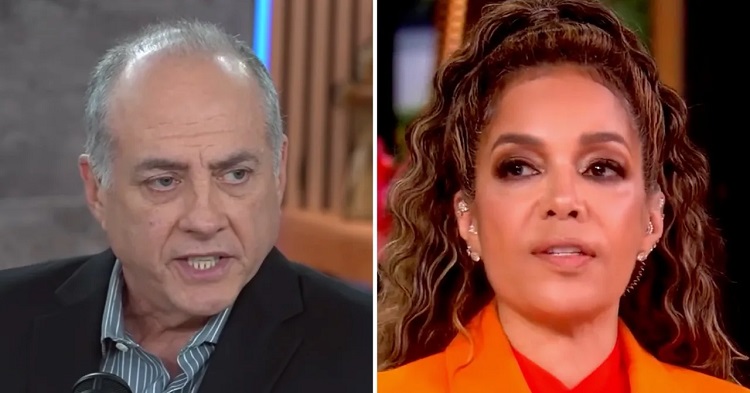
In the tragic killing of 17-year-old Austin Metcalf, America saw more than a courtroom case. It saw a grieving family forced to fight a second battle — not only for justice, but for the truth.
Austin’s father, Jeff Metcalf, has become a voice many Americans understand instinctively: a father who lost his son, watched the legal process unfold, and then had to endure public commentary that often seemed more interested in narrative than humanity.
The case itself was devastating. Austin Metcalf was killed during a high school track meet in Frisco, Texas, in April 2025. Karmelo Anthony, who was also a teenager at the time, admitted to the fatal stabbing but claimed self-defense. A Texas jury heard the evidence, weighed the testimony, rejected that defense, and found Anthony guilty of murder. He was later sentenced to 35 years in prison.
That should have been the center of the story: a young life lost, a family shattered, and a jury reaching a verdict after hearing the facts.
Instead, the case became another national argument.
Some commentators focused heavily on race, jury selection, and claims of unfairness. It is true that no Black jurors were selected for Anthony’s trial, and the defense raised concerns through a Batson challenge. But the judge allowed the jury to stand, and the trial continued under the rules of the court. That fact deserves serious discussion — but serious discussion is not the same as turning a grieving family’s pain into political theater.
That is where Jeff Metcalf’s anger becomes impossible to ignore.
He has repeatedly pushed back against people who speak about the case as if it were merely a cable-news segment or a social-media debate. To the public, this may be a “controversial case.” To the Metcalf family, Austin was a son, a brother, a twin, a teammate, and a future that will never happen.
That distinction matters.
Too often in modern America, tragedy is immediately fed into a political machine. Before families can bury their loved ones, activists, influencers, and television personalities start choosing sides. The facts become flexible. The victim becomes symbolic. The courtroom becomes secondary to the storyline.
But a murder case is not a hashtag. A dead child is not a talking point. And a grieving father should not have to beg the country to remember that his son was a human being.
The jury heard evidence that most viewers at home did not. The jury listened to witnesses, arguments, and legal instructions. The defense presented its theory. The prosecution presented its case. In the end, the jury convicted Anthony of murder and gave him a 35-year sentence.
That does not mean Americans cannot debate the justice system. They should. Jury selection, media coverage, race, self-defense law, school safety — all of these are legitimate issues. But they must be discussed with honesty, discipline, and respect for the people whose lives were permanently changed.
What Jeff Metcalf is demanding is not complicated. He is asking for truth over narrative, facts over performance, and basic decency over ratings.
Austin Metcalf’s death should remind the country of something simple but often forgotten: behind every viral case is a real family living with real loss. The public may move on to the next headline, but Austin’s parents and twin brother do not get to move on so easily.
America owes them more than political spin.
It owes them honesty.
It owes them restraint.
And above all, it owes Austin Metcalf the dignity of being remembered not as a weapon in someone else’s argument, but as a young man whose life was taken far too soon.