A Small, Heavy Tool With a Big Job
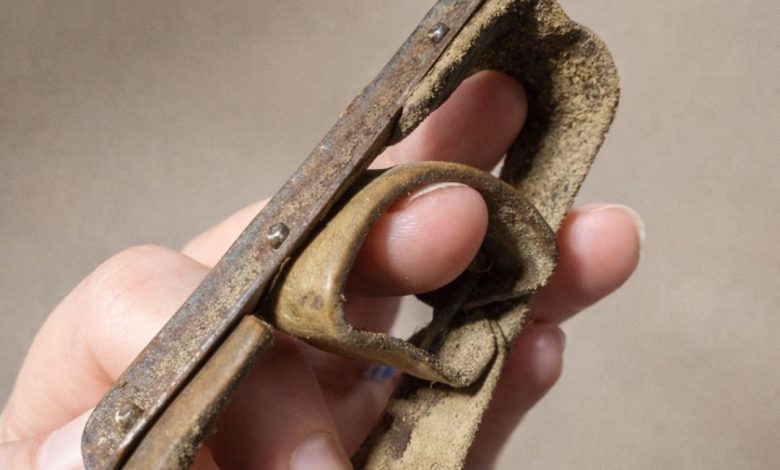
At first glance, the object in the photo looks like a strange pair of scissors—but the shape tells a different story. With its two finger loops, a thick cast-metal body, and a springy steel lever arm riveted along the top, this tool appears to be a vintage heavy-duty staple puller / tack lifter—the kind used when staples were larger, tougher, and commonly driven into wood, packaging, or upholstery.
What This Tool Most Likely Is
This piece strongly resembles a lever-style staple remover designed for thick staples or small tacks rather than paper staples.
Key identifiers in the photo include:
- Two rigid finger loops for grip and pulling force (not cutting motion like scissors)
- A curved pry “beak” at the tip to slide under a staple crown or tack head
- A steel top arm (spring/lever) fastened with rivets that helps apply leverage
- Cast-metal construction (often brass/bronze or iron), built for durability
How It Works (Simple Explanation)
The tool uses leverage, not slicing.
Typical use, step by step:
- Slip the curved tip under the staple or tack head.
- Pull upward while squeezing/gripping through the finger loops.
- The lever action helps lift the fastener out with less strain on your fingers.
In practical terms, it was a one-hand helper for removing stubborn fasteners from wood or thick materials.
Where Tools Like This Were Commonly Used
These were especially useful before modern disposable packaging and before lightweight plastic hand tools became common.
Likely settings included:
- Warehouses and shipping rooms (wood crates, cartons, strapping staples)
- Carpentry and repair work (small tacks, brads, light fasteners)
- Upholstery and furniture work (removing tacks and staples from frames)
- Offices with heavy packaging (not paper stapling—more like box staples)
Materials and Why It Looks “Rough”
The gritty surface and worn finish suggest age and long-term storage.
What you’re seeing is likely:
- Oxidation and grime embedded in the cast texture
- A mix of patina (normal aging) and light corrosion on the steel parts
- Rivets and contact points showing wear from repeated prying
How to Clean It Without Ruining It
If you want to restore it, the goal is usually function + preservation, not making it look brand new.
A careful approach:
- Brush off debris with a dry nylon brush or soft brass brush
- Use a small amount of light oil on moving joints and wipe excess
- Avoid aggressive sanding if you want to keep the original patina
- Store it dry to prevent new rust
Safety Notes (Important for Testing)
- Wear gloves and eye protection when prying metal fasteners
- Test on scrap wood, not valuable furniture
- Keep fingers clear of the tip—old tools can have sharp edges from wear
Why It’s a Great Find
Tools like this are small but historically practical: they reflect a time when items were built to be reused for decades and designed for real mechanical advantage. Even today, a well-made staple puller/tack lifter can outperform many lightweight modern versions—especially on stubborn fasteners.