l’m Positive You Will Not Know What This Is. Go Ahead And Prove Me Wrong (lf You Can)
What You’re Looking At
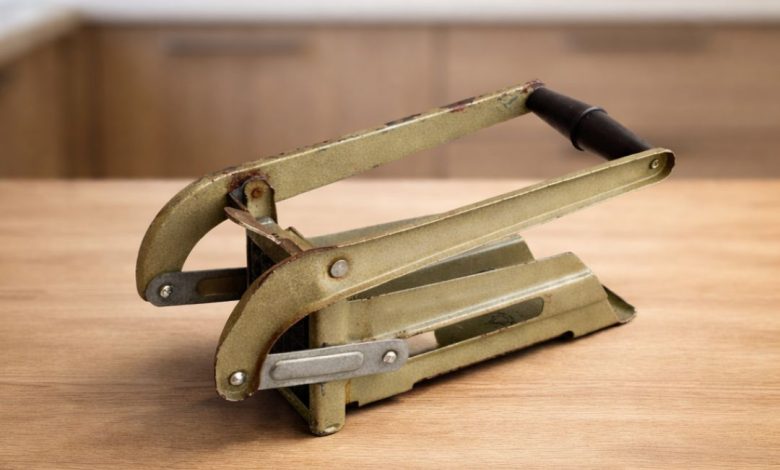
The object in the photo appears to be a vintage heavy-duty, lever-operated stapler/press, designed for thicker materials than a typical modern desk stapler. Its long handle, metal linkage arms, and sturdy base strongly suggest it was built to deliver extra force with less effort—ideal for workplaces that stapled a lot, stapled often, or stapled through dense stacks.
Key Visual Clues in the Photo
Several design elements point to a heavy-duty stapling or fastening function:
- Long lever handle with a black grip: provides mechanical advantage so the user can drive fasteners through thicker stacks.
- Twin pivoting side arms: a reinforced linkage system that keeps the press stable and aligned.
- Wide, low base: built to stay planted on a desk or workbench during repeated use.
- Elongated body/magazine section: commonly used to hold staples (or fasteners) in a feeding channel.
- All-metal construction with worn paint: typical of older office/industrial tools made to last decades.
What This Tool Was Used For
This kind of stapler was commonly used where standard staplers struggled. Typical uses included:
- Thick paperwork: invoices, forms, ledgers, multi-page packets
- Workroom and office production: collating and fastening repeated document sets
- Light packaging tasks: stapling cardstock, tags, or thin cardboard (depending on the exact model and staple size)
- Schools, print rooms, and back offices: environments that needed durability and speed
How It Works (Simple Mechanics)
The tool converts a downward push into a powerful press:
- You insert paper (or other material) into the stapling area.
- Pulling the long handle downward drives an internal pusher mechanism.
- A staple is fed from the magazine and forced through the material.
- The staple legs are typically folded (clinched) by a metal anvil inside the base, locking pages together.
- Releasing the handle returns the mechanism to its resting position, ready for the next staple.
Because of the linkage arms, the stapler can apply much higher pressure than a small desk stapler while still feeling smooth to operate.
Why Vintage Heavy-Duty Staplers Were Built Differently
Older hardware like this was engineered with a “repair, don’t replace” mindset:
- Metal gears and pivots instead of plastic parts
- Simple mechanical systems that can be cleaned and lubricated
- Rigid frames that resist flexing under heavy force
- Designed for years of repetitive use, not occasional household stapling
That’s why many vintage staplers still function today—even after decades of storage—once they’re cleaned and oiled.
How to Use It Properly (Practical Steps)
If someone finds a similar tool and wants to try it safely, the basic approach is:
- Check the magazine: many models open via a latch or sliding section to load staples.
- Use the correct staple type/size: heavy-duty staplers often require specific staples, not standard office strips.
- Test on scrap paper first: confirm clean feeding and proper clinching.
- Press straight down: avoid twisting the handle, which can cause jams.
- Clear jams carefully: remove staples with pliers—never force the lever.
What Makes It Valuable or Collectible
Collectors and vintage-tool fans often look for these traits:
- Brand markings or model stamps (sometimes on the side or base)
- Smooth lever action with no grinding or wobble
- Complete parts: springs, feed mechanism, base plate/anvil intact
- Original paint and finish (even with honest wear)
- Low rust and minimal pitting on moving joints
A fully working example is appealing not only as décor, but also as a functional piece of industrial-era office equipment.
Condition Notes Based on the Photo
From the image alone, the tool shows:
- Visible age and wear (small scuffs, paint wear)
- Solid structure (no obvious cracks or major bends)
- A handle grip that appears intact, which is a good sign for usability and comfort
Basic Cleaning and Care
To keep a vintage lever stapler working well:
- Dust and wipe with a soft cloth first (avoid soaking).
- For light rust: use gentle rust removal (fine steel wool or a rust eraser) carefully on affected spots.
- Add a drop of light machine oil to pivot points (wipe excess).
- Store in a dry place to prevent new corrosion.
- Keep staples and the feed channel clean and debris-free to reduce jams.
Why Tools Like This Still Matter
Beyond nostalgia, this kind of tool is a reminder of an era when everyday workplace objects were built for strength, longevity, and repairability. A vintage heavy-duty stapler is both a practical mechanism and a small piece of design history—proof that even simple office tools once had serious engineering behind them.