America’s Freedom Is On The Ballot
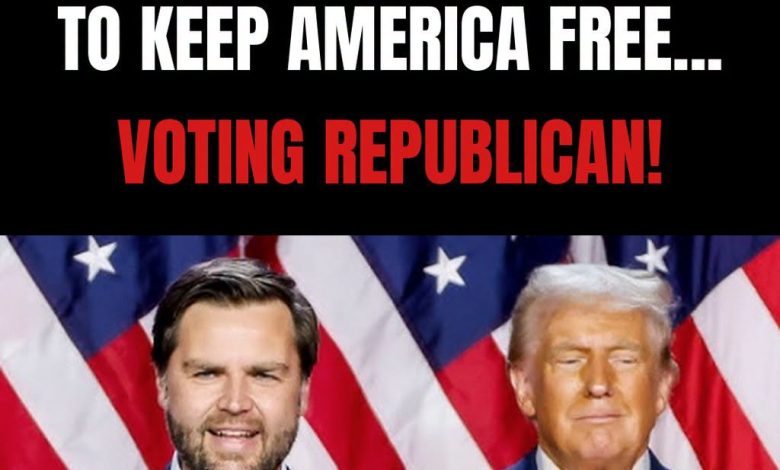
America is approaching a defining political moment. For many conservative voters, the central question is no longer simply which party offers the better collection of policies. It is whether the country will continue moving toward larger government, weaker borders, higher spending, and greater federal control—or return to the principles of limited government and individual liberty.
The contrast between the two major parties has become increasingly difficult to ignore.
At the southern border, years of inconsistent enforcement have placed enormous pressure on immigration authorities, local governments, schools, hospitals, and law-enforcement agencies. Illegal trafficking networks have exploited weaknesses in the system, while fentanyl and other dangerous drugs continue to devastate American communities.
A sovereign nation must be able to control who enters its territory. Border security is not an expression of hostility toward immigrants. It is a basic responsibility of government and an essential part of maintaining public safety, legal immigration, and national sovereignty.
The same concern applies to the economy. Persistent federal deficits and excessive government spending can contribute to inflationary pressure, higher borrowing costs, and declining purchasing power. Families feel the consequences whenever grocery bills, rent, insurance, utilities, and transportation costs rise faster than their wages.
Republicans argue that restoring economic stability requires spending restraint, lower regulatory burdens, domestic energy production, and tax policies that reward work, investment, and entrepreneurship. The alternative—continually expanding federal programs without sustainable funding—risks transferring today’s political promises to tomorrow’s taxpayers.
Energy policy is another major dividing line. While renewable technologies may play an important role in America’s future, an abrupt transition based on political mandates can increase costs and weaken reliability. The United States should pursue innovation without abandoning the oil, natural gas, nuclear power, and other resources that keep homes heated, factories operating, and transportation affordable.
Energy independence strengthens both national security and economic security.
Cultural and educational disputes have also moved to the center of American politics. Many parents believe schools have become too focused on divisive political theories and controversial social issues while failing to deliver strong results in mathematics, reading, science, and civics.
Parents—not distant bureaucracies or ideological organizations—should have a meaningful voice in what their children are taught. School choice, curriculum transparency, and parental rights should be treated as fundamental principles rather than partisan demands.
The Second Amendment remains another critical concern. Law-abiding gun owners should not be punished for crimes they did not commit. Policymakers should focus on violent offenders, illegal firearms trafficking, mental-health intervention, and effective policing rather than imposing sweeping restrictions on responsible citizens.
Constitutional rights should not disappear whenever the government faces a difficult policy problem.
These debates ultimately concern the proper role of government. Should Washington control more of Americans’ healthcare, education, energy use, speech, and economic decisions? Or should authority remain closer to individuals, families, communities, and states?
Conservatives believe that freedom depends on limits. Government must be strong enough to defend the country and enforce the law, but restrained enough to respect the people it serves.
For voters who prioritize secure borders, fiscal discipline, parental authority, constitutional rights, domestic energy, strong national defense, and traditional civic values, Republican candidates offer the clearest path forward.
No political party is entitled to unconditional loyalty, and Republican officials should also be held accountable when they abandon their promises or expand government power. But the broader choice remains unmistakable: continued centralization or a renewed commitment to self-government.
America’s future will not be preserved through complacency. It will be determined by citizens who study the issues, challenge political propaganda, demand honest leadership, and participate in the democratic process.
The next generation deserves a country defined by liberty, opportunity, responsibility, and equal justice—not permanent dependency on an ever-expanding federal government.
The republic can still be strengthened, but only if Americans choose leaders willing to defend its borders, control its spending, respect its Constitution, and trust its people.