What Kind of Role Models Should America’s Daughters Follow?
Raising daughters in modern America involves more than helping them succeed academically or professionally. Parents must also decide which public figures represent the values they want their children to carry into adulthood.
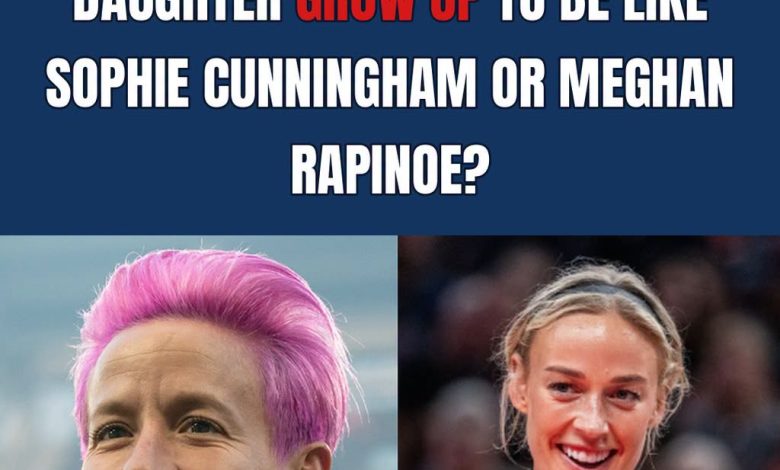
The contrast between former soccer star Megan Rapinoe and professional basketball player Sophie Cunningham illustrates a broader cultural debate over patriotism, personal responsibility, political activism, and the meaning of female strength.
Rapinoe became internationally recognized not only for her athletic accomplishments but also for her political advocacy. Her decision to kneel during the national anthem, criticism of political leaders, and support for progressive social causes made her an influential figure far beyond the soccer field.
Her supporters view that activism as courageous. They argue that athletes should use their platforms to challenge injustice and speak for people who feel ignored.
Many conservative parents, however, see a different message.
They question whether repeatedly presenting America through the language of oppression, grievance, and institutional failure encourages young people to improve their country—or simply teaches them to resent it. They also worry that athletic achievement is increasingly treated as a platform for ideological campaigning rather than an example of discipline, teamwork, and perseverance.
Young girls need to understand that gratitude and criticism are not mutually exclusive. America can be imperfect without being unworthy of respect.
Sophie Cunningham represents a different public image. Her appeal to conservative audiences comes from her competitive intensity, direct personality, and willingness to express views that do not always conform to the dominant culture surrounding professional sports.
Supporters see Cunningham as an example of a woman who can be strong, feminine, patriotic, and fiercely competitive without making political activism the centerpiece of her identity. Her public image emphasizes toughness on the court, loyalty to teammates, and pride in the opportunities available to American athletes.
The comparison is not simply about choosing one athlete over another. It concerns the qualities society celebrates and passes on to the next generation.
Parents naturally want their daughters to be confident enough to defend their beliefs. But confidence should not depend on seeing oneself as a permanent victim. Real empowerment comes from developing competence, accepting responsibility, overcoming setbacks, and treating success as something earned rather than owed.
Character is shaped by the examples young people repeatedly encounter.
When public figures suggest that American institutions are fundamentally hostile or illegitimate, young audiences may absorb the idea that achievement is less important than grievance. When athletes focus on preparation, resilience, teamwork, and gratitude, they demonstrate that personal strength can exist without constant political confrontation.
This does not mean athletes must remain silent about public issues. Every American has the right to speak freely. But free speech also includes the public’s right to evaluate whether a celebrity’s message is constructive, divisive, persuasive, or misguided.
Patriotism should not require pretending that the country has never made mistakes. At the same time, criticism should not become contempt for the flag, the nation, or the people whose sacrifices created the freedoms that activists use.
The healthiest message for America’s daughters is neither blind obedience nor permanent resentment. It is responsible citizenship grounded in courage, gratitude, discipline, and independent thought.
For families guided by faith, community, and national pride, Cunningham may offer the more compelling example. She represents an approach to female achievement centered on competition and personal responsibility rather than ideological conformity.
Rapinoe’s legacy will remain influential, especially among people who believe protest should be central to an athlete’s public role. But parents are not required to accept every celebrity promoted as a cultural hero.
They have the responsibility to ask harder questions: Does this person encourage young women to become stronger and more capable? Does she teach them to respect others while standing firm? Does she inspire gratitude for opportunity—or bitterness toward the country that provided it?
America’s daughters deserve role models who teach them to compete without apology, think without permission, and appreciate the freedoms they inherit.
The figures society celebrates today will help determine the character of the women leading America tomorrow.