Couple With Dwarfism Build a Family of Five Despite Medical Risks and Public Criticism
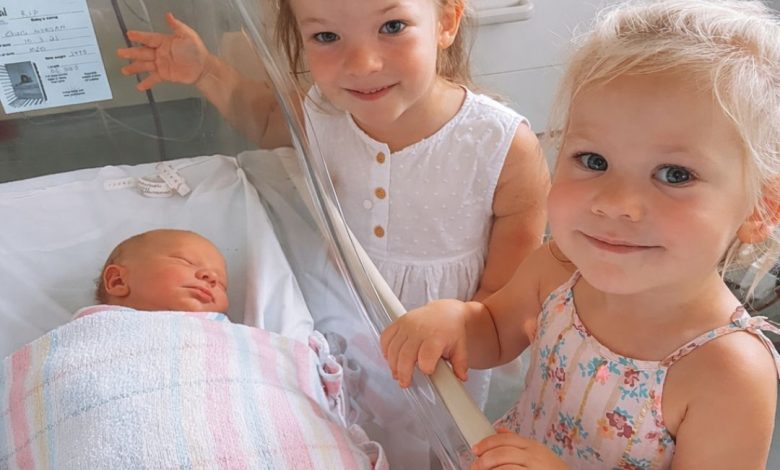
For many couples, questions about having children arrive almost immediately after marriage. Friends, relatives, and even strangers can feel entitled to weigh in—asking when the first baby will come, whether a second is planned, and how big the family “should” be. For Charli Worgan and her husband Cullen, an Australian couple who both live with different forms of dwarfism, those questions have often turned into harsh judgment about decisions that are deeply personal.
Yet Charli and Cullen chose to pursue the family life they wanted—and today they are raising three children, navigating both the medical realities of pregnancy and the social pressures that come with being highly visible online.
A Private Decision That Became Public
Charli shared major moments of her life on social media, including announcing the birth of their first child. What she didn’t anticipate was how quickly some people would turn that announcement into criticism, acting as though her family planning was open for public debate..
As the couple’s story reached wider audiences, a recurring theme emerged: some observers questioned why they would have children at all, focusing on perceived risks rather than the family’s right to make informed decisions for themselves.
Why Pregnancy Carried Higher Stakes for This Couple
Charli explained that each pregnancy came with serious uncertainty because their baby could:
- inherit one parent’s form of dwarfism
- be average height
- or, in the most severe scenario, inherit both parents’ forms of dwarfism, which doctors warned could be fatal.
This wasn’t a matter of guessing or hoping for the best. It meant the couple had to make careful choices about testing, monitoring, and planning—often far earlier than most expectant parents.
The Genetic Testing Charli Underwent
When Charli became pregnant with their third child, she chose to speak openly about the medical process—describing not only the emotional stress, but also the physical procedures involved.
One of the most significant steps was Chorionic Villus Sampling (CVS), a test used to examine the baby’s genetic makeup early in pregnancy. Charli described it as comparable to amniocentesis and emphasized how intense it felt physically, noting it involved a needle through the abdomen to collect placental tissue and carried a miscarriage risk she described as 2%..
She also highlighted the timing: while many parents celebrate reaching 12 weeks as a milestone when they can happily share news, she was facing a high-stress medical appointment and waiting for results that could change everything..
A Difficult “What If” Scenario
Charli and Cullen’s two daughters, Tully and Tilba, both have dwarfism. When preparing for their third child, the couple wanted clarity about whether the baby would inherit dwarfism as well—and whether the pregnancy presented the most severe genetic outcome.
Charli stated that if the baby had inherited both parents’ forms of dwarfism, the pregnancy would not be viable in the way doctors described, and they would have faced the prospect of ending the pregnancy. She shared that period of uncertainty as an emotionally heavy moment—one where the future depended on test results rather than hope alone.
The Outcome: “Baby Rip” and a Growing Family
Charli later shared positive news: their son, Rip, was born in February and, according to her, is thriving—much like his older sisters.
With that, the couple became a family of five, a reality they had wanted, worked toward, and medically managed with care.
Responding to Critics With a Call for Kindness
Charli did not deny that criticism exists. Instead, she framed her openness as a way to help others understand that having children in her circumstances was not casual or reckless—it involved careful consideration, testing, and emotional strain. She emphasized that people who doubt or judge should recognize the complexity behind the decision and, above all, prioritize compassion.
She also offered a broader reflection on parenting: that motherhood does not come with a single “correct” formula—and that families should be given room to find what works for them without being shamed for it.
Key Takeaways From Their Story
- Charli Worgan and Cullen are an Australian couple with different forms of dwarfism who chose to have children despite public criticism.
- Each pregnancy carried uncertainty because the baby could inherit one form of dwarfism, be average height, or inherit both forms, which doctors warned could be fatal.
- During her third pregnancy, Charli described undergoing CVS genetic testing, including the physical difficulty of the procedure and the 2% miscarriage risk she cited.
- Their children include daughters Tully and Tilba, and son Rip, whom Charli reported is thriving.
- Charli’s central message in addressing critics: major family decisions are complex, personal, and deserving of kindness rather than judgment.