Deep Underground, a Forest Thrives in a Massive Sinkhole
Where the Discovery Happened
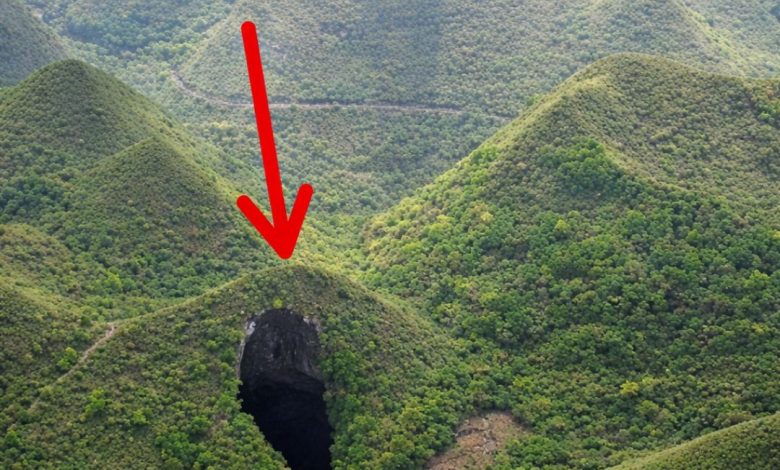
Deep within Leye-Fengshan Global Geopark in Guangxi Zhuang Autonomous Region, China, scientists discovered a remarkable sinkhole that hides a thriving woodland about 630 feet (nearly 200 meters) below the surface. The area is recognized by UNESCO for its rare and dramatic karst landscapes.
What Makes This Geopark Unique
The geopark is largely made of sedimentary carbonate rocks dating from the Devonian to Permian periods, creating ideal conditions for karst formations. Over long periods, water and erosion shape the land into striking natural structures, including:
- Caves and extensive cavern systems
- Natural bridges and stone arches
- High karst peak clusters (fengcong)
- Poljes (large flat-floored karst depressions)
- Karst springs
- Karst windows (tiankengs)
- Huge cavern chambers and speleothems (mineral cave formations)
The New Sinkhole: Size and Structure
In May 2022, researchers identified a newly documented sinkhole with extraordinary dimensions:
- Length: over 1,000 feet
- Width: about 490 feet
- Depth: nearly 630 feet
Inside, the team found dense plant growth, including old trees and a range of vegetation that may include previously undocumented species.
A Hidden Ecosystem Underground
One of the most fascinating aspects of this sinkhole is that it contains three cave openings, creating multiple connected micro-habitats. These openings may shelter unique plant and animal communities, protected from surface conditions.
Key observations included:
- Ancient trees thriving in the sheltered environment
- A potentially distinct ecological system shaped by light, humidity, and isolation
- The possibility of species not yet recorded by science, especially in cave zones
Why Karst Landscapes Create Sinkholes
Sinkholes typically form in karst regions because carbonate rock can dissolve slowly in weak acid. The process works like this:
- Rainwater seeps into the ground and absorbs carbon dioxide (CO₂) from soil and air.
- This creates slightly acidic water.
- The water flows through cracks in the bedrock, gradually dissolving the rock and enlarging underground spaces.
- When the hollow spaces become too large, the roof collapses, forming a sinkhole.
How China’s Karst Sinkholes Compare Globally
Karst features vary depending on climate, rock type, and geography. Southern China’s karst is especially dramatic, often producing:
- Massive sinkholes
- Large cave entrances
- Deep, complex underground systems
In other parts of the world, karst areas may still form sinkholes and caves, but they can be smaller or less visually striking.
A Region of Many Sinkholes
This new discovery is reported as the 30th known sinkhole in the surrounding area, underlining how geologically active and complex the landscape is.
China is also home to Xiaozhai Tiankeng, often described as the world’s largest sinkhole, with dimensions commonly cited as:
- Depth: about 2,100 feet
- Length: about 2,000 feet
- Width: about 1,760 feet
It even contains a stream running through it, making the scenery feel almost unreal.
Why This Discovery Matters
This underground woodland is more than a geological curiosity. It is a reminder that:
- Earth still holds hidden ecosystems in extreme places
- Some environments may protect rare or unknown species
- Protecting geoparks and karst systems helps preserve both biodiversity and geological heritage