Found peeking out of the ground, dense and weighted in.
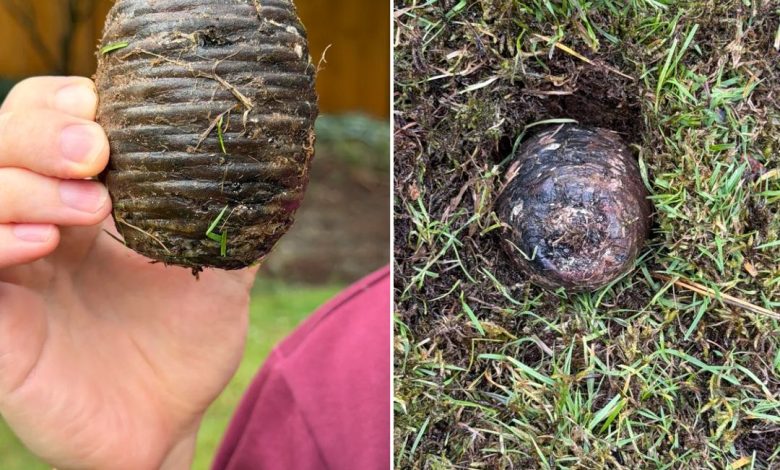
At first glance, the object looked more like a buried artifact than something from a tree. Its dark color, dense shape, and rough, uneven surface gave it the appearance of something old, heavy, and mysterious. For many people, it would be easy to mistake it for a strange seed pod, a fossil, or even a manmade object pressed into the ground long ago.
But the explanation is much simpler. The unusual item is actually a deodar cedar cone, made even more eye-catching by dirt, moisture, and natural wear.
What makes this discovery so surprising is the way a deodar cedar cone differs from the lighter, more familiar cones many Americans are used to seeing under pine trees. Instead of looking thin or delicate, these cones often appear solid, compact, and almost sculptural. Their deep ridges and heavy form can make them seem far denser than expected, especially after sitting outdoors for a long time.

The deodar cedar tree, known for its soft needles and sweeping branches, produces cones that naturally have a sturdier look. When one falls to the ground and collects mud or begins to weather, it can take on an even darker and heavier appearance. That is why this particular cone seemed so unusual at first sight.
Part of the fascination also comes from where it was found. Discovering something odd in your own backyard can instantly spark curiosity. A simple object becomes a small mystery, leaving people to wonder whether they have found a rare nut, a seed pod, or a forgotten relic. Nature often has a way of turning everyday items into puzzles.
In the end, this backyard enigma was not an ancient object or anything manmade. It was simply a weathered deodar cedar cone whose appearance had been transformed by the elements. Sometimes the most interesting discoveries are not rare at all. They just need a second look to reveal what they really are.