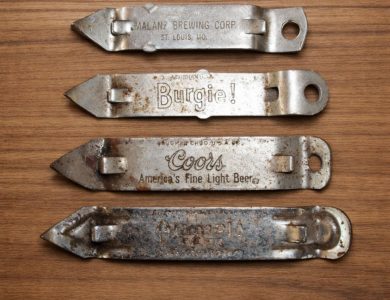
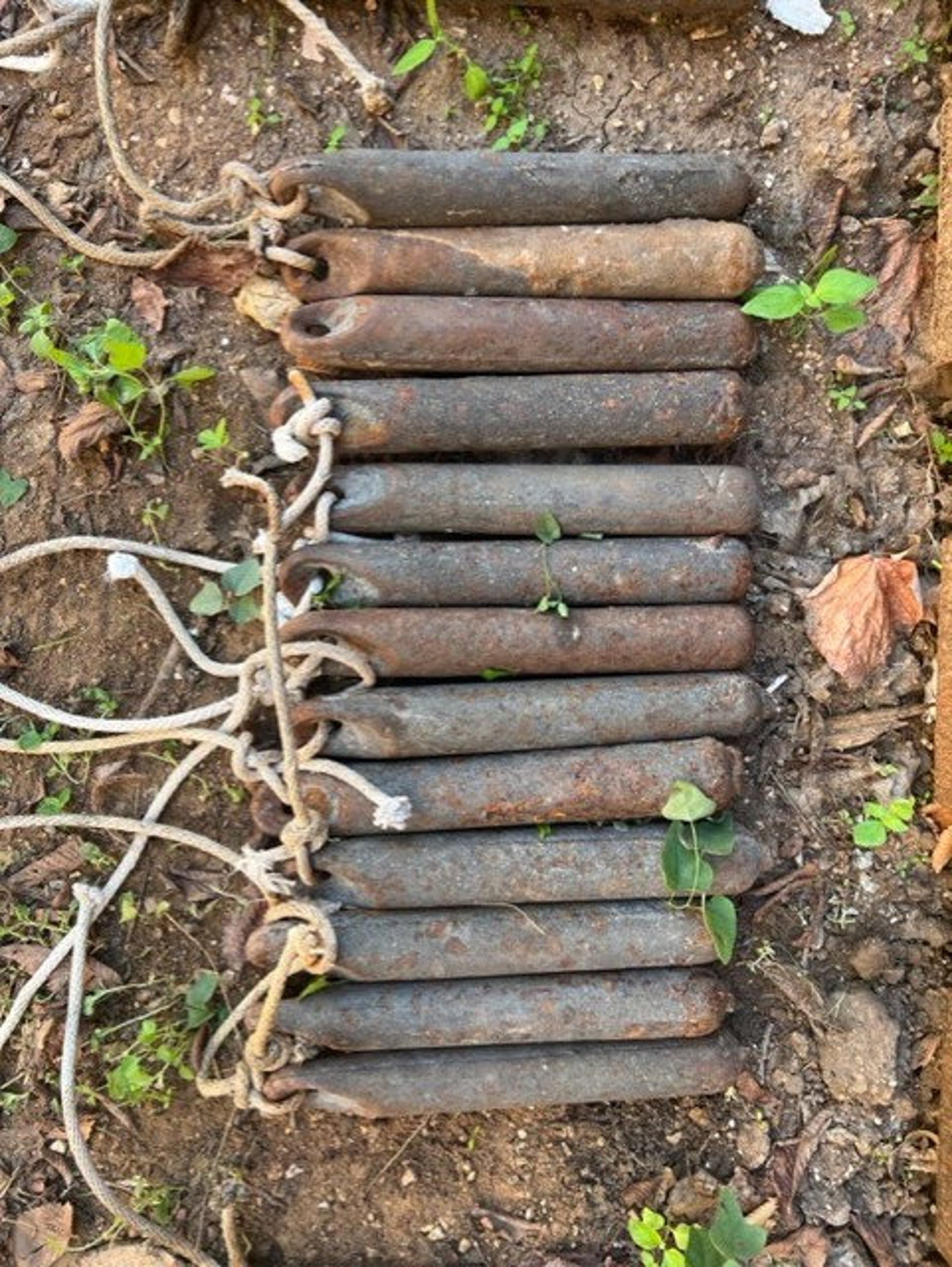
I found a bunch of these when I was planting, and I wasn’t sure what they were…
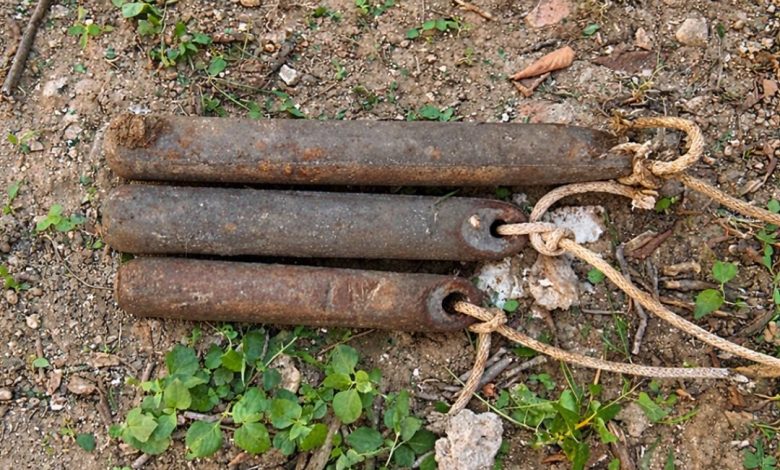
What Are Vintage Window Weights?
Vintage window weights are heavy counterweights—typically cast iron—hidden inside the side channels of traditional sash window frames. Their job is simple but critical: they counterbalance the moving window sash, making it easier to raise, lower, and hold in place.
From the images, these weights appear as:
- Long, cylindrical cast-iron pieces with heavy surface rust and age patina
- Attachment points such as a hole, loop, or hook at one end
- Rope connections (often old cord) that would run over a pulley inside the window frame
How They Work (The Rope-and-Pulley System)
Traditional sash windows were designed around a practical balancing method:
- A rope (or chain) attaches to the window sash
- The rope runs up and over a pulley at the top of the frame
- The rope descends inside a hidden channel and attaches to a cast-iron weight
- As the sash moves up, the weight moves down (and vice versa), creating balance
Key benefits of this system:
- Smooth operation (less force needed to move the window)
- Position control (the sash can stay open at a chosen height)
- Reduced wear on hinges or hardware because the weight shares the load
A Brief History: From the 17th Century to Peak Craftsmanship
Vintage window weights are closely tied to the evolution of sash windows and early building technology.
- 17th century beginnings: Early sash windows relied on basic rope-and-pulley concepts, built with practical materials and straightforward joinery.
- 19th century refinement: As craftsmanship advanced, sash windows became widely associated with architectural elegance, and the weight system became more standardized.
- Early 20th century peak: Many homes from this period used cast-iron weights sized specifically to each sash, reflecting a time when buildings were engineered for durability and long-term repairability.
Why They’re More Than “Just Old Metal”
Even though window weights are usually hidden, they represent something bigger: a design philosophy built around longevity.
They reflect an era when:
- Parts were meant to be serviced, not replaced entirely
- Builders valued mechanical simplicity that could last decades
- Materials like cast iron were chosen for strength, stability, and consistency
In many historic buildings, keeping original window weights is part of preserving the building’s identity—quiet evidence of how homes were once made.
What Makes Vintage Window Weights Distinctive?
Not all window weights are identical. They can vary by:
- Length and diameter (to match different sash sizes)
- Weight (calibrated to balance the sash properly)
- End fittings
- Some have a drilled hole for rope knots
- Some have a loop or eyelet
- Some have a hook-like end for specific attachment styles
In many cases, older examples may show:
- Hand-finished surfaces
- Foundry marks or faint stamped numbers (often indicating weight class)
- Heavy patina from decades inside the frame cavity
Why Restoration Projects Keep or Replicate Them
In window restoration, vintage weights are often treated as original engineering worth saving, because they help maintain:
- Authentic window function (the sash feels “right” when properly balanced)
- Architectural integrity (historic windows operate as intended)
- Repair-friendly design (weights can be adjusted, re-roped, and reused)
Common Restoration Considerations
When working with older sash windows, restorers typically focus on:
- Re-roping: replacing old, frayed sash cord while keeping the weights
- Rebalancing: ensuring each sash has weights that match its actual mass (especially after glass repairs or paint buildup)
- Pulley maintenance: cleaning or replacing pulleys so the rope runs smoothly
- Channel condition: verifying the side pockets and weight channels are clear and intact
Why These Weights Still Matter Today
Modern windows often rely on springs, friction tracks, or sealed systems. Vintage weights highlight a different approach: simple physics paired with durable materials.
They remain relevant because they:
- Remind us that good design doesn’t have to be complex
- Demonstrate how buildings once prioritized service life and repairability
- Preserve the character and operation of traditional sash windows that define many historic streetscapes
Conclusion: An Overlooked Piece of Architectural Heritage
Vintage window weights may be out of sight, but they are far from insignificant. They are functional artifacts of historic construction, balancing everyday convenience with long-lasting craftsmanship. Appreciating them means appreciating the idea that buildings can be both beautiful and engineered to endure—one quiet counterweight at a time.