If you know what this is, you must be old.
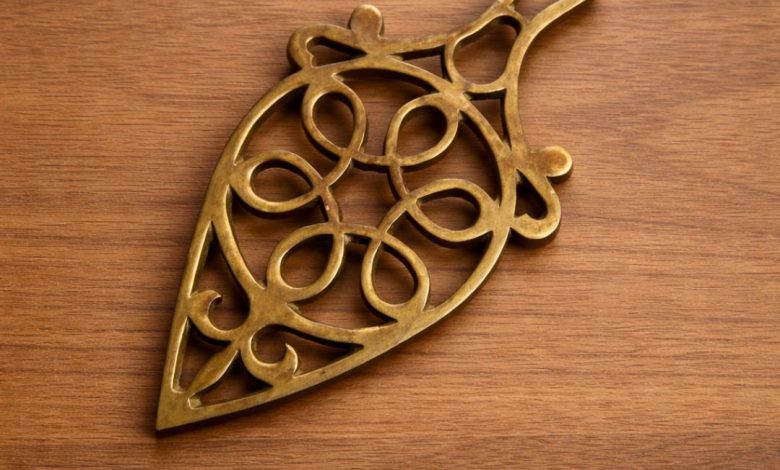
This object is commonly known as a vintage brass kitchen trivet or antique brass hot plate trivet. Due to its distinctive silhouette, it is often described as an iron-shaped trivet with an openwork, pierced decorative pattern.
Historical Period
- Estimated period of origin: Late 19th century to early–mid 20th century
- Such trivets were especially popular in Victorian and Edwardian households and remained in use well into the early 1900s as functional kitchen accessories and decorative items.
Origins and Makers
- These brass trivets were typically produced by skilled metalworkers and foundries, rather than a single known inventor.
- Many examples were made in Europe (especially England and France) and later in North America, reflecting traditional domestic craftsmanship of the era.
- They were often sold through houseware suppliers, ironmongers, and general stores.
Design Characteristics
- Material: Solid cast brass
- Form: Iron-shaped outline with a pointed tip and handle-like top
- Structure:
- Pierced, openwork design allowing heat to dissipate
- Three short legs elevating the trivet above the table surface
- Surface: Naturally aged patina, showing small dark spots and wear consistent with long-term use
Primary Function
- Heat protection:
- Used to hold hot pots, kettles, pans, or serving dishes
- Prevents heat damage to wooden tables, countertops, or linens
- Stability:
- The raised legs create airflow underneath, reducing heat transfer
Secondary and Decorative Uses
- Kitchen décor: Adds a vintage or farmhouse aesthetic
- Wall display: Often hung as decorative metal art due to its ornate shape
- Collectible item: Valued by collectors of antique kitchenware and brass objects
Why It Was Important
- Provided a practical solution before modern heat-resistant surfaces were common
- Combined utility with ornamentation, reflecting the period’s emphasis on beauty in everyday household tools
Common Modern Appeal
- Appreciated for its craftsmanship and aged brass patina
- Fits well in vintage, rustic, cottage, or traditional kitchens
- Frequently used today as both a functional trivet and decorative accent