Nobody could guess what it was until the answer was finally revealed.
What the Tool Is Called
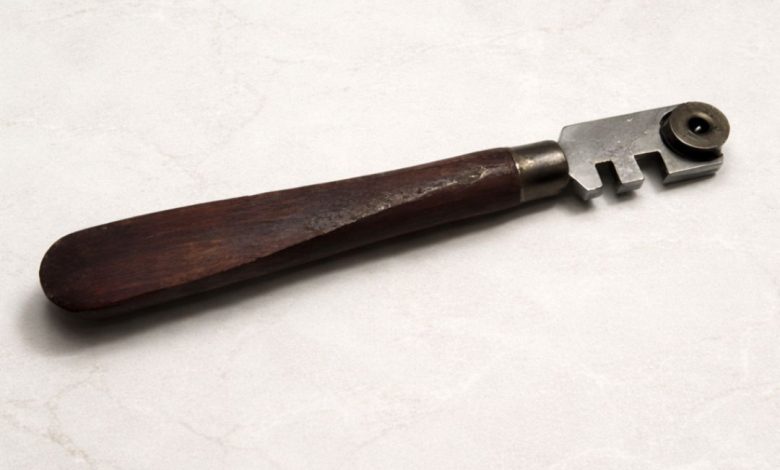
- Name (common): Glass cutter / glazier’s glass cutter
- Specific item shown: Shaw (England) 1–6 mm glass cutter with a rotating cutting-wheel head and wooden handle
- Markings on the head identify the maker: “SHAW ENGLAND” and the wheel dial marked 1–6
What It Does (Simple Explanation)
A glass cutter is used to score (scratch a controlled line into) the surface of glass. The glass is then snapped cleanly along that score line.
- It does not “saw” through glass. It creates a precise weak line so the sheet breaks exactly where you want.
Key Parts You Can See in the Photos
- Wooden handle: Provides grip and control for steady pressure.
- Metal head (marked SHAW ENGLAND): Holds the cutting mechanism.
- Cutting wheel/turret dial (marked 1–6): A rotating wheel assembly that typically lets the user index to a fresh cutting edge or a different wheel position.
- Notched front profile: Helps the head sit flat and stable while scoring, and can assist with controlled positioning along edges.
How It’s Used (Step-by-Step)
- Measure and mark the cut line on the glass.
- Place a straightedge along the line (for a straight cut).
- Hold the cutter upright and pull it across the glass with firm, even pressure.
- You should make one continuous score from edge to edge.
- Snap the glass along the score line (by hand, over a table edge, or with running pliers).
Typical Uses
- Window and picture-frame glazing
- Cutting replacement panes for cabinets, doors, or small windows
- Workshop projects using thin sheet glass (within the tool’s intended thickness range)
What “1–6 mm” Usually Means
- The 1–6 mm marking indicates the cutter is intended for thin to medium sheet glass in that approximate thickness range.
- On many cutters with a numbered wheel dial, the numbers also help the user rotate/index the wheel position (so you can move to another cutting edge position when performance drops).
When This Style Was Created (Background Timeline)
- Early glass cutting (centuries ago): Glass was commonly cut with diamond-point tools—effective, but expensive and requiring skill.
- Modern wheel-type glass cutters (19th century): The widely used, affordable cutting-wheel glass cutter design emerged in the mid-to-late 1800s, as inventors developed small hardened wheels that could score glass consistently.
- Why wheel cutters took over: They were more economical, easier to use, and well-suited to the growing trades of glazing and construction.
Who Created the Underlying Invention (Inventor/Origin of the Wheel Glass Cutter)
- The cutting-wheel concept is generally tied to 19th-century tool innovation, with patented wheel-type glass cutters appearing in the 1860s–1870s.
- One frequently cited early patent-holder for a wheel-style glass cutter is Samuel Monce (1869), associated with formalizing this type of mechanism.
- After that, many manufacturers refined the design into the familiar glazier’s wheel cutter used worldwide.
About the Maker and This Example (Shaw, England)
- The stamped branding “SHAW ENGLAND” indicates an English-made tool marketed for practical trade use.
- The wood handle, solid metal head, and indexed wheel dial are characteristic of 20th-century workshop and glazier tools, commonly found in toolboxes for routine glass work.
Why It Matters (Practical Value)
- A well-made wheel cutter like this is valued for:
- Consistent scoring on standard window glass
- Simple maintenance (keep the wheel clean; replace or rotate/index when worn)
- Long service life due to sturdy materials and straightforward construction