It used to be one of the most commonly used items. I don’t know anyone who wouldn’t know what it is.
What the Item Is
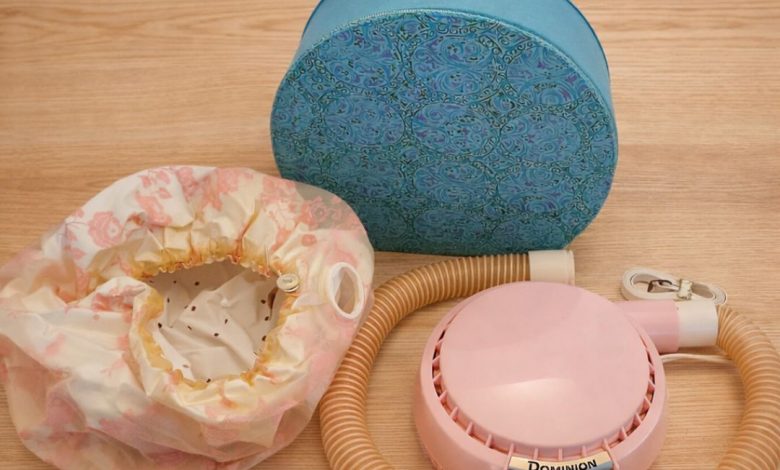
The photos show a Vintage Dominion Portable Bonnet-Style Hair Dryer—a compact, home-use hair-drying system designed to deliver warm air through a flexible hose into a fabric bonnet. The set typically includes:
- A motor/heater base unit (pink, labeled “DOMINION”) with a control dial
- A corrugated hose that connects the base to the bonnet
- A soft fabric bonnet/hood (often floral) that inflates as warm air fills it
- A round portable carrying case (blue, patterned front) for storage and travel
Name and Common Identification
- Common name: Portable Bonnet Hair Dryer / Portable Hood Dryer / Bonnet-Style Dryer
- Brand seen on unit: DOMINION
- Typical description used by collectors/sellers: “Vintage Dominion Portable Bonnet Style Hair Dryer”
When It First Appeared (Time Period)
Bonnet and hood hair dryers became widely popular for home use in the mid-20th century, especially as set-and-style routines (rollers, pin curls) became mainstream. Based on the design language, color palette, portability, and carry-case format, this Dominion set most likely dates to the 1960s–1970s era (mid-century into early late-century styling culture).
Who Created It (Inventor vs. Manufacturer)
It is important to separate the original invention from this specific branded product:
- Early “hood dryer” concept: Often credited to Alexandre Godefroy (France) in the late 19th century, who developed an early salon hood-dryer concept.
- Portable bonnet dryers (like this Dominion set): These were not the work of one single inventor. They evolved later as many appliance manufacturers produced home versions once small electric blowers/heaters became common.
- This unit’s maker: Dominion is the brand on the appliance. From the photos alone, the exact corporate entity and model number cannot be confirmed without a data plate label (often on the underside of the base or inside the case).
Primary Purpose and How It Was Used
The Dominion portable bonnet dryer was built to dry and set hair evenly while keeping hands free. Typical uses included:
- Setting hair with rollers: Warm air speeds drying so curls “set” in place
- Drying after washing: Especially helpful for thick hair or long styling routines
- Hands-free styling: Users could sit, read, or do makeup while drying
How the System Works (Simple Explanation)
- Plug in the base unit and set the dial control (commonly Off/Low/High or similar).
- Attach the hose to the base outlet and the bonnet inlet.
- Put hair in rollers (optional), then place the bonnet over the head.
- The motor pushes warmed air through the hose, causing the bonnet to inflate and circulate heat around the hair.
Key Features Visible in the Photos
- Portable round case: Indicates it was marketed for easy storage and travel
- Compact base unit: A low-profile design with vents around the perimeter
- Front label and dial: The DOMINION badge and a control knob for airflow/heat settings
- Bonnet material: Soft fabric hood designed to be comfortable and to distribute air
Why Bonnet Dryers Were Popular
Bonnet dryers solved practical styling problems of their era:
- More uniform drying than air-drying during roller sets
- Less arm fatigue compared to holding a handheld dryer for long periods
- Consistent, gentle heat that supported classic curled styles
Collector Notes: What Impacts Value and Desirability
If you are documenting or selling the piece, these factors matter:
- Completeness: Case + base + hose + bonnet + power cord (complete sets are more desirable)
- Condition: Clean vents, intact bonnet elastic, flexible hose without cracking
- ioc: Original finish and label: Clear DOMINION badge and readable dial markings
- Color and styling: Pastel appliances and patterned cases are especially collectible
Safety and Use Considerations (If You Plan to Test It)
Vintage electrical hair appliances may require extra caution:
- Check the cord for brittleness or cracking before powering on
- Avoid long continuous run times until functionality is verified
- Consider inspection by a qualified technician if you intend regular use
- Keep airflow vents clear to reduce overheating risk