I’ve been trying to figure this out for days. What Is It Used For?
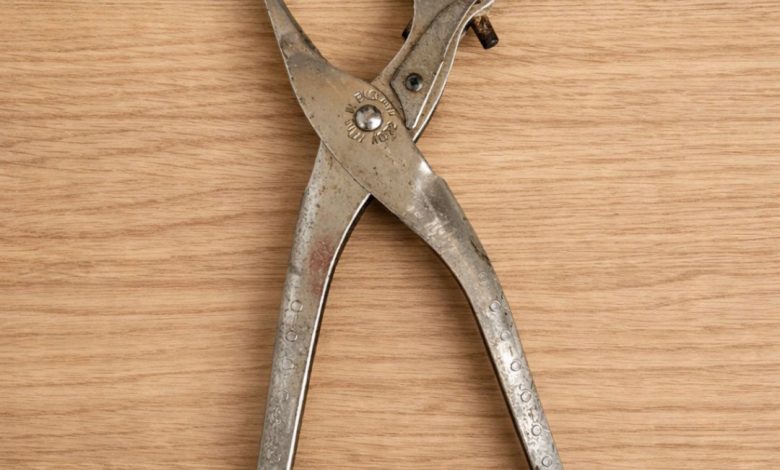
The Tool’s Name
This item is best known as a Vintage 6-Hole Rotary Punch, also called a rotary leather hole puncher or revolving punch pliers.
In the photos, the stamp/marking reads “GENERAL HARDWARE NEW YORK”, identifying the brand or distributor.
What It Is (Easy Explanation)
A rotary punch is a pliers-style tool with a rotating wheel (turret) of 6 hollow punches. You rotate the wheel to select a hole size, place the material between the jaws, then squeeze the handles to cut a clean circular hole.
Key Features (What You Can See in the Images)
- 6 punch sizes on a rotating head (quick size changes without swapping parts)
- Lever/pliers action for strong cutting force with hand pressure
- Sharp cutting tubes designed to remove a neat “plug” of material
- Likely aluminum alloy or light metal body (lightweight compared with all-steel versions)
- Sturdy, simple mechanism meant for repeated workshop use
When It First Appeared (Time Period)
- The revolving “turret” style punch became widely used in late 1800s into the early 1900s, as leather goods, harness work, and shoe repair demanded fast, repeatable hole-making.
- Many surviving examples like the one shown are commonly associated with early-to-mid 20th century production, especially lighter alloy versions intended for portable everyday use.
Who Created It (Maker / Origin)
- The general design was not the invention of one single, easily credited person; rather, it evolved through multiple manufacturers and patented improvements over time.
- The specific example in your images is marked “GENERAL HARDWARE NEW YORK”, indicating the company or distributor associated with this particular tool.
What It Was Used For (Main Purpose)
A rotary punch was made to create clean, consistent holes in materials such as:
- Leather and tack (bridles, straps, reins, halters)
- Belts (adding sizing holes)
- Saddlery and harness parts
- Canvas and thick fabric (depending on thickness)
- Rubber, gasket material, thin plastics (carefully, if the punch stays sharp)
Why It Was a “Must-Have” in a Tack Room
- Speed: change sizes instantly by rotating the wheel
- Consistency: repeated holes match in size and spacing
- Portability: no hammer or anvil required
- Clean results: sharp tubes cut rather than tear when properly aligned
How It Works (Step-by-Step)
- Choose the hole size by rotating the 6-wheel head.
- Align the punch tube with the anvil (the flat receiving side).
- Mark your spot on the strap/leather for accuracy.
- Squeeze the handles firmly to cut the hole.
- Clear the punched plugs from the tube as needed.
Collector Notes (What Makes One Desirable)
- Legible maker’s mark (like GENERAL HARDWARE NEW YORK)
- Even wheel rotation without wobble
- Sharp, round punch edges (not dented or flattened)
- Minimal jaw misalignment so holes cut cleanly
- Honest patina and wear can add vintage appeal while still being functional
In One Line
This Vintage 6-Hole Rotary Punch is a practical, durable leatherworking tool—popularized from the late 19th century onward—and your example is identifiable by the GENERAL HARDWARE NEW YORK marking, built to punch clean, repeatable holes in straps, belts, and tack.