Kitchen tool with scissor-like action – from Grandmother’s kitchen drawer. What Is It Used For?
What it is (Name & Type)
This tool is best described as a vintage scissor-style portioning scoop, commonly sold under practical names such as:
- Vintage Metal Dough Baller
- Vintage Meatball Maker / Meatballer Tongs
- Vintage Ice Cream Scoop Tongs
- Vintage Melon Baller / Cookie Scoop Scissors
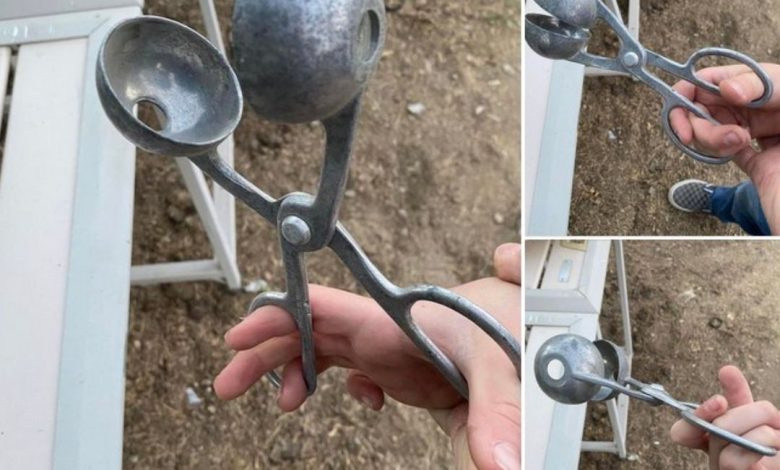
From the photos, it features two hemispherical cups that close together like tongs to form and release a near-spherical portion. The small holes in the cups help release sticky mixtures (reducing suction) so the portion drops out more cleanly.
Approximate Time Period (When it became common)
Tools like this were most commonly seen in early-to-mid 20th century kitchens (roughly the 1920s–1960s), when many household and bakery gadgets were made from cast aluminum or aluminum alloy and designed for fast, repeatable portioning.
- The concept of portioning scoops is older, but scissor-style, cup-forming kitchen tongs became especially popular as home baking and entertaining expanded.
Who Created It (Inventor / Maker)
- The exact inventor and manufacturer of this specific scissor-cup design are often unmarked and difficult to verify without stamped branding or a patent number on the handles or pivot.
- Historically, portioning tools evolved from earlier ice-cream and food “dippers.” A frequently cited milestone in portioning-scoop history is Alfred L. Cralle’s late-1800s ice cream mold/dipper patent, which helped popularize the idea of measured scooping and clean release—even though this pictured scissor-cup style is a different mechanism and typically later.
If your tool has any faint markings near the hinge rivet or along the handle, that is usually where the maker name (or patent reference) would appear.
What it was used for (Primary Function)
This gadget’s job is speed + uniform size. It creates consistent portions that cook evenly and look neat. Common uses include:
- Meatballs: portioning ground meat mixtures into uniform balls
- Dough balls: shaping biscuit dough, doughnut-hole dough, or bread-roll portions
- Cookie dough: forming consistent scoops for drop cookies
- Melon balls: scooping rounded portions of melon (depending on cup size)
- Ice cream / frozen desserts: portioning softer ice cream or semi-frozen mixtures (especially in warmer kitchen conditions)
How it works (Simple Explanation)
- Squeeze the handles to close the cups around a portion of mixture.
- The cups shape the portion into a rounded form.
- The vent holes help reduce sticking and allow the formed portion to release more easily.
- The scissor action provides leverage, making it easier on the hand than spooning and rolling.
Why it mattered (Practical Benefits)
- Consistency: every meatball/cookie is the same size
- Efficiency: faster than hand-rolling
- Cleaner handling: less direct contact with sticky dough or raw meat
- Even cooking: uniform portions bake/fry/cook at the same rate
Materials & Build (What the photos suggest)
- Likely cast aluminum or aluminum alloy body with a riveted pivot
- Smooth, durable cups designed to withstand frequent use
- A utilitarian finish that develops a gray patina with age and kitchen exposure
Collector & Kitchen Appeal Today
Vintage portioning tools remain popular because they are:
- Highly functional (still works for modern cooking)
- Visually distinctive (classic “old kitchen gadget” look)
- Often better-built than many lightweight modern novelty versions