Just bought a lake home and found three of these in the water next to the pier…
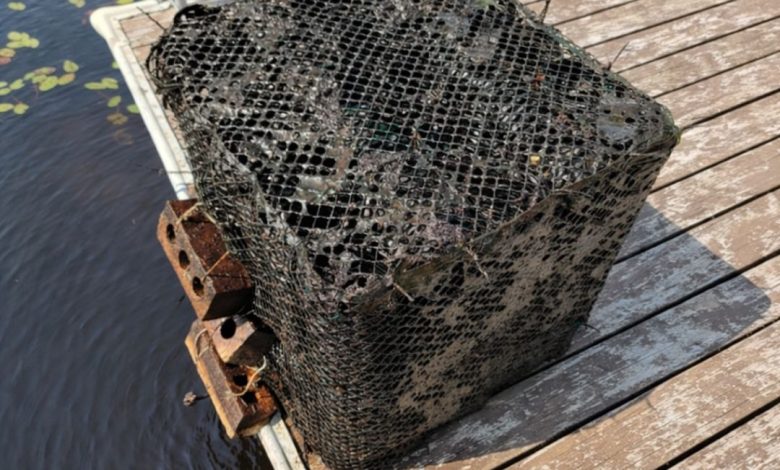
What It’s Called
- The object shown is commonly called a fish crib (also known as a fish habitat crib or fish shelter structure).
- In simple terms, it is an artificial underwater habitat placed near docks, drop-offs, or shallow-to-mid depth zones.
What You’re Looking At (Based on the Photos)
- A criss-cross stack of corrugated pipe sections (or similar rigid material)
- Wrapped in plastic netting to keep the stack together
- Weighted down with bricks so it stays on the lake bottom
- Positioned close to a pier, where fish naturally travel and feed

When It First Appeared
- Fish cribs have been used in various forms since the mid-20th century, growing more common from the 1960s–1980s as lake management, private lake associations, and anglers began installing artificial habitat structures to improve fish survival and concentrate fish for angling.
- Earlier versions often used brush piles, logs, and wooden frames; modern versions may use pipes, plastic structures, or engineered reefs designed to last longer.
Who Created It
- A fish crib is not credited to a single inventor.
- It is a practical concept developed over time by:
- Fisheries managers and conservation groups improving habitat
- Local lake associations supporting fish populations
- Anglers and property owners building structures to attract fish and improve fishing
What It’s Used For
- The primary purpose is to create a safe hiding place for small (“baby”) fish so they can survive long enough to grow.
- It also becomes a feeding and ambush zone where larger fish patrol nearby.

Key Functions
- Nursery habitat: Gives juvenile fish cover from predators
- Predator-prey balance: Helps maintain a healthier fish community by increasing survival rates of young fish
- Structure in open water: Adds complexity to a lake area that may otherwise be flat or featureless
- Fishing hotspot: Larger fish (“lunkers”) often hover around the edges waiting for smaller fish to leave cover
Why the Design Works
- The gaps and tunnels created by stacked pipes provide hiding spaces of different sizes.
- The netting keeps pieces from drifting apart over time.
- The bricks act as ballast so waves, ice movement, or currents don’t relocate it.
Where Fish Cribs Are Commonly Placed
- Near drop-offs (where shallow water quickly becomes deeper)
- Along weed edges or nearby open-water lanes
- Close to docks and piers (high fish traffic areas)
- In clusters to create a larger habitat zone
Why Homeowners Find Them
- Previous owners or lake groups may have installed them to:
- Improve local fishing
- Support lake ecology
- Create predictable fish-holding structure near a property
Quick Takeaway
- What you found is a fish crib, an intentional underwater structure that functions as a protective habitat for young fish and a reliable gathering point for bigger predator fish, often improving both fish survival and fishing success near the area where it’s placed.