About The Size Of My Hand. Found In The Trash. (I’m A Trash Man). Any Ideas?
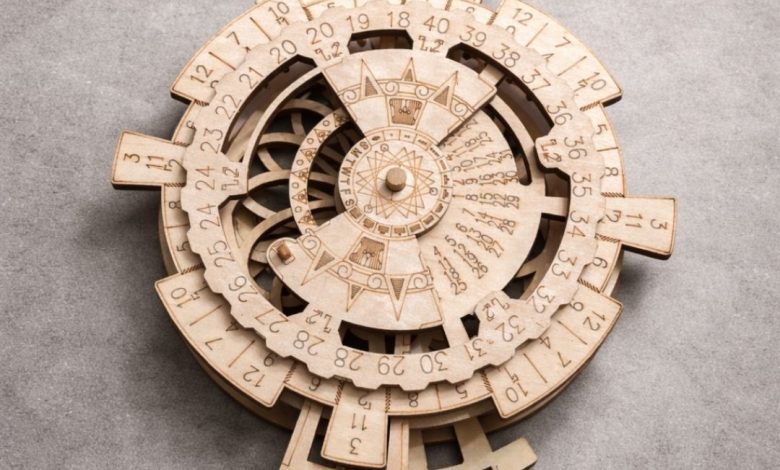
What It’s Called
- Common name: Perpetual Calendar
- Product-style name: Laser-Cut Perpetual Calendar Model / Wooden 3D Puzzle Perpetual Calendar
- Type: Hand-operated mechanical-style calendar made from laser-cut wood layers and rotating rings
What You’re Looking At (Based on the Photos)
- A circular, gear-like wooden calendar built from multiple stacked rings.
- Engraved sections that typically represent:
- Month
- Day of the week (e.g., S M T W T F S)
- Day of the month (1–31)
- Often a year window (many models allow setting a specific year or a repeating range)
- A central fastener/axle that lets the rings rotate and “lock” into place using notches or tabs.
When This Kind of Calendar Was First Created
- Perpetual calendars (as an idea) are centuries old. Long before modern apps, people used reference tables, rotating paper discs, and mechanical aids to figure out calendar dates without rewriting a new calendar every year.
- The laser-cut wooden 3D puzzle version is modern—it became popular in the late 20th century and especially the early 21st century, when laser cutting and hobby model kits made intricate wooden mechanisms affordable and widely available.
Who Created It
- The original “perpetual calendar” concept wasn’t created by one single inventor. It evolved over time through calendar mathematics, printing, and mechanical design.
- This specific laser-cut wooden puzzle style is typically designed by modern kit manufacturers and model designers (often sold as craft kits).
- Unless the kit brand is printed on the packaging or instructions, the exact designer/creator can’t be confirmed from the photos alone.
What It Was Made For (Purpose and Use)
- Primary function: to display a usable calendar date by rotating rings to align:
- Month
- Day of week
- Day number
- (Sometimes) year
- Secondary function: as a hands-on mechanical puzzle—part decoration, part engineering toy.
- Why it’s “perpetual”: it can be reset and reused year after year instead of being thrown away like paper calendars.
How It Works (Simple Explanation)
- Choose the month by rotating the month ring until the correct month is centered in its window.
- Set the date by rotating the numbered ring to the correct day of the month.
- Align the weekday by rotating the weekday ring so S M T W T F S matches the real weekday for that date.
- Some versions also include a year selector or a logic pattern that helps match weekdays correctly across years.
Why People Like These Wooden Perpetual Calendars
- Reusable: no need to buy a new one every year.
- Decorative: the layered geometry looks like a wooden “time machine” or a steampunk instrument.
- Educational: demonstrates mechanical alignment, indexing, and calendar logic in a visual way.
- Gift-friendly: often marketed as a desk piece or maker/craft gift.
Key Details to Note (What Makes This One Stand Out)
- Laser-engraved markings with crisp, burned-in lines typical of laser cutting.
- Multiple concentric rings and cutouts that give it a clockwork aesthetic.
- A central hub that acts as a pivot, allowing smooth rotation while keeping parts aligned.