“National Leaders Tree” Optical Illusion Has the Internet Counting Hidden Faces—Here’s How It Works
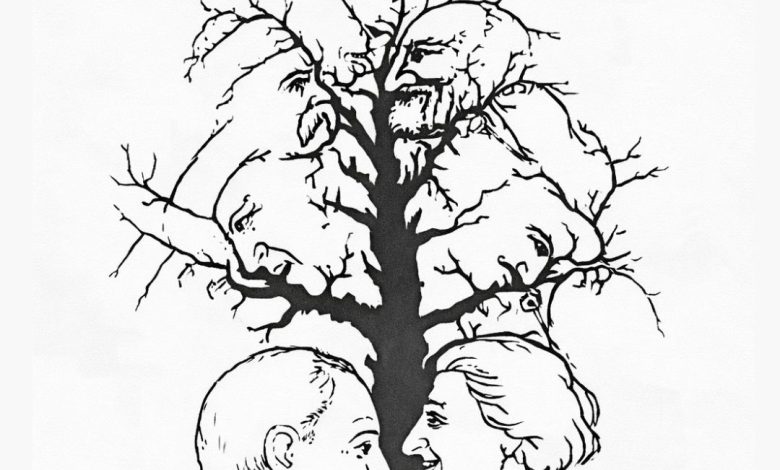
Optical illusions have a special way of making people stop scrolling. One minute you’re looking at a simple picture, and the next you’re squinting at shadows, branches, and outlines, convinced you’ve missed something obvious.
That is exactly what’s happening with a viral brainteaser often referred to as the “National Leaders Tree.” The challenge is straightforward on paper: count how many faces you can find hidden inside the tree. In practice, it can be surprisingly tricky.
Many people immediately spot the two faces near the bottom of the image. The real challenge begins when you try to identify the additional faces blended into the trunk, branches, and negative space.

What the “National Leaders Tree” Challenge Asks You to Do
To attempt the puzzle properly, viewers typically follow these steps:
- Look at the entire image first (don’t zoom in immediately).
- Count the two obvious faces at the base of the tree.
- Scan the tree slowly, focusing on:
- The curve of branches
- Gaps between leaves
- Light-and-shadow edges
- Shapes formed by overlapping lines
- Only after a first pass, zoom in and repeat the count carefully.
Important: Many people accidentally double-count the same face from different angles. A good method is to point to each face (or mark it) as you count.
Why This Illusion Feels So Hard
This kind of image works because your brain is constantly trying to “complete” patterns. Faces are one of the strongest patterns humans recognize, so even partial cues—like a curve that resembles a cheek or a shadow that looks like an eye socket—can trigger face recognition.
These illusions often rely on:
- Negative space (the “empty” areas form shapes)
- Overlapping contours (one line can serve as multiple features)
- Hidden profiles (side-view faces tucked into edges)
- Visual switching (you see one thing, then your brain flips to another)
The Viral “Memory Score” Claims People Share Online
As the puzzle spread, a popular twist appeared: people began claiming the number of faces you see reveals something about your memory. The image is often paired with a breakdown like the one below:
- 2 to 4 faces
- Viral claim: You may have poor memory, and some posts go as far as suggesting a “memory disorder.”
- 5 to 6 faces
- Viral claim: You’re at risk of Alzheimer’s or dementia.
- 7 to 8 faces
- Viral claim: Your memory is average and could improve with practice.
- 9+ faces
- Viral claim: Excellent memory and strong facial recognition skills.
A Necessary Reality Check
It’s fine to enjoy this as a fun internet challenge, but it’s crucial to know this:
- This image is not a medical test.
- Counting faces in an optical illusion cannot diagnose memory disorders, Alzheimer’s, or dementia.
- How many faces you notice can change depending on screen size, lighting, focus, fatigue, eyesight, and whether you’ve seen the illusion before.
If memory concerns are real in everyday life—like frequent confusion, getting lost, or struggling with routine tasks—the right step is speaking with a qualified medical professional, not relying on a viral image.

Tips to Spot More Faces (Without Guessing)
If you want to improve your score legitimately, try these approaches:
- Change your viewing distance: move closer, then farther away.
- Rotate the image: turning it sideways can reveal hidden profiles.
- Use the “blur trick”: slightly unfocus your eyes to reduce detail and highlight larger shapes.
- Scan by sections: top-left, top-right, center, trunk, base—one area at a time.
- Look for profiles first: side-view faces are often easier to detect than front-facing ones.
Why People Love These Challenges Anyway
Even without the “memory score” claims, puzzles like this stay popular because they create:
- Instant competition (“I saw 10—how many did you get?”)
- A replay effect (you keep searching until you’re satisfied)
- A surprise payoff (once you see a face, you can’t unsee it)
And that’s the real fun of it: a harmless test of attention and perception, not a serious measurement of intelligence or health.
If you try the “National Leaders Tree,” the best way to treat it is simple: count carefully, compare with friends, and enjoy the illusion for what it is—an entertaining visual trick.