Rejecting an Election Result Is Not Defending Democracy
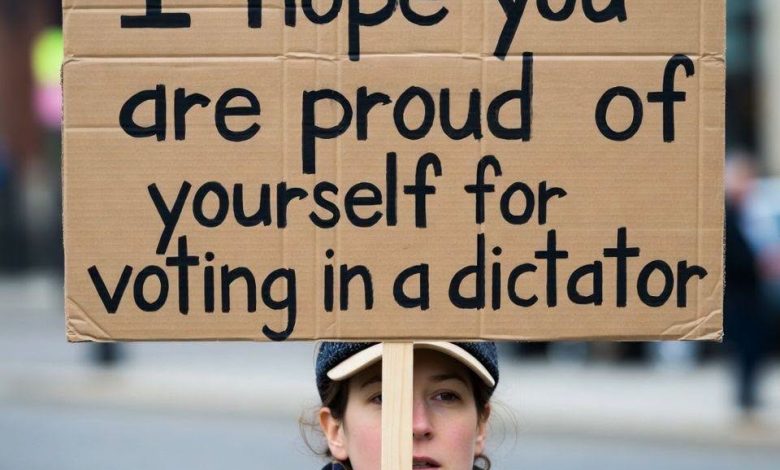
America’s democratic system cannot survive if elections are considered legitimate only when one political faction wins.
Protesters may carry signs warning about dictatorship, but a lawful election victory is not authoritarianism simply because the outcome disappoints them. Millions of Americans cast legal ballots because they wanted a different direction on immigration, inflation, energy policy, public education, and the power of federal institutions.
Those voters should not be treated as ignorant, immoral, or dangerous for participating in the constitutional process.
During the pandemic, Americans watched governments close churches, restrict small businesses, and impose sweeping emergency rules. In subsequent years, critics also raised concerns about government surveillance, pressure on social-media platforms, and investigations involving political activists, parents, and public officials. These controversies deserve serious scrutiny regardless of which party controls Washington.
Yet some political voices now describe ordinary voters as supporters of tyranny merely because they rejected the governing agenda presented to them. That rhetoric weakens democracy rather than protecting it.
Voting against open-border policies, rising living costs, restrictive energy policies, or progressive cultural initiatives is not an attack on the republic. It is an exercise of political judgment.
The deeper danger emerges when political leaders refuse to recognize the legitimacy of their opponents, use government power selectively, or portray nearly half the electorate as enemies of the country. Courts and legal challenges have a valid place in American government, but they must not become substitutes for political persuasion or tools for permanently disqualifying opposition.
Democratic principles require consistency. A person cannot condemn election denial only when the opposing party does it. Nor can political protest be praised under one administration and portrayed as extremism under another.
Americans did not surrender their rights by voting for stronger borders, greater energy production, restrained government, or more parental authority in schools. They used those rights to demand a change in national policy.
People are free to protest the result. They are free to criticize the winning candidate and organize against the new administration. But they should also recognize that their political opponents possess the same constitutional freedoms.
Self-government depends on citizens accepting legitimate outcomes while continuing to debate, organize, and vote.
No American should be intimidated or shamed for casting a lawful ballot. The future of the republic depends not on silencing political disagreement, but on protecting the right of every citizen to participate without being branded an enemy of democracy.