Small metal object found in 100+ year old sewing box
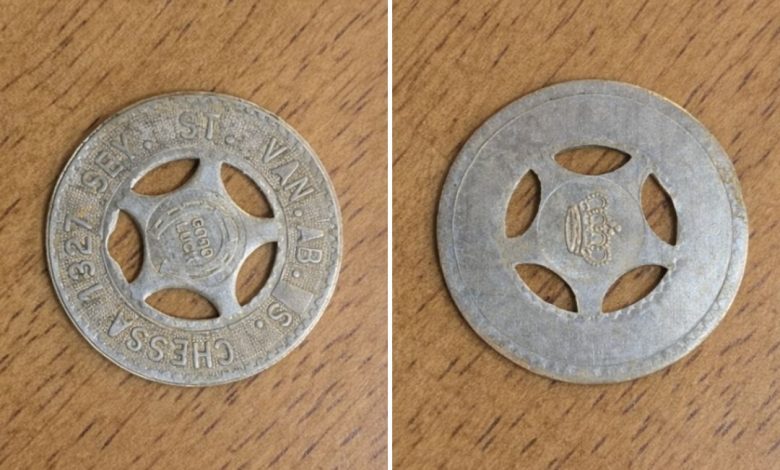
There is something deeply captivating about coming across an old object and not immediately knowing what it is. A small forgotten item can stop you in your tracks, stir your imagination, and pull you into a story from another time. That is exactly the kind of feeling sparked by Woolworth’s Good Luck Tokens—simple little keepsakes that may not look like much at first glance, but carry a surprising amount of nostalgia.
At first, a small aluminum token might seem easy to mistake for something else. It is light, round, often stamped with “GOOD LUCK,” and sometimes attached to a chain. To someone finding one today in a drawer, sewing box, or old tin, it could easily appear to be a sewing accessory or some forgotten household tool. But for many people, it is something far more memorable: a tiny prize from the vending machines once found in Woolworth’s stores.
That realization opens the door to a much larger memory.
A Simple Token from Everyday Life
Part of what makes these tokens so special is how ordinary they once were. They were not reserved for holidays, major milestones, or special occasions. They were part of the everyday rhythm of shopping. A family might stop by Woolworth’s for socks, candy, thread, or kitchen items, and somewhere in the store there would be a small machine offering charms and tokens for just a few coins.
That kind of experience is hard to explain to anyone who never knew stores like Woolworth’s. These were places people wandered through, not rushed through. They invited curiosity. Children were drawn to anything shiny or unusual, and adults often were too. For the price of a quarter, you could walk away with a small token that felt personal, lucky, and worth keeping.
Why People Held Onto Them
The true value of Woolworth’s Good Luck Tokens was never in the metal itself. They were lightweight, inexpensive, and mass-produced, yet many people saved them for years. Some featured initials, names, or short sayings, while many simply carried the message “GOOD LUCK.” That made them feel both like a souvenir and a charm—something ordinary, yet oddly meaningful.
People have always attached emotion to small objects. A coin, a charm, a ticket stub, a button, or a keychain can hold a memory far larger than its size. These little pieces of the past often survive because they are easy to tuck away and hard to throw out. That is why finding one in a sewing box feels completely natural. Sewing boxes were rarely used only for thread and needles. They often became safe places for buttons, receipts, photographs, loose change, and tiny keepsakes that mattered for reasons no one needed to explain.
Why These Tokens Still Matter
What gives Woolworth’s Good Luck Tokens their lasting charm is that they were once woven into daily life. They were not rare treasures or expensive collectibles. They were small pleasures—objects picked up during an ordinary shopping trip and then quietly carried into the future.
Today, a worn aluminum token can bring back an entire scene: the clink of coins dropping into a vending machine, the look of an old five-and-ten-cent store, and the excitement of leaving with a tiny prize in your pocket. It may have cost very little, but the memory attached to it became priceless.
That is the power of objects like this. They remind us that the smallest things often stay with us the longest. A simple token stamped with “GOOD LUCK” may seem insignificant at first glance, but for many people it represents a moment, a place, and a feeling they never forgot.
And that is exactly why such a small piece of metal can still feel so special today.