The Kindness Signal Most People Miss in Restaurants
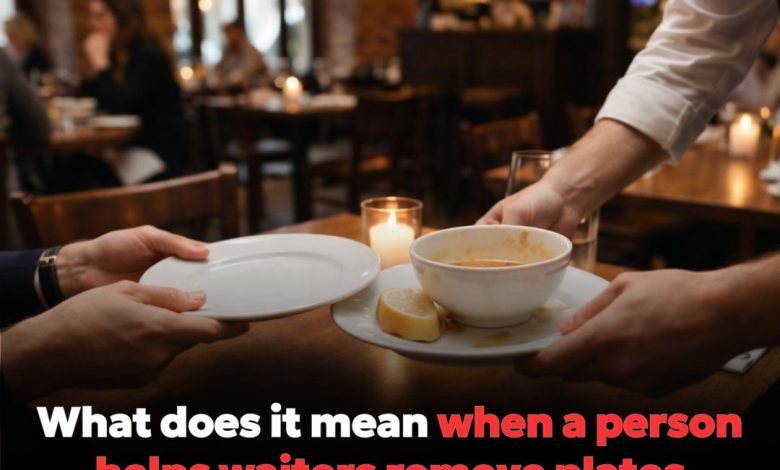
If you spend enough time in restaurants, you’ve probably seen it: when the room gets busy, a guest starts gathering empty plates, stacking bowls, or sliding glasses toward the edge of the table—sometimes before the waiter even arrives. Maybe you’ve done it yourself without thinking.
This small habit may look like simple politeness, but psychology suggests there are often deeper reasons behind it. And in many cases, it reflects how a person pays attention, empathizes, and responds to other people’s workload.
What This Behavior Often Means
When someone helps by stacking plates or clearing space, they are usually not trying to show off. More often, it signals a practical kind of empathy.
Common psychological explanations include:
- They have “service empathy” from past experience
Many people who do this have worked in restaurants or other service jobs. They remember what it feels like to manage multiple tables, carry heavy trays, and keep smiling during a rush. - They naturally notice other people’s effort
Some individuals are highly aware of their environment. They tend to spot small details—like a server juggling tasks—and respond automatically.
This is often linked to strong situational awareness and high empathy. - They feel responsible for shared spaces
Certain people treat public places as shared environments rather than “someone else’s job.” In psychology terms, it can reflect a prosocial mindset—a tendency to reduce friction for others when it’s easy to do so. - They express kindness in quiet, practical ways
Psychologists sometimes describe this as a “micro-act of kindness”—small, low-effort actions that reduce someone else’s burden.
The key point is that it’s usually done without expecting praise or even a thank-you.
The Psychology Behind “Micro-Acts of Kindness”
A micro-act of kindness is usually:
- Small and simple (stacking plates, moving items closer, wiping a spill)
- Low-cost to the person doing it
- High-value to the person receiving it during stressful moments
- Done quickly and quietly, often without making it a “big deal”
These actions can be meaningful because they communicate something powerful: “I see you working hard.”
Why Not Everyone Does It (And That’s Normal)
It’s important to note that not clearing plates isn’t automatically rude. People may avoid helping for reasonable reasons, such as:
- Cultural expectations
In some cultures, interfering with staff duties can be seen as disrespectful or awkward. - Fear of doing it wrong
Some guests worry they might stack dishes unsafely or create more work. - Attention and social focus
People may be deep in conversation, distracted, or simply not noticing what’s happening around them.
So this behavior is not a moral “test.” It’s more accurately a difference in habit, comfort, and awareness.
Why This Tiny Gesture Can Matter So Much to a Waiter
For someone working a busy shift, small help can have outsized impact:
- It reduces physical strain (fewer trips, easier carrying, faster clearing)
- It breaks up the rush by making one step simpler
- It improves emotional tone because it reminds staff the room isn’t indifferent
- It can even shift the mood of an entire shift, especially during peak stress
In other words, it’s rarely just about plates. It’s about recognition and relief.
A Helpful Note: If You Do It, Do It Well
If you’re the type who helps, it’s best to keep it simple:
- Stack similar items together (plates with plates, bowls with bowls)
- Avoid over-stacking (too heavy or unstable)
- Keep sharp items safe (don’t hide utensils where someone could get poked)
- Leave it easy to lift (one neat stack is better than multiple messy piles)
The Bigger Meaning
At its core, helping a waiter clear plates reflects something simple and human: noticing someone doing a hard job and choosing to make it slightly easier.
And that is often what kindness looks like in real life—small choices that matter more than we realize.