Thin Slabs Of Ivory With Days Of The Week On The Top Found In My Closet. What Is This Thing?
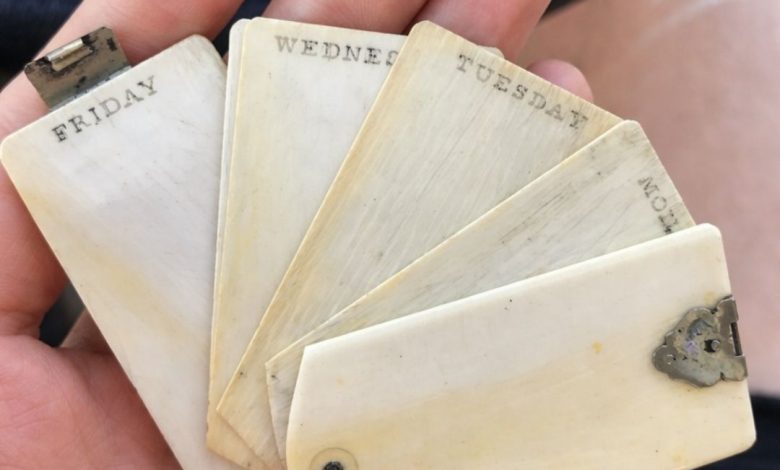
This small folding item is an early Victorian chatelaine aide-mémoire (a personal “memory aid”), dating to the mid-1800s. Built like a miniature notebook, it features thin sheets of bone (sometimes described as bone or ivory in antique listings) held together with small metal fittings.
Name and What It’s Called
- Common name: Chatelaine aide-mémoire
- Also known as: memo book, memorandum, mini appointment tablet, chatelaine notebook
- Key clue visible in the piece: pages labeled with days of the week, including “Friday,” “Wednesday,” “Tuesday,” and others.
When It Was Made
- Time period: Early Victorian era
- Approximate date: Mid-19th century (mid-1800s)
- Context: A time when well-dressed women often carried practical tools as part of fashionable accessories.
Who Created It
In most cases, pieces like this were produced by Victorian accessory makers and jewelers who specialized in chatelaine items (small tools and personal accessories worn on a chain).
- Maker name: Often unmarked or unknown
- Typical creators: local workshops, jewelers, or accessory manufacturers supplying fashionable goods for women’s dress.
What a Chatelaine Is (Why This Object Exists)
A chatelaine is a decorative chain or hook system worn at the waist, designed to hold essential small items. This aide-mémoire would have been:
- Clipped or attached to a chatelaine chain, or
- Carried in a pocket for safer storage
Design Details Visible in the Image
- A fan-like set of rigid sheets that open outward
- Day-labeled pages for a weekly layout
- Metal hinge and clasp hardware to keep it closed
- A compact size intended for one-handed use
Primary Function: What It Was Used For
This item worked as a personal scheduling and reminder system in an era before disposable paper planners were common. The owner would use it to:
- Note appointments and engagements for the coming week
- Record short reminders (calls, visits, errands, social events)
- Keep information private and portable
How the Weekly Pages Worked
- The described example includes 6 pages: Monday to Saturday
- Social convention often treated Sunday as reserved for worship and rest, so many ladies avoided “appointments” on that day
- The pages likely served as a structured weekly prompt, helping the owner organize her time at a glance
Why It Matters: A Small Object With Big Social Meaning
This aide-mémoire reflects Victorian life in a practical, personal way:
- It shows how fashion and function were combined in women’s accessories
- It hints at a busy social calendar managed with discretion and elegance
- It represents an early form of a portable weekly planner, designed to be used anywhere