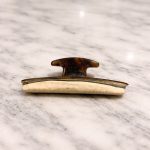
This tool has a gear-like part. It is made entirely of metal. Do you know what it is?
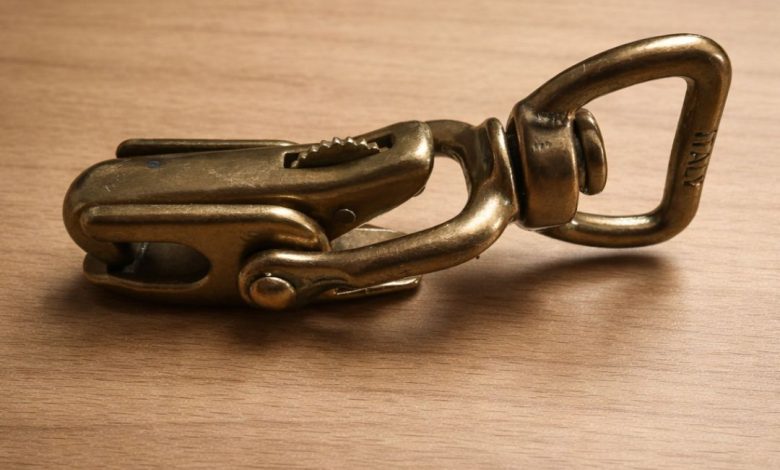
Locking Swivel Snap Hook (Quick-Release Carabiner): What You’re Looking At
This item is best described as a locking swivel snap (often called a quick-release carabiner or swivel snap hook). It combines a spring-loaded jaw with a rotating swivel eye and a locking “gear/wheel” that helps prevent accidental opening.
Common Names
- Locking swivel snap
- Quick-release snap hook
- Swivel snap / swivel clip
- Rifle sling snap (hardware component)
- Horse tack snap / tack clip
When It First Appeared (Historical Timeline)
Because this is a practical hardware form that evolved across multiple industries, the exact first date can vary by design and manufacturer. In general terms:
- Late 1800s to early 1900s: Swivel snap hooks became widely used in equestrian tack, harness work, and industrial/leather trades as metalworking and mass production improved.
- Early to mid-1900s: More specialized variants—like quick-release and locking mechanisms—became increasingly common for military/outdoor gear (including slings), hunting equipment, and work/leather goods.
Who Created It
- The specific inventor is often not clearly documented for this exact “locking gear” variant because it is an evolution of earlier snap hook and swivel designs used by many hardware makers.
- In practice, these snaps were developed and refined by metal hardware manufacturers serving tack shops, saddlers, leather workers, and later outdoor/military suppliers.
What It’s Used For
This type of snap is used wherever you need a strong, fast connection that can rotate freely and is less likely to pop open unintentionally.
Common applications include:
- Dog leashes and leads (especially heavier-duty or working-dog setups)
- Horse tack and stable gear (cross-ties, leads, straps, and various attachments)
- Hunting and outdoor equipment
- Rifle slings and carry straps (as a sling attachment component)
- Leather goods (bags, straps, belts, cases, and craft projects)

How the Locking Mechanism Works (Easy Explanation)
This clip has two key functions: quick release + secure lock.
- Step 1: Open the jaws
- The clip uses a spring-loaded gate/jaw that opens when the release area is pressed or pulled (depending on the exact model).
- Step 2: Close the jaws around a ring or D-ring
- When released, the spring forces the jaws shut.
- Step 3: Lock it closed with the “gear/wheel”
- Once shut, you can rotate the small toothed wheel/gear backward into a position that physically blocks or impedes the opening action.
- This reduces the risk of accidental release during movement, twisting, or tension.
- Step 4: Swivel prevents twisting
- The top loop is mounted on a swivel joint, allowing the clip to rotate and helping prevent straps or leads from tangling.
Why It’s Popular (Key Advantages)
- Fast attachment/detachment for practical daily use
- Swivel action helps prevent strap twist and binding
- Locking feature adds safety for active use (dogs, horses, field gear)
- Durable metal construction suited for tension and repeated handling
Where You’ll Typically See It Installed
- Connected to a D-ring on a collar, harness, saddle tack, or strap end
- Used as the terminal clip on leashes, slings, and adjustable leather straps
- Integrated into handcrafted leather goods as a premium or heavy-duty closure/connector
Quick Identification Checklist
- Swivel eye at the top (rotating loop)
- Spring-loaded jaws for quick clipping
- Toothed gear/wheel that rotates to lock the opening mechanism
- Overall appearance: tack/leather hardware style with a rugged build