Trump’s Firm Response to Iran Sends a Clear Message: America Will Not Be Tested
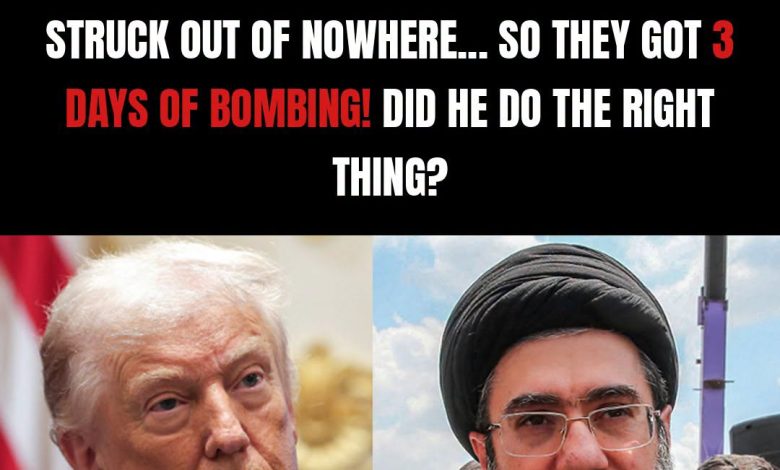
America’s enemies learned a familiar lesson this week: the United States is strongest when its leaders act with clarity, speed, and resolve.
After Iran escalated tensions in the Gulf and rejected pressure to return to serious negotiations, President Donald Trump responded with a forceful strategy designed to protect American interests, defend regional stability, and remind hostile regimes that broken commitments carry real consequences. Recent reports describe renewed U.S. military action aimed at weakening Iranian capabilities tied to attacks on commercial shipping, along with a continued blockade on Iranian ports.
For many conservatives, the message is simple: peace is not preserved through weakness. It is preserved through deterrence. Iran’s leadership has spent years using delay, threats, proxy forces, and nuclear brinkmanship to pressure the West. When hostile regimes believe America will only talk, they buy time. When they believe America will act, they recalculate.
Trump’s response stands in sharp contrast to years of failed diplomacy that many Americans viewed as too soft on Tehran. Critics of past Iran policy argue that generous agreements, slow enforcement, and repeated concessions only encouraged the regime to push further. The latest confrontation reinforces that argument: a deal means little if one side treats it as a temporary shield while continuing to threaten U.S. troops, allies, and global energy routes.
The Strait of Hormuz remains one of the world’s most important energy corridors, and instability there can affect American families through higher fuel prices and broader economic pressure. That is why the issue is not only about foreign policy. It is about national security, energy security, and the cost of weakness paid by ordinary Americans. Reports of disrupted regional navigation and rising oil concerns show how quickly Iranian aggression can move from a distant crisis to a kitchen-table issue.
Trump’s defenders argue that his approach does not seek endless war. Instead, it seeks swift accountability. The goal is to make clear that attacks on American interests, threats to allies such as Israel, and attempts to dominate vital waterways will be met with pressure strong enough to change the enemy’s calculations.
The broader lesson is one America has learned repeatedly: appeasement invites escalation, while strength restores deterrence. Adversaries around the world are watching how Washington handles Iran. If America hesitates, others may test its limits. If America responds firmly, those same adversaries understand that aggression comes with a price.
For citizens tired of empty warnings and endless concessions, Trump’s Iran policy represents a return to America First leadership: protect the homeland, defend allies, secure trade routes, and refuse to let hostile regimes dictate the terms of global stability.
In the end, Iran’s leaders expected hesitation. Instead, they saw resolve. And that may be the most important message of all: under Trump, America’s red lines are no longer just words.