What Does WC Stand For on Bathroom Signs? The Real Meaning Explained
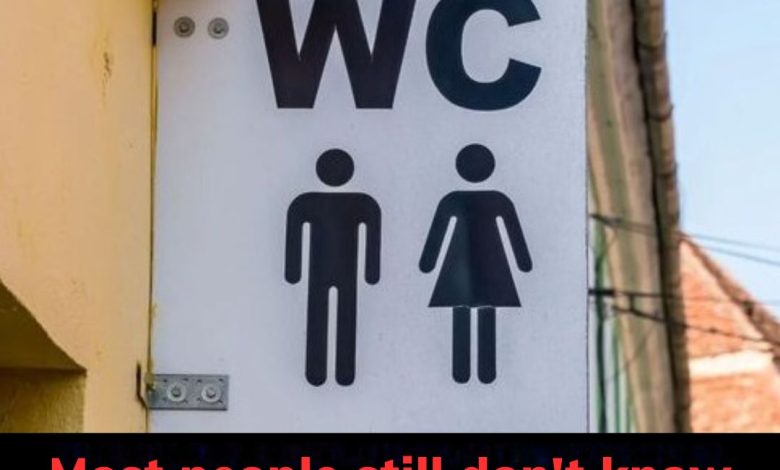
Walk into a public building in the United Kingdom and you might see several different words pointing you toward the same place: toilet, loo, restroom, ladies, gents—and very commonly, WC.
What surprises many visitors (and even some locals) is that WC is not just a random label or a fancy abbreviation. It has a specific meaning rooted in history.
What does “WC” stand for?
WC stands for “Water Closet.”
In simple terms, a water closet is an early name for a small room that contains a toilet connected to a water-based flushing system.
Why would a toilet be called a “closet”?
The phrase makes more sense when you look at how homes were laid out before modern plumbing.
A clear way to understand it is this timeline:
- Before indoor plumbing
- People often had a separate room for washing (what we’d now think of as a “bathroom”).
- Water typically didn’t come from a tap inside the room.
- You might have had to carry water in buckets, heat it, and fill a tub manually.
- When indoor plumbing arrived
- Houses already had a “bathroom” space for washing.
- Builders needed a practical spot to add the toilet.
- The easiest solution was often to place it in a small enclosed room, similar in size and function to a closet.
- Over time, this toilet room became known as the water closet.
So, a “water closet” was basically a small enclosed toilet room that used water for flushing.
Why do so many signs still use “WC”?
Even though “water closet” sounds old-fashioned today, the abbreviation stuck—especially on signs.
Common reasons include:
- It’s short and universal-looking: Two letters fit neatly on signage.
- It became standardized early: Once a label spreads across public spaces, it tends to stay.
- It’s understood across many languages: In parts of Europe and beyond, WC is widely recognized as “toilet.”
Why do UK toilets have so many different names?
The UK is famous for having multiple everyday words for the same thing, and toilets are a perfect example. Depending on where you are and who you’re talking to, you might hear:
- Toilet: The most direct and commonly used.
- Loo: Very common in casual British speech.
- Bathroom: Often used even when there’s no bath (especially in homes).
- Restroom: More common in American English, but still understood.
- Lavatory / Lav: More formal or older usage.
- Ladies / Gents: Common for public facilities.
- WC: Common on signage, especially in older buildings, stations, cafés, and public venues.
Why do people get confused by “WC”?
Not everyone learns the abbreviation explicitly. Many people:
- Recognize the sign without knowing what the letters stand for
- Assume it’s a brand, a code, or simply “the toilet sign”
- Rarely hear the full phrase “water closet” in everyday conversation
That’s why, when the meaning pops up in a viral video or comment thread, it often triggers reactions like:
- “I’ve wondered forever and never looked it up.”
- “I see WC everywhere, but I didn’t know why.”
- “Wait… people don’t know this?”
Quick takeaway
- WC = Water Closet
- It’s a historic term from the rise of indoor plumbing
- The abbreviation remains popular on signs because it’s simple, recognizable, and long-established
Did you already know what WC stood for, or did you just learn it now?