What is this set of six elephants that are hollowed?
1) Name and What You’re Looking At
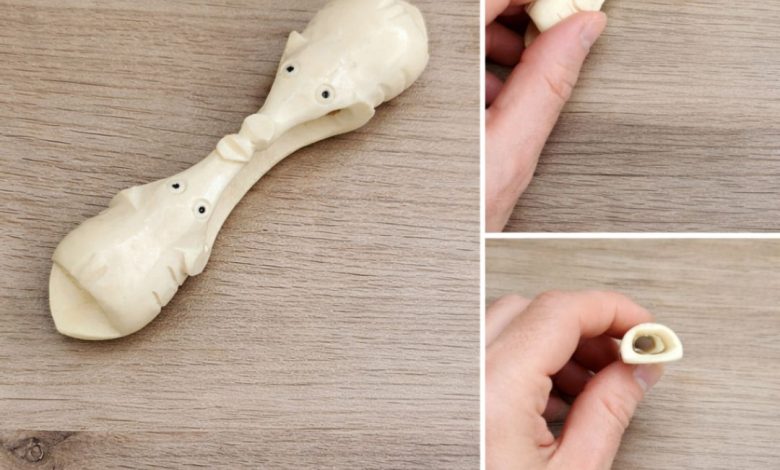
This item is best described as a knife rest set (also called a knife holder). In your photos, each piece is a small hand-carved rest made to look like two elephants facing each other, with an arched “bridge” between them. That raised bridge is the functional part: it keeps the blade off the table or cloth.
Key identifying details
- Material look: cream/beige, consistent with bone (often polished)
- Design: two elephants facing each other on each rest
- Form: an arched center that creates a raised contact point for a knife or utensil
- Use case: a matching set, typically laid out as part of a formal place setting
2) When Did Knife Rests First Appear?
Knife rests as a dining accessory are associated with the rise of formal European table service, most notably from around the 17th century onward, when elaborate dining etiquette and fine linens became more common. Their core purpose has remained the same ever since: keep used cutlery from touching the tablecloth or table surface.
Important note about dating your specific set
- The concept (knife rests) is centuries old.
- A carved bone “souvenir/handicraft” style set like the elephant examples is often encountered in the 20th century, especially as decorative table accessories and export crafts.
- Without a maker’s mark, paperwork, or a known provenance, an exact year is usually not possible to confirm from photos alone.
3) What Is It Used For? (Practical Function)
A knife rest is used during a meal after a knife has touched food. Instead of placing the knife directly on the plate edge, tablecloth, or tabletop, you set it on the rest.
Main functions
- Hygiene: keeps food residue off the cloth/table
- Presentation: supports a formal, “fine dining” look
- Convenience: keeps utensils within reach without making a mess
- Protection: helps reduce stains on linens and avoids scratches on delicate surfaces
4) How to Set and Use Knife Rests Correctly
Typical placement (formal setting)
- Place the rest just above the dinner plate, aligned horizontally.
- During pauses between courses, rest the knife (and sometimes fork/spoon) on it.
How to position the utensils
- Lay the knife blade across the raised bridge so the blade stays elevated.
- Keep the handle stable so it doesn’t roll.
- If using multiple utensils, avoid stacking heavily—use the rest to keep contact points minimal.
5) Material Notes: Bone and Care
If these are truly bone, they are durable but can dry out or discolor if treated harshly.
Care guidelines
- Hand-wash only with mild soap and lukewarm water
- Do not soak for long periods
- Avoid dishwashers (heat + detergents can damage or warp)
- Dry immediately with a soft cloth
- Store away from direct sunlight to reduce yellowing
6) Collectibility and What Makes a Set “Better”
Collectors and buyers typically look for:
- Uniform color across the set (matching patina)
- Consistent carving quality (symmetry, detail, clean lines)
- No cracks or splits, especially along thin arched sections
- Minimal chips on elephant ears/trunks and raised edges
- Evidence of handwork (subtle tool marks) rather than perfect factory repetition
7) A Quick Authenticity and Ethics Checklist
Because bone, horn, ivory, and resin can be visually similar in photos, it is smart to verify material—especially for resale.
Good practice points
- If selling, describe as “bone (or bone-like material)” unless verified
- Be cautious with any item that could be mistaken for ivory; regulations and platform policies can be strict
- If you have provenance (country, artisan, era), keep it with the set—documentation increases confidence and value
Bottom Line
This is a vintage-style carved elephant knife rest set, designed for formal dining to keep used knives and utensils off the tablecloth or tabletop. Knife rests as a tradition trace back to 17th-century formal table service, while carved decorative sets like these are commonly encountered as 20th-century handcrafted table accessories, especially when marketed as artisan or regional craft pieces.