When Networks Silence A President, The Public Deserves An Explanation
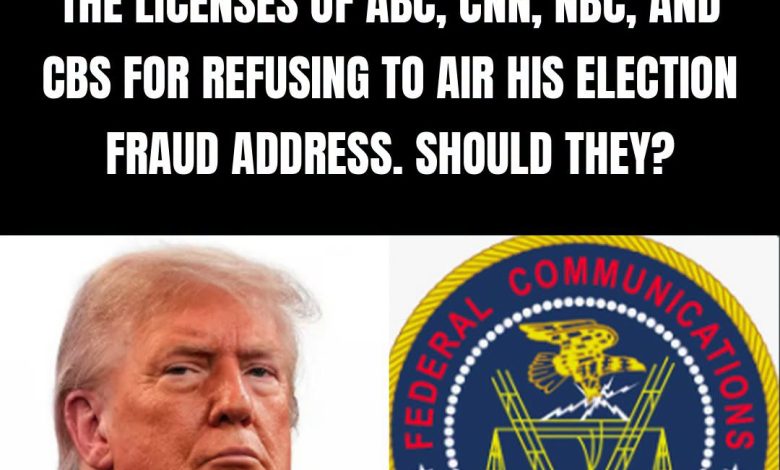
Americans should be deeply concerned whenever major television networks collectively refuse to broadcast an important presidential address—especially one involving allegations about the integrity of the nation’s elections.
Networks such as ABC, CBS, NBC, and CNN possess enormous influence over what millions of citizens see, hear, and discuss. Although private news organizations have the editorial right to decide what they broadcast, that discretion carries a serious public responsibility. When nearly every major outlet reaches the same decision on a politically explosive issue, viewers are justified in asking whether journalism is being replaced by institutional gatekeeping.
The central question is not whether every allegation made by President Trump should automatically be accepted as true. Claims involving voting machines, ballot handling, or election misconduct must be supported by verifiable evidence and tested through courts, audits, and transparent investigations. Broadcasting a presidential statement does not require a network to endorse it. Journalists can air the address, challenge its assertions, consult election officials, and provide viewers with relevant context.
That is what responsible reporting should look like.
Refusing to show the speech entirely creates a different problem. It allows media executives to determine that Americans should not even hear the President’s argument firsthand. Such decisions reinforce the widespread belief that powerful news organizations are no longer neutral observers but active participants in political conflict.
Public confidence in the media has already been damaged by years of selective coverage, sensationalism, and ideological framing. Stories that support a network’s preferred narrative often receive extensive attention, while inconvenient information may be minimized, delayed, or ignored. This inconsistency has encouraged millions of Americans to abandon traditional broadcasts and seek information from independent outlets, podcasts, and social-media platforms.
However, calls to revoke broadcasting licenses must also be approached carefully. The First Amendment protects editorial independence, including decisions that many citizens consider biased or irresponsible. In addition, the federal government generally licenses individual broadcast stations—not entire cable networks—and regulatory power must never become a weapon used by presidents of either party to punish unfavorable coverage.
The proper response is therefore not government-controlled journalism. It is greater transparency, stronger competition, consistent editorial standards, and public accountability.
Networks should explain why an address was rejected. They should identify which claims they believe are unsupported and present the evidence behind that conclusion. They should apply the same standards to Democratic and Republican officials alike. Above all, they should trust viewers to evaluate competing arguments instead of deciding that certain political statements are too dangerous for the public to hear.
Election integrity is too important to be reduced to partisan slogans. Unsupported allegations can weaken trust, but so can media institutions that appear unwilling to investigate controversial claims openly. Trust cannot be restored through censorship, intimidation, or unquestioning loyalty to any politician. It must be earned through evidence, transparency, and equal scrutiny.
America’s republic depends on an informed population. Citizens need access not merely to approved narratives, but to disputed claims, rigorous fact-checking, and the full context necessary to reach their own conclusions.
The answer to controversial speech is not silence. It is more evidence, more scrutiny, and more honest journalism.