Zohran Mamdani’s Call to Abolish ICE Shows How Far the Left Has Moved on Immigration
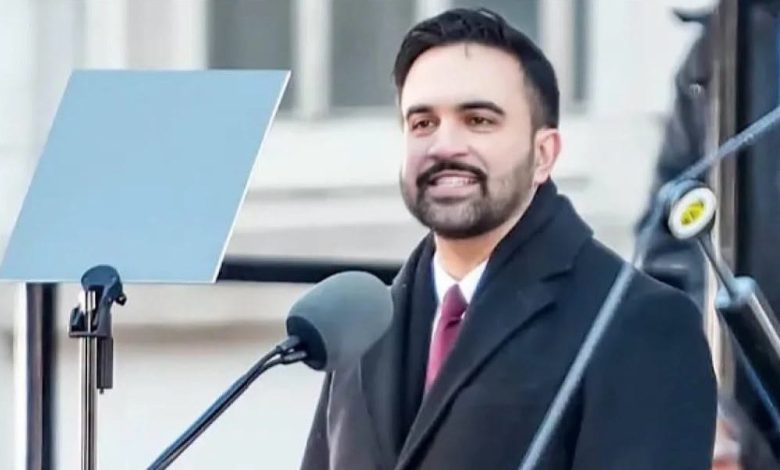
New York City Mayor Zohran Mamdani has again placed himself at the center of America’s immigration debate by supporting the call to abolish Immigration and Customs Enforcement, better known as ICE. According to ABC News, Mamdani has said he supports abolishing ICE while calling for more “humanity” in immigration policy.
For many Americans, that position is not compassion. It is a direct challenge to the basic idea that a sovereign country must be able to enforce its own laws.
ICE is not merely a political symbol. It is a federal law enforcement agency whose stated mission is to protect America through criminal investigations and the enforcement of immigration laws in order to preserve national security and public safety. Its Enforcement and Removal Operations division handles key parts of the immigration enforcement process, including identification, arrest, detention, and removal.
That does not mean every ICE policy is beyond criticism. In a free country, law enforcement agencies should be scrutinized, challenged, and held accountable. But abolishing the agency entirely is not reform. It is an ideological demand that would weaken the federal government’s ability to carry out immigration laws passed by Congress.
Mamdani’s position also reflects a broader shift inside the modern progressive movement. He has long been associated with democratic socialist politics, and his rise has been celebrated by the Democratic Socialists of America and other left-wing groups. Recent reporting has noted growing momentum for DSA-backed candidates in New York and other parts of the country.
That matters because immigration enforcement is no longer just a policy disagreement. It has become a dividing line between Americans who believe the nation must maintain enforceable borders and activists who increasingly view immigration enforcement itself as immoral.
The problem with “abolish ICE” is simple: it offers no serious replacement. If ICE is eliminated, who handles deportation orders? Who investigates immigration-related criminal networks? Who coordinates detention and removal of individuals who have exhausted legal remedies? Who enforces the immigration laws that Congress has already placed on the books?
Supporters of abolition often speak in moral language, but they rarely answer the operational question. A country cannot run on slogans. It needs institutions, laws, and consequences.
President Donald Trump’s administration has moved in the opposite direction, emphasizing tougher immigration enforcement and border security. The White House has described border security as a top priority and has said that enforcement resources, removals, and cooperation with state and local partners expanded under its immigration agenda. A June 2026 White House release also stated that the administration had expanded the immigration enforcement workforce, including ICE agents.
That contrast is exactly why Mamdani’s position is politically important. Trump’s message is enforcement. Mamdani’s message is abolition. One side argues that immigration law must be restored and strengthened. The other treats enforcement itself as the problem.
Americans can support legal immigration while still rejecting open-border politics. They can believe in due process while also believing that deportation orders must mean something. They can welcome immigrants who follow the law while opposing policies that reward lawbreaking or overwhelm local communities.
New York has already become one of the clearest examples of the pressure created by mass migration: housing strain, shelter costs, public service burdens, and conflict between local officials and federal immigration policy. These are not abstract debates for working families. They affect schools, budgets, neighborhoods, and public trust.
That is why Mamdani’s call to abolish ICE should be taken seriously. It is not just a comment about one agency. It is a statement about whether America should enforce immigration law at all.
The better path is not abolition. It is accountability, lawful enforcement, and a clear national standard: America has the right to decide who enters, who stays, and who must leave.
Without enforcement, immigration law becomes optional. Without consequences, borders become symbolic. And without borders, national sovereignty becomes little more than a campaign slogan.
ICE should be reformed where necessary, supervised where appropriate, and supported where it is carrying out lawful duties. But abolishing it would be a reckless step toward a weaker, less secure America.