New York’s Wealth Flight Is a Warning Democrats Refuse to Hear
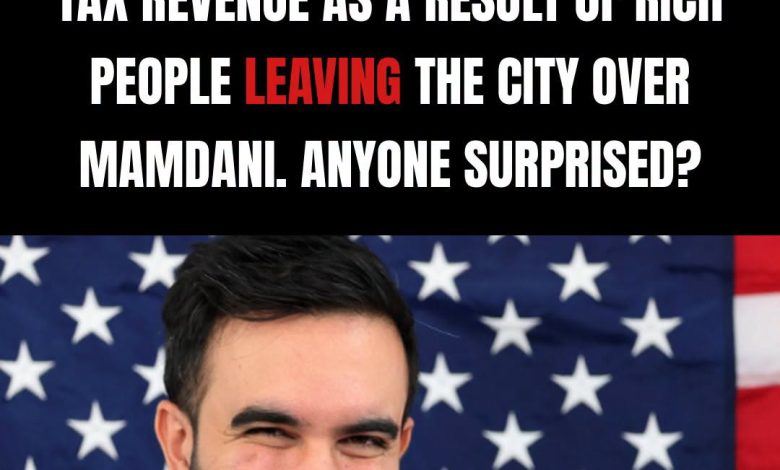
New York is learning a hard economic lesson: you cannot keep treating successful people like an unlimited ATM and then act surprised when they leave.
For years, progressive leaders have pushed higher taxes, heavier regulation, and anti-business rhetoric in the name of “fairness.” Now the bill is coming due. A Citizens Budget Commission analysis found that New York’s share of America’s millionaire taxpayers fell from 12.7% in 2010 to 8.7% in 2022, while states like Florida and Texas gained ground. The same analysis estimated that New York State could have collected $10.7 billion more in personal income tax revenue in 2022 if it had kept its 2010 share of the nation’s millionaires. New York City could have collected $2.5 billion more.
That is not just a problem for the rich. It is a problem for every working family that depends on functioning subways, safer streets, stable schools, clean parks, and basic city services.
Mayor Zohran Mamdani’s tax-the-rich agenda only intensifies the concern. His supporters argue that higher taxes on top earners can fund more government programs, but the missing question is obvious: what happens when the people expected to pay the bill decide they have better options elsewhere? New York’s own experience suggests this is not a theoretical risk.
The left often frames wealth flight as a moral issue, as if leaving a high-tax state is an act of selfishness. But Americans still have freedom of movement. Entrepreneurs, investors, executives, and professionals can compare tax burdens, safety, schools, housing, and quality of life. When New York tells them they are villains for succeeding, states with lower taxes and friendlier business climates are ready to welcome them.
The result is a slow-motion fiscal squeeze. When high earners leave, they take more than income-tax revenue with them. They also take spending, investment, charitable giving, business formation, and jobs. Restaurants, contractors, nonprofits, cultural institutions, and small businesses all feel the loss. Punishing the top of the tax base eventually hurts the middle class.
New York once represented ambition. It was the city where people came to build, compete, risk, and rise. But decades of progressive mismanagement have made the city less competitive: higher costs, public-safety concerns, strained infrastructure, and a political culture increasingly hostile to private enterprise.
Conservatives understand a principle New York’s left keeps ignoring: growth pays for government, not resentment. A city cannot tax its way into prosperity while driving away the very people and businesses that create taxable income.
Florida and Texas are not gaining residents by accident. They offer a clearer message: lower burdens, more respect for property rights, and fewer lectures from politicians who treat success as a public offense. New York’s leaders can dismiss that as ideology, but the market is already voting with moving trucks.
The choice is simple. New York can continue down the path of class warfare, higher taxes, and expanding bureaucracy. Or it can restore the conditions that made it great: public safety, fiscal discipline, economic freedom, and respect for people who build things.
If the city keeps chasing away its wealth creators, ordinary New Yorkers will be left paying more for less. That is not justice. That is policy failure.