A Family’s Message: Cherish Differences, Raise Awareness
A Message About Differences
Accepting and cherishing people who look or live a little differently can make the world kinder, safer, and more welcoming—especially for children who grow up being noticed for something they didn’t choose.
Winry’s Birthmark: What Her Parents Saw at Birth
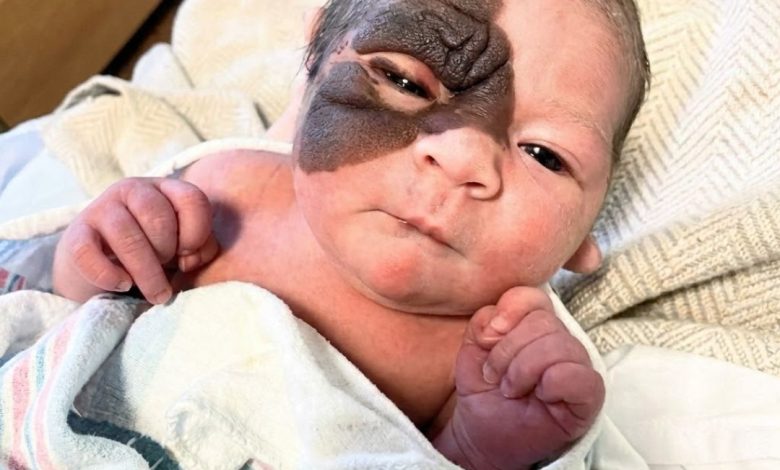
When Winry was born, her parents immediately noticed a dark patch on her face.
- At first, they believed it might be a bruise
- It quickly became clear it was not a bruise
- Doctors later explained it was a rare condition called congenital melanocytic nevi (CMN)
Her mother, Nicole Hall, described the first moments as emotional and uncertain:
- She recognized it looked like a mole
- She felt worried because she had never seen anything like it
- Even while unsure, she focused on holding Winry close and loving her
Nicole’s Pregnancy Was Normal
Nicole shared that her pregnancy felt typical overall.
- Morning sickness occurred roughly during weeks 8–14
- After that, she felt well until late-pregnancy tiredness began
- Nothing during pregnancy suggested Winry would be born with a noticeable facial birthmark
What Is CMN?
Congenital melanocytic nevi (CMN) is a rare birthmark present at birth.
It can appear as:
- Light brown to black patches
- Different shapes, sizes, and textures
- On various parts of the body, depending on the individual
Health Considerations: Monitoring and Prevention
Having CMN can come with a potential risk of melanoma, a type of skin cancer. While the overall risk is described as relatively low, Winry’s parents are careful and proactive.
Key steps Nicole takes to protect Winry:
- Sun protection every time they go outside
- A hat to shade her face
- Sunscreen applied carefully
- Regular checkups with a dermatologist for ongoing monitoring
Nicole emphasized that:
- Winry’s health and happiness are the top priority
- Routine dermatology visits may become a long-term part of Winry’s care
Preparing for Attention From Others
Winry’s parents understand their daughter may receive stares as she grows.
Instead of hiding, they choose to educate and normalize differences by:
- Sharing Winry’s story publicly
- Helping other families feel seen and supported
- Encouraging parents to talk with children about visible differences in a respectful way
Nicole explained why sharing matters:
- For many people, it is their first time seeing a birthmark like Winry’s
- Representation can help children with birthmarks feel less alone
- It can also help other kids learn empathy and acceptance
Winry’s Personality: “She Radiates Joy”
Despite early worries, Winry is described as a thriving baby.
Nicole shared that Winry is:
- Happy and healthy
- Frequently laughing or squealing with excitement
- A “big talker,” already showing a bit of sass and confidence
Her parents hope that as Winry grows older, she will:
- See her birthmark as part of who she is
- Feel proud of her uniqueness
- Cherish her difference rather than fear it
Social Media and Community Support
Nicole’s TikTok videos have helped spread awareness about CMN to a wide audience.
This visibility led to meaningful connections, including:
- Other parents reaching out with shared experiences
- One family from Brazil whose son has an almost identical birthmark
For Winry’s family, this has reinforced an important truth:
- They are not alone
- And by sharing, they help others feel less alone too
A Takeaway for Families
Winry’s story highlights a simple but powerful idea:
- Differences are not defects
- With knowledge, care, and compassion, families can replace fear with understanding—and help children grow up feeling confident in their own skin.