A Funny Find With a Serious Message: Resourcefulness in Old Homes
A Strange Bulge With a Real Story
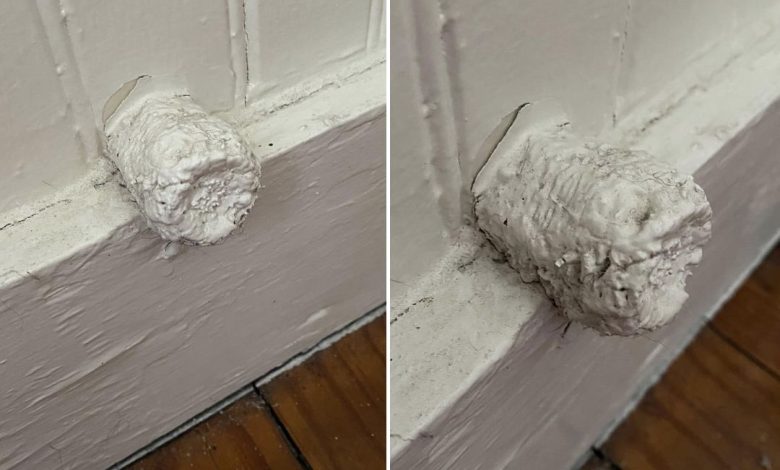
In an over-100-year-old home (built in 1908), a homeowner noticed something unusual: a weird, lumpy object sticking out near the baseboard. At first glance, it looked like:
- Old plaster
- A painted-over knob
- A random wall bump that had “always been there”
But after a closer look—helped by a painter—the truth came out: it was a corn cob, preserved under years of paint, used as a doorstop.
What Is a Corn Cob Doorstop?
A corn cob doorstop is exactly what it sounds like:
- A leftover corn cob repurposed to stop a door
- Placed or fitted so the door wouldn’t slam into the wall
- A simple, practical solution from a time when people used what they had
Why People Used Corn Cobs as Doorstops
The early 1900s were a different world. Many homes did not come with the small conveniences we consider normal today. Even basic items like doorstops were not guaranteed.
Common reasons this worked:
- Cheap (basically free): the cob was left after meals
- Available: corn was common, so cobs were easy to find
- Surprisingly sturdy: strong enough for small household tasks
- No store required: no need to buy a specialized product
For families watching every expense, this kind of reuse wasn’t strange—it was normal.
How the Doorstop Became a Mystery
Over time, these small homemade fixes often got forgotten. The corn cob doorstop in this home stayed in place while the house changed around it.
What made it hard to recognize:
- Repeated painting over the years
- Dust and aging blending it into the wall
- People assuming it was just part of the house
Eventually, it looked like “nothing”—until someone with experience investigated it properly.
More Than a Joke: A Snapshot of Daily Life
A corn cob doorstop may sound funny today, but it points to something bigger: resourcefulness. People a century ago often:
- Reused items instead of tossing them
- Improvised rather than shopping for a perfect solution
- Fixed small problems with simple materials already on hand
Corn cobs weren’t only trash—they could be used for many chores, including:
- Kindling
- Small household tasks
- Makeshift supports and stoppers
A Small Historical Detail Worth Keeping
If you find something like this in an older home, it can be tempting to remove it right away. But odd little artifacts like this can be:
- A piece of your home’s story
- A clue to how past residents lived
- A conversation starter with real historical value
Sometimes, the smallest and strangest objects reveal the most human part of history: people simply making life work with what they had.