Can You Spot the Problem With This Picture? It Took Me Forever
A Puzzle That Hides in Plain Sight
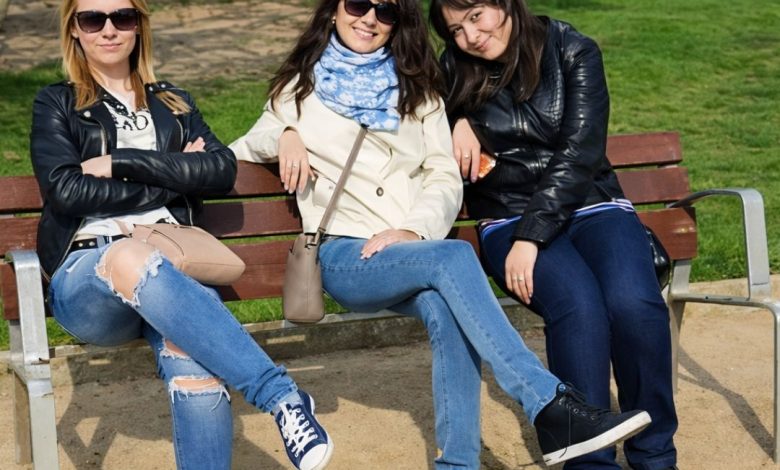
At first glance, the photo seems completely ordinary: three women smiling at the camera, relaxed, friendly, and casual. Nothing appears suspicious. That is exactly why this kind of image puzzle is so effective. The trick is not buried in a corner or disguised as a tiny detail. Instead, the “secret” sits in the most obvious place—right where you assume everything is normal.
Many people spend ages scanning the background, checking faces, and hunting for something complicated. But the puzzle is designed to punish that instinct. The problem is simple, bold, and in front of you—yet your brain often refuses to accept it.
The Hint That Changes Everything
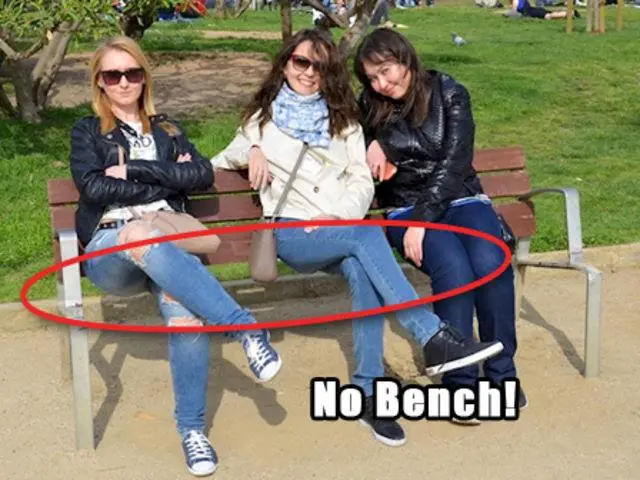
Here’s the clue that unlocks the image: two of the women have their legs crossed, and they appear to be “seated.”
Now ask one direct question: What are they sitting on?
If you look carefully at the area beneath them, the answer becomes unsettling:
- There is no solid surface supporting them.
- Their bodies are positioned like they’re sitting… but the “seat” isn’t there.
- They appear to be suspended in midair.
That’s the “problem” with the photo: two women are sitting on AIR.
Why Most People Miss the Obvious
This puzzle works because your brain doesn’t look at images like a camera. It doesn’t measure every pixel and calculate physics. Instead, it tries to be efficient by using shortcuts—especially in familiar situations.
When you see people posing and smiling, your mind automatically fills in assumptions such as:
- They must be sitting on a bench or chair.
- The scene must follow normal rules of balance and gravity.
- Anything “impossible” is unlikely, so it’s probably not the answer.
This is a classic example of the brain favoring plausibility over accuracy. Even if your eyes briefly detect something “off,” your mind may dismiss it and keep searching for a more realistic explanation.
The Psychology Behind the Trick
Several common perception habits make this kind of puzzle frustrating:
- Top-down thinking: You interpret what you see based on expectations, not raw visual facts.
- Pattern completion: Your brain “finishes” missing information (like an unseen seat) because it expects it to exist.
- Attention misdirection: You focus on faces, smiles, and body language—because that’s what humans are trained to read first.
- Overthinking bias: When told “there’s a hidden problem,” many people assume it must be complicated or subtle.
In other words: your brain searches like a critic, not like a beginner. And that’s exactly the trap.
How to Spot Photo Puzzle Tricks Faster
If you want to get better at puzzles like this, train yourself to check the basics before chasing tiny details.
A practical method:
- Check physics first: feet, shadows, balance, and support points.
- Trace contact points: where bodies touch chairs, benches, ground, or objects.
- Follow lines and edges: look for missing surfaces, strange cutouts, or misaligned shapes.
- Compare lighting: do shadows and highlights match the supposed position of the subject?
- Zoom out mentally: ask, “What is the simplest impossible thing here?”
For this image, the fastest route is step #2: What are they sitting on?
Is It an Optical Illusion or Photoshop?
The final reveal points to the same conclusion: this is likely a manipulated image. A skilled editor can remove or alter the seat area so the pose looks believable, especially if:
- the background is busy enough to distract you, and
- the subjects look natural and confident, and
- you expect a normal group photo.
Whether you call it an illusion or editing, the effect is the same: your brain accepts the story of the photo before it verifies the structure.
The “Life Lesson” Hidden in a Funny Puzzle
This kind of puzzle is entertaining, but it also mirrors a real-world thinking habit: when something feels confusing, people often assume the answer must be complicated.
The smarter move is often the opposite:
- Start with the simplest explanation.
- Check the most obvious elements first.
- Be willing to consider an “unlikely” possibility if the evidence supports it.
Key Takeaways
- The problem isn’t hidden—it’s in plain sight.
- Two women appear to be sitting on AIR, suspended in midair.
- Your brain misses it because it prioritizes normal assumptions over verification.
- Puzzles like this train you to think more directly, not more desperately.
So—did you see it right away, or did your brain refuse to believe it?