Election Integrity Debate Intensifies as Trump and Sherrill Clash Over Voting Safeguards
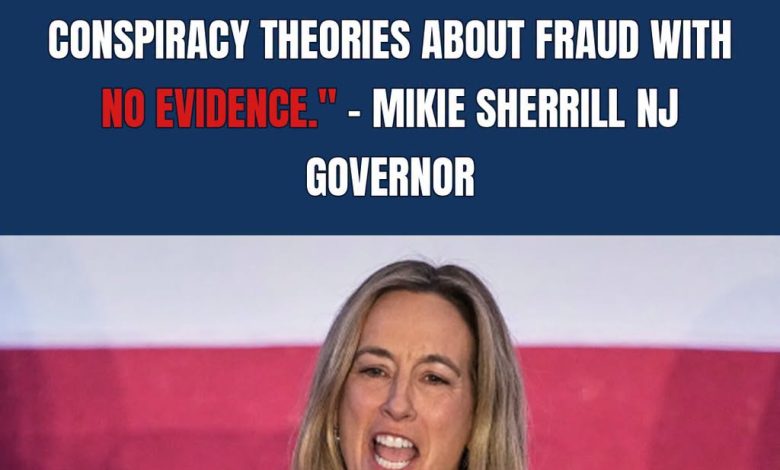
The national debate over election security has intensified as President Donald Trump and New Jersey Governor Mikie Sherrill clash over voting procedures, federal oversight, and the line between legitimate scrutiny and politically motivated accusations.
The latest dispute follows New Jersey’s acknowledgment that a software problem mistakenly added approximately 6,600 noncitizens to voter-registration records between 2023 and 2024. State officials reported that roughly 400 of those individuals may have cast ballots. The error was serious and exposed a weakness that demands investigation, although the affected votes represented less than 0.01 percent of the more than four million ballots cast in New Jersey’s 2024 election. No publicly available evidence has established that the incident was part of a coordinated Democratic fraud operation.
Trump and his administration have cited the New Jersey case while demanding voter information and advocating stricter national safeguards. Sherrill, meanwhile, has accused the administration of politicizing an administrative failure that the state says has already been corrected. Her administration has moved to remove the affected registrations, investigate the software vendor, and determine how the error escaped earlier detection.
Conservatives are justified in demanding a complete explanation. Election systems should not register ineligible residents after those residents have identified themselves as noncitizens. Officials must establish who designed the faulty process, how many elections were affected, whether every improper registration has been removed, and why existing safeguards failed.
However, a documented registration error is not automatically proof of a massive nationwide fraud conspiracy. Claims that Democrats secretly stole the 2020 presidential election remain unsupported by evidence sufficient to change the result. Numerous lawsuits, recounts, audits, and investigations failed to establish outcome-changing fraud. An Associated Press review identified fewer than 475 potential fraud cases across six contested battleground states—far below the margin separating the candidates. Trump’s own attorney general, William Barr, also said the Justice Department had not discovered widespread fraud capable of altering the election.
The argument that most election cases were rejected only on procedural technicalities is also misleading. Some cases were dismissed because plaintiffs lacked standing or failed to meet procedural requirements, but judges also examined substantive allegations and found that the evidence did not support the requested results. The Cybersecurity and Infrastructure Security Agency and election officials from both parties reported that the 2020 election had extensive safeguards, including paper records, audits, and recount procedures.
That does not mean America’s election system is perfect or beyond criticism. Administrative mistakes, inaccurate databases, inconsistent chain-of-custody practices, aging technology, and confusing registration procedures can undermine public confidence even when they do not change an election’s outcome. Dismissing every concern as a conspiracy theory is politically shortsighted. At the same time, describing every error as evidence of an organized fraud scheme can damage trust just as severely.
Several reforms deserve serious bipartisan consideration. These include auditable paper ballots, transparent post-election audits, secure ballot-storage procedures, accurate voter-roll maintenance, meaningful access for authorized observers, and prompt public disclosure of confirmed errors. Voter-identification requirements may also be debated, but any system must ensure that eligible Americans—including elderly voters, military families, naturalized citizens, and people without easy access to government documents—are not improperly denied a ballot.
The federal government and more than two dozen states are now fighting over the Trump administration’s effort to connect disaster-security funding with election-related requirements. The administration argues that paper ballots, audits, and citizenship verification would strengthen elections. The states contend that using emergency funding as leverage exceeds federal authority and interferes with their constitutional role in administering elections.
The strongest position is neither blind trust nor automatic suspicion. New Jersey’s registration failure should be fully investigated, and responsible officials or vendors should be held accountable. But broader allegations must still be supported by verifiable evidence rather than affidavits, statistical speculation, partisan assumptions, or isolated mistakes presented without context.
Americans deserve election systems that are secure, transparent, accessible, and independently auditable. Restoring confidence requires officials from both parties to acknowledge real failures, correct them publicly, and avoid exaggerating the evidence for political advantage. Election integrity is protected not by unquestioning faith or sweeping accusations, but by facts, enforceable safeguards, and consistent standards applied to everyone.