Elon Musk’s Defiance Has Made Him a Symbol of Resistance to America’s Cultural Establishment
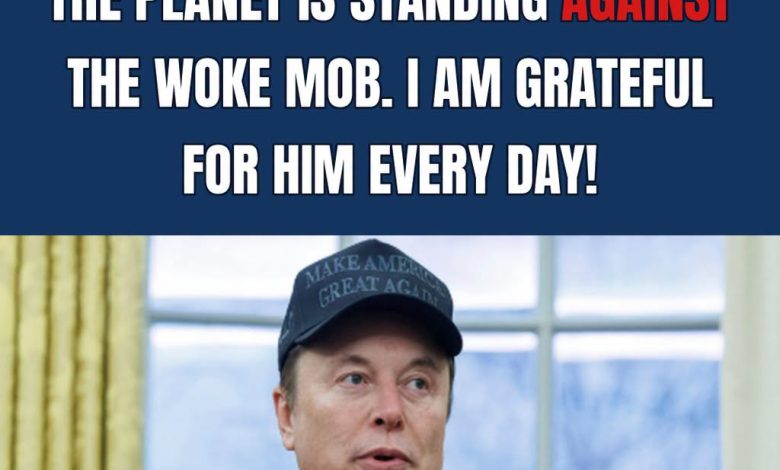
Across the United States, many citizens believe the country’s most important institutions are being reshaped by an ideology that places political identity above competence, open debate, and individual freedom.
Parents worry about what their children are being taught in school. Employees fear professional consequences for expressing unpopular views. Military veterans and national-security advocates question whether ideological objectives are beginning to compete with readiness, discipline, and merit.
Against this backdrop, Elon Musk has emerged as one of the most influential figures willing to challenge the prevailing cultural establishment.
Musk’s critics portray him as reckless, divisive, or motivated by personal power. His supporters see something very different: a wealthy and independent entrepreneur using his influence to defend free expression at a time when many corporate leaders appear unwilling to risk criticism.
His acquisition of Twitter, now known as X, became the clearest example of that confrontation. Musk argued that a platform occupying such a central role in American political life should permit a broader range of lawful opinions rather than allowing ideological gatekeepers to determine which viewpoints deserve public exposure.
The change has not ended disputes over censorship, moderation, or misinformation. It has, however, forced Americans to reconsider how much authority technology companies should possess over political speech and how closely those companies should cooperate with government agencies.
That debate matters because free expression is not protected only when the speaker is popular or correct. Its real value becomes apparent when individuals challenge dominant institutions, question official narratives, or express opinions that powerful groups would prefer to exclude.
For years, many conservatives have felt that their beliefs were treated not merely as incorrect, but as socially unacceptable. Support for traditional family structures, secure borders, domestic energy production, religious liberty, and merit-based advancement has often been characterized as evidence of extremism rather than as part of legitimate democratic disagreement.
Musk’s refusal to accept those labels has made him a powerful symbol for Americans who feel politically marginalized.
His criticism extends beyond social media. He has questioned government mandates, challenged regulatory bureaucracy, warned about declining birth rates, and raised concerns about immigration systems that fail to distinguish between lawful migration and uncontrolled entry.
Not every statement he makes is persuasive, and his considerable influence deserves scrutiny. Admiration should not require unquestioning loyalty. Wealthy individuals, including those who claim to defend liberty, can still make mistakes or exercise power irresponsibly.
Nevertheless, Musk has demonstrated a willingness to enter debates that many executives carefully avoid.
He has also challenged the contradictions surrounding modern environmental politics. Americans are frequently asked to accept higher energy costs, transportation restrictions, and sweeping industrial changes while political and corporate elites continue to enjoy lifestyles unavailable to ordinary families.
Musk’s own electric-vehicle company is a major participant in the transition toward cleaner technology. Yet he has also criticized policies that impose rigid mandates without adequately considering electrical-grid capacity, consumer affordability, manufacturing employment, or national energy security.
That distinction is important. Technological innovation is not the same as government coercion. Progress can be encouraged without forcing families and industries to follow politically determined schedules that ignore practical limitations.
Through companies involved in electric vehicles, satellite communications, artificial intelligence, and space exploration, Musk has shown that ambitious private enterprise can still accomplish projects once considered impossible. His work represents a distinctly American belief that invention, competition, and risk-taking can produce advances that centralized bureaucracies struggle to achieve.
His willingness to spend personal capital on controversial principles has also distinguished him from executives who publicly adopt fashionable causes while avoiding meaningful personal risk.
Musk has faced advertiser boycotts, political investigations, intense media criticism, and organized campaigns against his companies. Some of that scrutiny is justified; no business leader should be exempt from accountability. But the intensity of the backlash also reveals how uncomfortable influential institutions become when a prominent individual refuses to follow their approved political script.
The broader issue is not whether Elon Musk is always right. He clearly is not. The issue is whether America still has room for powerful dissenters who challenge ideological conformity.
A healthy republic cannot depend on one billionaire to protect public debate. Nor should citizens transfer unquestioning trust from government institutions to a private entrepreneur. The lasting defense of liberty must come from constitutional safeguards, transparent institutions, competitive markets, independent journalism, and citizens willing to think critically.
Still, Musk’s resistance has reminded millions of Americans that cultural dominance is not permanent and that powerful institutions can be questioned.
At a moment when many people feel pressured to remain silent, his example suggests that individual liberty, open debate, technological ambition, and merit-based achievement remain worth defending.
The nation’s cultural conflict is far from over. But Musk’s willingness to confront entrenched power has given his supporters renewed hope that common sense and free expression can still reclaim a meaningful place in American public life.